
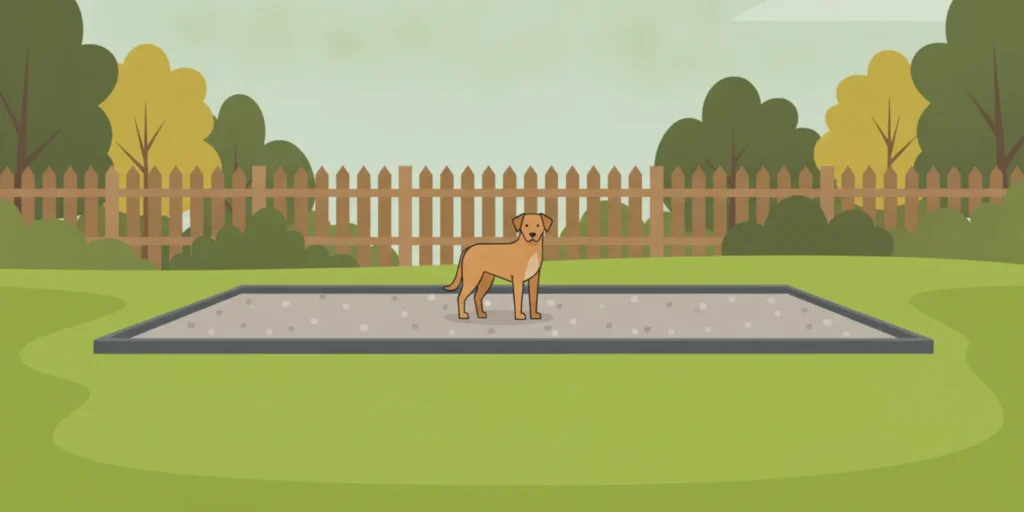
Pea gravel for dogs can create a defined, free-draining surface for a dog run or bathroom area, but it is not the right fit for every yard or every dog. Before choosing it, consider the stone size, the ground beneath it, how you will clean the area, and whether the surface suits your pet’s habits. These practical checks can help you plan the space without assuming any loose aggregate is automatically safe or maintenance-free.
Call to discuss your material needs
What should pea gravel for dogs do in a pet area?
Start with the job the surface needs to do. A small potty corner, a long exercise run, and a high-traffic path have different demands. Decide whether you mainly want a defined place for bathroom breaks, a surface that drains instead of holding puddles, or a durable route between the house and yard. The clearer the use, the easier it is to choose the area’s size and plan its base and edges.
Pea gravel is made up of small, rounded stones. The rounded shape gives it a different feel underfoot from angular crushed aggregate, and the loose pieces can shift as people and dogs cross them. That means it is useful to think of the surface as a managed part of the yard, not a permanent hard floor. Its behavior depends on the gravel, the subgrade, drainage, depth, and how often the area is used.
Keep the project boundary in mind, too. A dog run is not the same design problem as a decorative patio. If you are planning a seating area rather than a pet space, see this separate guide to a pea gravel patio. Here, the focus is on the everyday routines around dogs: entering and leaving, cleaning up, keeping stones in place, and checking the surface over time.
Is pea gravel a suitable surface for every dog?
No single loose surface suits every dog. A dog’s size, age, mobility, coat, play style, and willingness to walk on new textures can all affect how a surface works in practice. A dog that runs and turns sharply may interact with loose stones differently from one that uses a small area for brief bathroom breaks. The owner should assess the individual dog and supervise the introduction of any new ground surface.
Do not treat a general landscaping recommendation as a safety guarantee. Stones can move, track into other areas, or be mouthed by curious pets. If you have concerns about your dog’s paws, mobility, tendency to chew or swallow objects, or other health needs, ask your veterinarian whether a loose gravel surface makes sense. Check the area regularly and change the plan if your dog avoids it, limps, repeatedly mouths stones, or the surface becomes uncomfortable or difficult to use.
Also consider the climate and where the run sits. A shaded spot may remain damp longer than a sunny, exposed area; a low point may collect runoff; and a route near a door may carry stones indoors. These site-specific issues matter as much as the material name. The goal is a manageable space that fits your yard and your dog, not a promise that one product will solve every drainage or cleanup concern.
How do drainage and the ground below affect the result?
Gravel allows water to pass through the surface, but that does not mean the whole installation drains well. Water still needs somewhere to go. If the underlying soil is compacted, the area is low, or runoff is directed toward the house or a neighboring property, water can linger below or around the gravel. Walk the site after rain and note puddles, downspouts, slope, and the direction water already travels.
Plan the subgrade before placing stone. Remove unsuitable organic material and loose debris, then shape the ground so water does not flow toward buildings. The right preparation depends on the existing soil and the use of the area; do not assume that adding more gravel fixes a drainage problem. For broader planning context, review this guide to gravel drainage and washouts. A dog run may be smaller than a driveway, but the basic need to understand runoff still applies.
Decide whether a fabric layer is appropriate for your site and maintenance plan rather than installing one by default. Fabric may help separate soil and aggregate in some applications, but it does not replace sound grading, and exposed edges or later digging can become a nuisance. Likewise, a compacted base layer may help create a more stable foundation in some layouts, but the right material and construction depend on soil, intended traffic, and drainage. If considering a base layer, compare options such as Class 2 and Class 5 gravel with the project requirements before ordering.
Use a simple site checklist before you settle on the location:
- Where does rainwater collect now, and where can it safely drain?
- Will roof runoff or a downspout discharge into the run?
- Is the surface near a door, gate, play area, or garden that should stay free of loose stone?
- Can you reach the entire area with a rake or other cleanup tool?
- Will grading or excavation affect utilities, tree roots, or existing landscaping?
If the site has persistent standing water or a complicated slope, address that before buying surface material. A small pet area can still need careful grading. If reshaping the yard is part of the work, Minnesota Aggregates also provides information about skid steer grading and site preparation.
What should you consider about footing and stone size?
Look at the actual material and its size range before deciding. “Pea gravel” is a common product description, but you should confirm what the supplier is providing rather than relying only on the name. A useful comparison is to view the available material in person, if possible, and ask how the size range and rounded shape may affect walking, raking, and stone tracking. The gravel size chart can help you understand how aggregate sizes compare, though it is not a pet-safety certification.
Consider the surface from your dog’s point of view. Can the dog walk across it without hesitation? Does the loose stone shift under a quick turn? Are pieces likely to be carried beyond the edging? Supervise short visits at first and watch how your dog responds. Owners know their pets’ behavior best; avoid leaving a dog unattended on a new surface until you understand how the dog uses it.
Think about the tradeoff between a comfortable-feeling surface and one that stays where you put it. Smaller loose pieces may track more readily, while larger or angular stones may feel different underfoot and can be harder to rake. Do not substitute a different aggregate without checking the intended use and actual material. If tracking is a concern, the layout can help: put a firm transition area at the gate or door, use edging to contain the run, and sweep loose stones back periodically.
How can you make cleanup manageable?
Plan cleanup as part of the design, not as an afterthought. Pick a location you can reach with a scoop, rake, or hose as appropriate for the site. Loose aggregate can be raked to redistribute it after routine use, but waste and debris still need prompt removal. The precise routine depends on the dog, the number of pets, weather, and how often the area is used.
A defined potty zone can make daily maintenance simpler than spreading gravel over a large section of yard. Keep it accessible, and avoid placing it where runoff can carry waste toward storm drains, gardens, or neighboring areas. If you plan to rinse the area, first consider where that water will flow and whether rinsing suits the underlying soil and drainage conditions. No surface eliminates the need for regular cleaning.
Weeds and grass can also appear at edges or through material, especially if soil and organic debris collect on top. Keep the surface free of leaves, refill or redistribute gravel as needed, and inspect the boundary. For additional general maintenance ideas, read about ways to reduce weeds in gravel areas. The useful takeaway is to maintain the whole installation, not just add fresh stone whenever a problem appears.
How do edging and layout keep stones contained?
Containment starts with a clear footprint. Mark the intended run before digging or ordering, then decide where gates, paths, and transitions belong. Durable edging can help keep loose stone inside the designated area and reduce migration into lawn or planting beds. Choose an edge that is stable, appropriate for the yard, and installed without sharp or exposed hazards. Check it periodically for movement or gaps.
Make the entry point easy to use. A short paved or firm transition at the gate can help reduce the amount of gravel carried into the house, and a path can keep people from stepping through garden beds. Make sure the gate opens freely and that the layout does not create a narrow pinch point. Avoid placing the run where a dog’s activity will repeatedly scatter material into a sidewalk, drain, or area that needs to remain clear.
Think about how much of the yard should be gravel. A compact, clearly bounded zone may be easier to clean and maintain than a large expanse. Keep nearby lawn or another surface if your dog benefits from having choices, and make the layout work with the regular route from the house. These decisions are more important than simply maximizing the amount of stone delivered.
How much pea gravel should you plan for?
Measure the area and choose a planned depth before estimating volume. For a rectangular space, multiply length by width to get square feet, then multiply by the planned depth in feet to get cubic feet. Divide by 27 to convert cubic feet to cubic yards. For example, an area that is 10 feet by 12 feet with a planned depth of 3 inches has 120 square feet of area. Three inches is 0.25 feet, so the calculation is 120 × 0.25 ÷ 27, or about 1.11 cubic yards before allowing for site-specific adjustments.
This is an estimate, not a guarantee of the final amount. The shape of the site, uneven subgrade, settling, and the way material is spread can affect the quantity. Do not choose a depth solely from an online example: determine it based on the installation plan, material, underlying base, and intended use. If your area has curves or several sections, measure each section separately and add the volumes.
Use the cubic yardage calculator as a planning aid, and compare the result with this guide on estimating how much gravel you need. When requesting a quote, share the measured dimensions, intended depth, delivery location, and access details. Those details are more helpful than asking for a load based only on a rough description of the yard.
| Planning item | What to decide | Why it matters |
|---|---|---|
| Area dimensions | Length, width, and any irregular sections | Provides the starting point for volume estimates |
| Installed depth | Confirm the depth with the site and installation plan | Changes the quantity and influences how the surface behaves |
| Base and subgrade | Identify soil condition, grading, and any base layer | Helps avoid treating surface gravel as a cure for poor drainage |
| Containment | Map edging, gate, and transition areas | Reduces migration and improves access for cleanup |
| Delivery access | Note truck access, placement area, and site constraints | Helps coordinate an appropriate delivery plan |
How should you stage the installation?
Once the site and material plan are settled, work in a deliberate sequence. Mark the perimeter, confirm the gate and path locations, and verify the drainage direction before disturbing the ground. Remove vegetation and loose organic debris from the footprint, then shape and prepare the subgrade according to the site plan. If the soil is soft, the area holds water, or the planned base is uncertain, pause and resolve that question before covering the ground with aggregate.
Install edging and any planned base components in the order appropriate to the design. Keep the edge consistent around corners and entry points, because gaps often become places where loose material migrates. Then spread the pea gravel across the planned footprint rather than making one deep pile in the middle. Use a rake to even out distribution and check the depth in several places. Do not assume the surface is level just because the top appears smooth; uneven ground below can create thin and deep spots.
Leave a clear route for moving materials and tools, and avoid blocking the gate or access to the yard while work is underway. If you are spreading the aggregate yourself, divide the job into manageable sections and check each section before moving on. If a contractor is preparing the site, agree in advance on who is responsible for grading, edging, base preparation, and final placement. Clear responsibilities help prevent a finished-looking surface from concealing an unfinished drainage or containment issue.
What ongoing checks keep the area usable?
Build a quick inspection into your normal yard routine. Look for shifted edging, stones scattered beyond the footprint, low spots, debris, and places where soil or water is exposed. Rake displaced gravel back into position and remove leaves or other material that can collect on the surface. After substantial rain, check where water traveled and whether the area dried as expected. If water repeatedly pools or runs toward an unwanted location, address the underlying grading or drainage issue instead of simply adding more stone.
Notice how your dog uses the area over time, too. A layout that works during a supervised first visit may need changes if the dog avoids a section, digs at the edge, or carries gravel along the access route. Adjust the boundary or transition zone where practical, and reconsider the surface if the dog appears uncomfortable. Consistent observation and simple maintenance are more useful than assuming the installation will remain unchanged once it is complete.
What should you ask before ordering?
Before placing an order, confirm the material description, estimated quantity, delivery access, and intended placement area. Share whether the space is a small potty section or a larger run, and explain what preparation is already complete. Ask how the material is supplied and what information is needed to quote delivery. A clear conversation can surface practical issues such as a narrow driveway, overhead obstacles, soft ground, or a spot where the truck cannot unload.
Material delivery is typically planned around the order and site details. Minnesota Aggregates states general material delivery in 3–4 business days; do not assume that this timing is a guarantee for a particular date or project. Provide a preferred schedule when requesting a quote and confirm the applicable timing. If you want to place the material yourself, see the practical tips for spreading gravel. For help reshaping or leveling the site, ask about skid steer services as a separate project consideration.
Before the truck arrives, mark the intended drop location, keep the route clear, and confirm that the ground can accommodate delivery. Plan where the material will go if you need more than one pile or must keep access open. Have the dimensions and any known site limitations ready when requesting a quote through the Minnesota Aggregates contact page.
Request a quote for your project
Frequently asked questions
Will pea gravel stop mud in a dog run?
It can provide a defined gravel surface, but it cannot correct every drainage or soil problem. If water has nowhere to drain, it may remain below or around the aggregate. Assess grading and runoff first, and seek site-specific help if water regularly collects.
Can pea gravel be used as a dog potty area?
Some homeowners consider it for a designated bathroom area, but the material is not a fit for every dog or yard. Consider cleanup access, drainage, stone tracking, and your dog’s response. A pet-ground-cover article from Don’t Forget the Pets notes pea gravel as one option for a dog’s bathroom area; that does not establish a safety guarantee for an individual pet.
How often will I need to add more gravel?
There is no fixed refill schedule. Check the surface for low spots, displaced stone, exposed soil, weeds, and material that has moved outside the edging. How often you need to redistribute or replenish it depends on the area, use, weather, and how well the installation is contained.
Should I choose pea gravel instead of grass?
Compare the maintenance you want with your site conditions and your dog’s preferences. Grass is not automatically easier to maintain, and gravel is not maintenance-free. Consider drainage, shade, cleanup habits, tracking, and how your dog responds to each surface before committing to a large area.
Sources and planning references
The pet-area reference above discusses pea gravel as one possible ground cover; use it as general context, not as veterinary guidance or a guarantee. For your own project, confirm the material and site plan before ordering, and consult your veterinarian about individual health or paw concerns.
A well-planned dog area starts with a surface your dog can use comfortably, a site that handles water, and a cleanup routine you can maintain.