
Wondering how much gravel do I need? Measure the area’s length and width in feet, choose a compacted depth, convert that depth to feet, multiply the three numbers, then divide by 27. The result is the project’s cubic yards before any allowance for compaction or uneven ground.
Want a second set of eyes on your measurements? Request a free quote from Minnesota Aggregates for material and dependable delivery planning.
This guide explains the calculation, common gravel depths, irregular-area measurements, material selection, and delivery details that matter for Minnesota properties. It also shows where a small ordering buffer is useful and where it can create an unnecessary leftover pile.
How Do You Calculate How Much Gravel You Need?
To calculate gravel quantity, find the area’s volume in cubic feet and divide by 27. The core formula is length in feet x width in feet x depth in feet / 27 = cubic yards. Calculate each layer separately when a project uses different materials or depths.
- Measure the length and width in feet.
- Choose the finished, compacted depth in inches.
- Divide the depth in inches by 12 to convert it to feet.
- Multiply length by width by depth in feet.
- Divide the cubic feet by 27 to get cubic yards.
For a 40-foot-long by 12-foot-wide area with a 3-inch layer, convert 3 inches to 0.25 feet. Multiply 40 x 12 x 0.25 to get 120 cubic feet. Divide 120 by 27 for approximately 4.44 cubic yards before adding any appropriate buffer.
If you prefer to enter the dimensions instead of doing the math by hand, use the Minnesota Aggregates cubic yardage calculator. Bring the result to the quote conversation so the material type, site conditions, and truck-load planning can be confirmed.
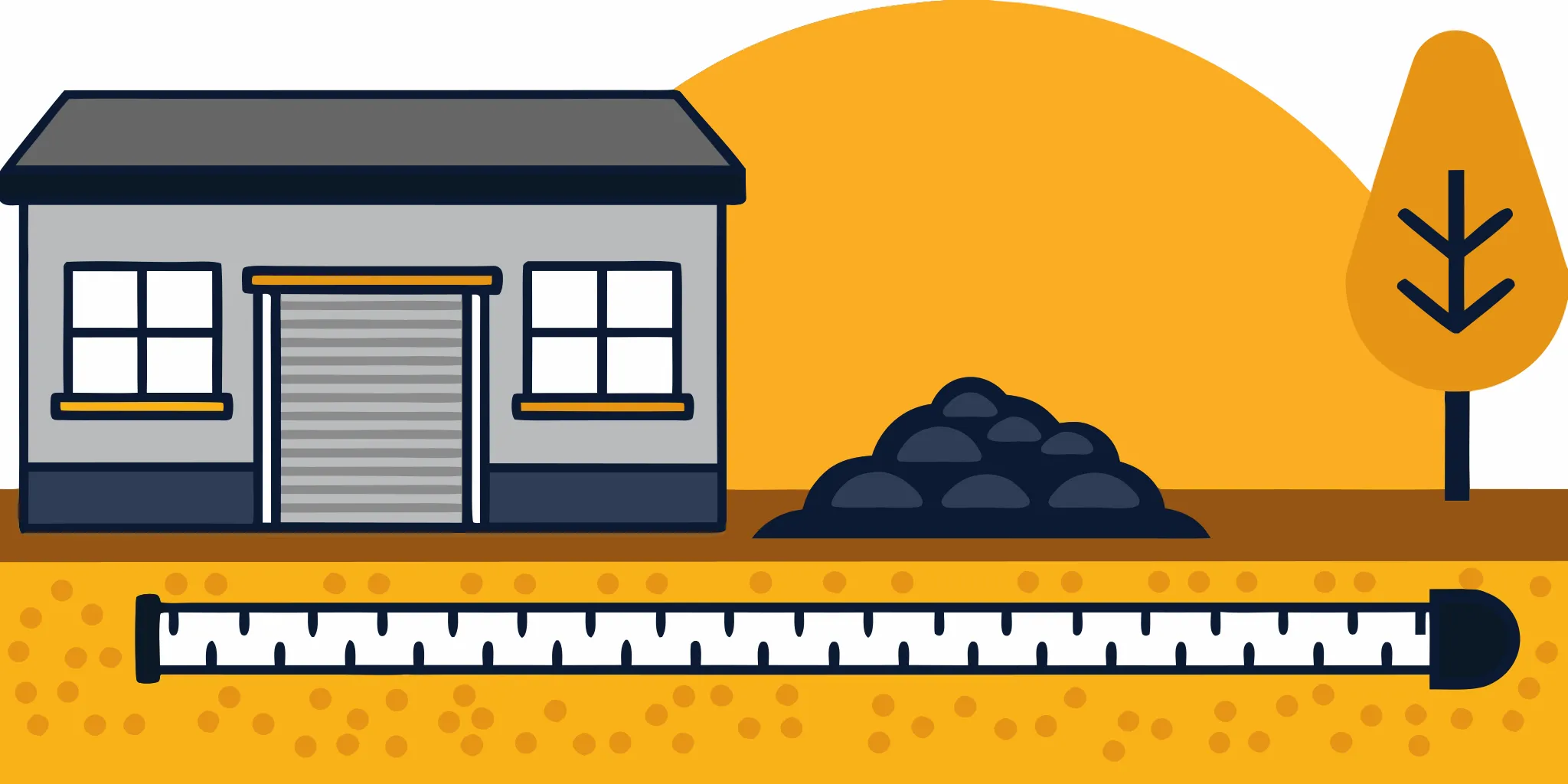
Calculate square footage first
Multiply the length by the width to get square footage. For rectangles, this is straightforward. A 50-foot by 10-foot driveway is 500 square feet. Then multiply the square footage by the depth in feet to find cubic feet.
Calculate each gravel layer separately
A new driveway may need more than one layer. Calculate the deeper base and thinner surface course separately because they may use different materials. Adding the layer totals together too early makes it harder to order the correct quantity of each product.
What Gravel Depth Should You Use?
The correct gravel depth depends on the project’s use, existing subgrade, drainage, and whether you are building a new base or refreshing a surface. A light walkway and a vehicle-bearing driveway do not need the same structure. Treat common depth ranges as planning baselines, not a substitute for site-specific advice.
| Project | Typical Planning Depth | Important Consideration |
|---|---|---|
| Driveway surface refresh | 2 to 4 inches | Confirm the existing base is stable |
| New driveway or parking area | 4 to 8 inches or site-specific design | Calculate multiple layers separately |
| Walkway or garden path | 2 to 4 inches | Plan edging and drainage |
| Pad or compacted base | 4 to 6 inches or site-specific design | Account for load and soil conditions |
Minnesota freeze-thaw cycles make drainage and a stable base especially important. Water held in soft soil can freeze, expand, and contribute to movement. A thicker gravel order alone will not solve a drainage or subgrade problem. Identify soft spots and plan the finished slope before ordering.
For a compactable driveway base, review Class 5 gravel delivery. Class 5 contains crushed material and fines that bind under mechanical compaction. If the project calls for recycled asphalt instead, compare the application with asphalt milling delivery.
Should You Add Extra Gravel to the Calculation?
A practical ordering allowance often ranges from about 10% to 20%, but it should reflect actual site conditions. Compaction, low spots, spillage, and measurement uncertainty can increase the quantity required. A flat, well-measured surface refresh may need less allowance than a new base over uneven ground.
For the 4.44-cubic-yard example, a 10% allowance produces 4.88 cubic yards. A 20% allowance produces 5.33 cubic yards. The right order also depends on available load sizes and whether a leftover pile would interfere with the property.
- Consider a larger allowance for uneven subgrade, uncertain depth, soft areas, or material that will be thoroughly compacted.
- Consider a smaller allowance for a precisely measured top-off over a stable, even surface.
- Do not guess at a major subgrade problem. Correct drainage and soft areas before relying on extra material.
Before ordering, request a Minnesota Aggregates quote to confirm material, yardage, delivery distance, and site-access details.
How Do You Measure an Irregular Gravel Area?
Measure an irregular area by dividing it into simple rectangles, triangles, or circles, calculating each shape’s square footage, and adding the totals. Then multiply the combined area by the planned depth in feet and divide by 27. This approach is easier to check than estimating one complex outline.
Rectangles and triangles
For each rectangle, multiply length by width. For each triangle, multiply base by height and divide by two. Add the square footage from every piece before applying the depth. Keep a sketch with measurements so the calculation can be reviewed during the quote process.
Curves and changing widths
For a curved driveway or path, divide it into shorter sections and measure the average width of each section. Multiply each section’s length by its average width, then add the section totals. More sections usually produce a more useful estimate.
Changing depths
If the required depth varies, calculate separate zones rather than using one depth for the whole project. This makes deep low areas visible in the estimate. It also helps identify places that may need subgrade correction rather than simply more gravel.
How Do Cubic Yards Convert to Tons?
Cubic yards measure volume, while tons measure weight. The conversion varies by material density, gradation, moisture, and compaction. Do not use one universal tons-per-yard number for every aggregate. Give the supplier the cubic-yard estimate and confirm the applicable conversion for the selected product.
Minnesota Aggregates lists Class 5 at approximately 1.4 tons per cubic yard, but other products may differ. For example, washed or clean materials contain different particle sizes and void spaces than a graded base containing fines. Moisture can also change delivered weight without changing the project’s geometric volume.
Keep both units in context:
- Cubic yards answer how much space the material must fill.
- Tons help the supplier and hauler plan material weight and truck capacity.
- Compacted depth describes the finished layer after placement and compaction.
Which Material Fits Your Gravel Project?
The right quantity is only useful when paired with the right material. Minnesota Aggregates supplies materials for bases, driveways, landscaping, leveling, and drainage-related work. Describe the project’s use and desired finished surface when requesting a quote instead of asking only for generic gravel.
Class 5 gravel
Class 5 is a compactable aggregate base used for driveways, roads, parking lots, building pads, and backfill. Its mix of crushed stone and fines is designed to form a stable surface under mechanical compaction.
Asphalt millings
Asphalt millings are recycled asphalt pieces used for driveways, parking pads, rural roads, and similar surfaces. The material can compact and bind over time with heat and traffic.
Sand and black dirt
Some projects need fill, leveling, or landscaping material rather than a compactable gravel surface. Review sand delivery and black dirt delivery when the job’s goal is drainage, grading, lawn establishment, or garden work.
How Should You Plan a Minnesota Gravel Delivery?
A smooth gravel delivery requires a confirmed quantity, suitable dump location, firm truck access, and enough clear space for the vehicle to maneuver and raise its bed. Delivery distance, yardage, material availability, and site access can affect the quote and schedule. Share constraints before the delivery day.
Check the access route
Walk the route a truck would take. Look for soft ground, tight gates, narrow turns, low branches, overhead wires, and restricted space. Confirm that the proposed route and dump location can support a loaded truck. Tell Minnesota Aggregates about concerns while planning the order, not when the truck arrives.
Mark the dump location
Choose a clear, firm location where the material will not block traffic or cover utilities, septic components, or drainage features. Mark the spot and provide clear placement instructions. The truck needs room to maneuver safely and raise its bed.
Plan for spreading and compaction
A delivered pile still needs to be spread, graded, and, for compactable projects, mechanically compacted. Review how to spread gravel on a driveway. For larger jobs, skid steer services can help with spreading, grading, leveling, and site preparation.
Common Gravel Calculation Mistakes
The most common quantity errors come from using inches as feet, skipping the division by 27, measuring only part of an irregular area, or applying one depth to every zone. A calculation can also be mathematically correct but operationally wrong if it ignores compaction, drainage, load sizes, or site access.
- Using inches directly in the formula: divide inches by 12 before multiplying.
- Stopping at cubic feet: divide by 27 to get cubic yards.
- Ordering one material for every layer: calculate and select each layer separately.
- Assuming more material fixes soft soil: address drainage and subgrade conditions first.
- Ignoring delivery access: confirm the truck route and dump location before scheduling.
- Rounding too early: keep decimals through the calculation, then discuss practical load sizing.
Frequently Asked Questions
How much gravel do I need for 100 square feet?
At a 2-inch depth, 100 square feet requires about 0.62 cubic yard before an allowance. At 4 inches, it requires about 1.23 cubic yards. Confirm the proper depth for the project’s use, then account for compaction and site conditions.
How many square feet does one cubic yard of gravel cover?
One cubic yard covers about 162 square feet at 2 inches deep, 108 square feet at 3 inches deep, or 81 square feet at 4 inches deep. Actual ordering needs can change with compaction and uneven ground.
How much Class 5 gravel do I need?
Calculate Class 5 in cubic yards using length x width x depth in feet / 27. Then discuss compaction, existing base conditions, and load sizing with Minnesota Aggregates. The company lists Class 5 at approximately 1.4 tons per cubic yard for weight planning.
Can Minnesota Aggregates help calculate gravel quantity?
Yes. Use the online cubic yardage calculator for an initial estimate, then request a quote to confirm the material, quantity, delivery distance, and access conditions for the project.
Turn Your Measurements Into a Delivery Plan
Measure carefully, calculate cubic yards, choose the right material and depth, and account for real site conditions. That process gives Minnesota Aggregates the information needed to help plan a dependable delivery without relying on a rough guess.
Request a free quote from Minnesota Aggregates or use the cubic yardage calculator to start planning your gravel project.