
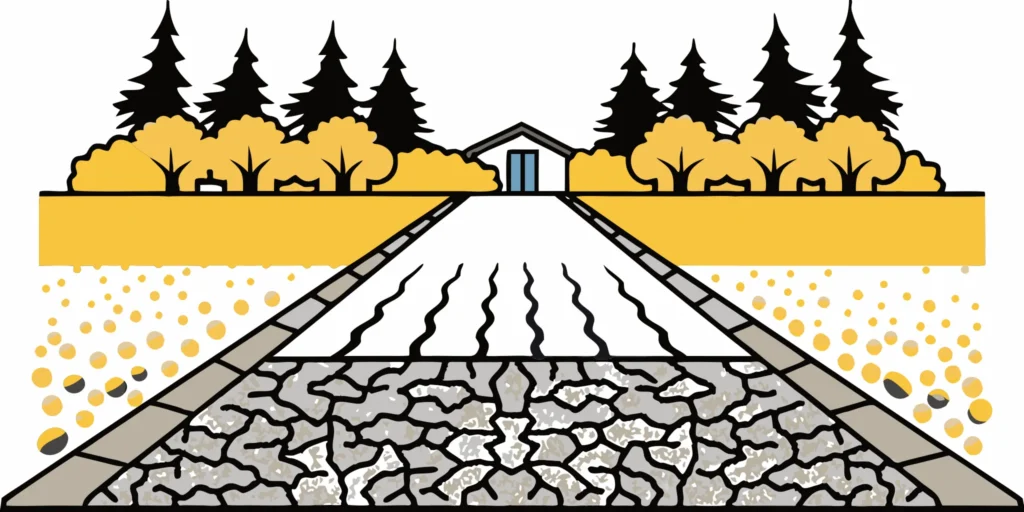
If you own a gravel driveway in Minnesota, you know the spring melt reveals more than just bare ground. Potholes appear like clockwork every year, turning a smooth surface into a bumpy mess. These gravel driveway potholes are not a sign of failure they are a sign that water, freezing temperatures, and traffic have done their seasonal work. The good news is that most potholes are preventable with the right base preparation, grading, and materials. And when they do appear on an existing driveway, fixing them the right way keeps them gone for years not just until the next rain.
This guide covers why Minnesota gravel driveways get potholes, how to prevent them with proper base prep and crown grading. And the step-by-step process for repairing existing potholes so your driveway stays smooth through our harsh winter freeze-thaw cycles.
Why Minnesota Gravel Driveways Get Potholes
Minnesota winters are among the most challenging for gravel driveway maintenance due to extreme temperature swings and high moisture. If you own a home or manage a commercial site in the Twin Cities, you know that keeping your driveway smooth is a constant job. Local driveways are highly prone to gravel driveway potholes because of how water, soil, and cold weather interact. Understanding these forces helps you make better repairs that last.
The Power of Minnesota Freeze-Thaw Cycles
Our local weather puts driveways through severe stress each year. Extreme freeze-thaw cycles in Minnesota expand and contract sub-surface materials under your driveway. When the ground freezes, water in the soil turns to ice. This process leads to soil expansion, which pushes the driveway structure upward. As the ice melts during warmer days, the soil contracts and leaves empty gaps beneath the gravel. Vehicles driving over these weak spots crush the surface layer, which causes it to cave in and form potholes.
How Frost Heave Breaks the Driveway Base
The damage starts deep below the surface layer. Freezing temperatures cause soil heave, breaking the base layer and creating gaps for water to pool. This soil movement weakens the foundation of the driveway. The Minnesota Department of Transportation notes that maintaining roadbed components is a main priority to keep surfaces smooth. When the base layer loses its strength, the surface gravel cannot support the weight of normal traffic.
Poor Drainage and Water Pooling
Water is the main enemy of any gravel surface. Crowning the driveway prevents water accumulation, which reduces the freeze-thaw damage that ruins driveways. A proper crown means the center of the driveway is slightly higher than the edges. This shape forces water to run off to the sides. Without a crown, rainwater pools in low spots and saturates the gravel. As tires roll through these wet areas, they displace the loose stone and wash away the binding fines, leaving a hole that grows larger with every rainstorm.
How to Prevent Potholes Before They Start
You can stop gravel driveway potholes from forming by setting up a strong foundation. Proper driveway prep is just as important as the top layer of stone. To keep your driveway smooth, you must build a solid, deep base that can withstand heavy traffic and wet weather.
Build a Strong Base Layer
A well-compacted, properly sloped base is essential for preventing potholes in your driveway. In Minnesota, the standard aggregate for base construction and surfacing is Class 5 gravel, which meets the MnDOT Spec 3138 crushed limestone standard. According to guidelines from the Minnesota Department of Transportation, roadbed components must be managed effectively to maintain a smooth surface.
Class 5 gravel is ideal because of its mix of particle sizes. This state spec ensures a consistent blend of fine dust and larger stone sizes. These different sizes allow the material to interlock and pack more firmly than single-sized stone, creating a tight surface that keeps water out and resists shifting.
Grade for Proper Water Drainage
Water is the main enemy of any gravel surface. To stop pooling, you must shape the top layer with a center crown. Crowning a gravel driveway is critical to ensure proper water drainage, which reduces water pooling that contributes to freeze-thaw damage. The surface should slope gently down from the center toward the outer edges.
This shape forces rainwater and melting snow to run off the sides instead of soaking into the ground. Soil compaction is a fundamental step in ensuring the stability of any driveway surface, as noted by the University of Minnesota Extension. Without proper compaction and a center crown, water will sit on the surface, soften the base, and quickly lead to sunken spots.
Maintain Your Gravel Driveway
Even a perfectly built driveway needs routine care to stay in top shape. You should inspect your driveway for drainage issues after heavy rainfall. This check shows you where water pools and where future damage might start. Addressing minor erosion and low spots early keeps small issues from turning into major repairs.
Regular maintenance and a steady grading schedule will keep your driveway solid for years. When you use the best driveway gravel types and maintain a clean slope, you prevent the deep sub-base failures that cause recurring potholes.
Step-by-Step: How to Fix Existing Potholes in Your Gravel Driveway
Fixing gravel driveway potholes requires more work than simply dumping loose rock into a wet dip. If you do not address the underlying compaction or drainage, the same potholes will quickly return. The Minnesota Department of Transportation emphasizes that proper surface repairs are key to maintaining long-term roadway performance. Setting aside time between July and September, when drier weather makes the material easy to compact, ensures a much more durable repair.
Prep and Excavate the Area
You must first clear the pothole of all leaves, loose mud, and soft organic debris so the new gravel can bond directly with the hard sub-base. Once clean, use a shovel or a pick to dig out the area. For a strong, lasting repair, dig the hole at least two feet wider than the actual pothole. This extra width breaks up the hard, slick sides of the old crater and creates a stable shoulder for your new materials.
Add and Compact Fresh Aggregate
Fill the excavated hole with high-quality aggregate. When fixing spreading gravel properly, you should use a material with a mix of fines and larger stone sizes to ensure it binds tight. Add the gravel in thin, three-inch layers. Compact each layer thoroughly with a hand tamper or a heavy lawn roller before adding the next. Packing the stone in stages prevents vehicle tires from immediately pushing the loose aggregate out of the hole.
Build a Crown for Proper Drainage
The final step is to shape the top layer so water runs off the driveway. Grade the surface so the center sits slightly higher than the edges. This slope, known as a crown, keeps water from pooling in the middle of your path. Without a proper crown, standing water will soak into the sub-base, softening the ground and causing new gravel driveway potholes to form during the next heavy rain.
- Clear the debris: Remove all leaves, standing water, and mud from the bottom of the pothole to ensure a solid bond.
- Excavate the hole: Dig out the pothole and make the cut at least two feet wider than the original damage.
- Add fresh material: Fill the hole with a quality aggregate mix in thin, three-inch lifts.
- Compact each layer: Pack down each layer of stone using a heavy hand tamper or mechanical plate compactor.
- Crown the surface: Shape the top layer to create a gentle slope from the center to the edges for water runoff.
Best Materials for Repairing and Resurfacing Minnesota Gravel Driveways
Choosing the right material is vital when you want to repair gravel driveway potholes or resurface your drive. Different aggregates offer unique benefits for binding, packing, and resisting harsh northern weather. Selecting the wrong material often means your repairs will wash away during the next heavy rain or spring thaw.
Class 5 Gravel
According to Minnesota standards, Class 5 gravel is the standard aggregate for base construction and surfacing. This crushed limestone has a precise mix of fine dust and larger stones. The blend allows the rocks to interlock under pressure to form a solid, steady base. This tight lock prevents shifting and helps stop water from pool-ing in low spots. You can read more about how this material works in our Class 5 gravel base guide.
Asphalt Millings
Recycled asphalt millings are top choices for durable Minnesota driveways. Millings are recycled chunks of asphalt that pack down tighter over time. As cars drive over them, the heat and weight help the material bond into a semi-solid pavement. This aggregate is highly resistant to water washouts and heavy snowplows. You can find out more about costs and usage details in our asphalt millings guide.
Surface Gravel
Surface gravel contains larger, rounded stones but lacks the fine binding dust found in Class 5. While it looks nice, it does not pack as tightly. Unbound stones shift easily under tires, which can lead to quick erosion. It is best used as a thin top decorative layer over a solid base rather than as a patch for deep holes.
Driveway Material Comparison
| Material Type | Compaction Level | Washout Resistance | Best Use Case |
|---|---|---|---|
| Class 5 Gravel | High | Medium-High | Standard driveway base and surfacing |
| Asphalt Millings | Very High | High | Durable, low-dust heavy traffic areas |
| Surface Gravel | Low | Low | Decorative top dressing only |
Patching vs Resurfacing
You do not always need to resurface the entire driveway when potholes appear. For a few isolated holes, spot-patching with well-compacted Class 5 limestone or asphalt millings is enough. However, if potholes cover more than a third of the driveway, adding a fresh, full layer of material is best. The Minnesota Department of Transportation notes that pothole patching is a standard maintenance practice to keep roadways safe and stable. Regular patching keeps small holes from turning into major base failures.
When to Call a Professional for Gravel Driveway Repair in Minnesota
Fixing a minor driveway problem is often a simple weekend job. However, some issues point to deep failures that a hand shovel cannot fix. If you ignore these signs, your driveway can suffer from constant damage. Knowing when to get professional help can save you time, money, and hassle.
Signs of Deep Base and Drainage Failures
If you see recurring gravel driveway potholes in the exact same spot, your driveway has a deep base or drainage problem. Simply throwing loose gravel into a recurring hole does not solve the root issue. You must address the sub-surface layers to keep water from pooling. When water saturates the base, the driveway loses its strength and sinks under vehicle tires.
According to the Minnesota Department of Transportation, the erosion of gravel base material at the shoulder slope is a common issue that causes surface instability and leads to potholes. If you notice large washed-out areas along the driveway edges after a heavy storm, manual patching is not enough. You will need a professional with heavy machinery to restore the slope and stability of the roadside shoulders.
The Benefits of Professional Skid Steer Grading
Major driveway restoration requires a uniform surface and proper compaction. It is very hard to distribute aggregate evenly by hand. Professional skid steer services ensure that new gravel is applied at a consistent depth and level. Experienced operators use these machines to spread the aggregate smoothly across the entire surface. This precise spreading is critical for creating a proper crown that sheds water.
Using a skid steer also makes it easy to repair deep base layers. A professional can excavate worn-out spots, add a new Class 5 gravel base, and pack it down tightly. This level of compaction is key to preventing the return of gravel driveway potholes. If your driveway needs major regrading, renting small tools will not give you the same durable results as professional equipment.
Frequently Asked Questions
Why do gravel driveway potholes keep coming back in the same spot?
Potholes return when you only fill the hole without fixing the underlying base. If the surrounding dirt remains loose or holds water, vehicle tires will quickly push the new gravel out. According to Minnesota Aggregates, a well-compacted and properly sloped base is essential to keep water from pooling and to prevent recurring surface damage.
What is the best gravel to use for filling potholes?
The best material is Class 5 gravel, which is crushed limestone. It contains a mix of fine dust and larger stone sizes. This mix allows the gravel to lock together tightly when compacted. The Minnesota Department of Transportation uses this specific aggregate specification for base construction and roadway repairs to ensure a stable and durable surface.
When is the best time of year to repair a gravel driveway?
The best window to repair your driveway is during the drier late summer months, specifically from July through September. Dry weather makes it much easier to clear debris, spread new aggregate, and compact the base. Working in dry conditions ensures the new gravel bonds properly with the existing sub-surface layers before the autumn rains and winter freeze-thaw cycles begin.
Can you fix gravel driveway potholes by just adding new gravel on top?
No, simply dumping gravel into a hole is a temporary fix that will fail quickly. You must first clear out all loose dirt, mud, and leaves from the hole. For a lasting repair, excavate the area at least two feet wider than the pothole itself. This extra space gives the new material a stable sub-base to bond with so it does not dislodge.
Ready to fix your gravel driveway potholes?
Minnesota weather is incredibly tough on gravel driveways. Leaving potholes unrepaired allows water to pool and quickly wash away the base layer, turning minor surface issues into major structural failures. Ignoring these holes now means you will deal with deeper ruts, vehicle damage, and much costlier repair bills after the next heavy rain or freeze-thaw cycle.
Working with professional help gets your driveway back in top shape before the damage spreads. Getting high-quality materials delivered on time and spread with professional equipment ensures a smooth, long-lasting surface that drains water properly. For driveway repairs that need equipment, see skid steer services for driveway repair. You can avoid the stress of a bumpy, muddy driveway and protect your property with a reliable repair.
Ready to restore your driveway?
Call (612) 772-3677
to get a free quote for gravel delivery and skid steer services.