
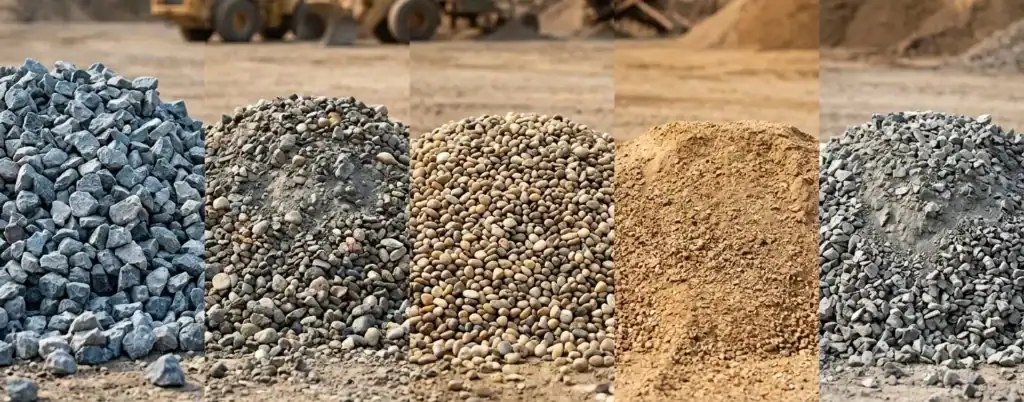
Recommended Gravel for Driveway: For a durable, long-lasting driveway in Minnesota, the recommended gravel for a driveway is a multi-layered aggregate system. For the base layer, use a 4- to 6-inch coarse 4-inch crushed stone foundation for heavy-duty load distribution and drainage. For the middle and surface layers, Class 5 gravel (a MnDOT-spec blend of crushed limestone and fines) is highly recommended because it self-compacts into an ultra-dense, stable foundation that resists rutting during harsh freeze-thaw cycles. For an affordable, pavement-like top layer, recycled asphalt millings are an exceptional, low-maintenance recommendation. Avoid rounded pea gravel for driving surfaces, as it shifts constantly under tire weight.
Key Takeaways
- Prioritize Angular Gravel for a No-Shift Surface: For a stable driveway that won’t develop ruts, choose angular, crushed stone like Class 5. Its jagged edges interlock tightly when compacted, providing a durable surface that stays put, unlike rounded pea gravel which constantly shifts under tires.
- Build in Layers for a Driveway That Lasts: A successful gravel driveway requires a deep foundation built with three distinct layers—a large stone base for drainage, a middle layer for stability, and a top layer for a smooth finish. Compacting each layer thoroughly is the most critical step to ensure a solid, long-lasting result.
- Match Your Gravel to Your Site’s Needs: Consider Minnesota’s climate, your soil type, and your driveway’s slope before ordering material. Proper planning ensures your gravel choice will handle water drainage and heavy traffic effectively, preventing common issues like erosion and sinking.
Your Guide to Driveway Gravel Types
Choosing the right gravel for your driveway can feel like a big decision, but getting it right from the start saves you a lot of headaches later. The term “gravel” covers a wide range of materials, each with its own texture, color, and purpose. The best one for your project depends on what you need it to do. Are you looking for a sturdy base that can handle heavy trucks? A smooth, attractive surface for a winding country lane? Or something that can stand up to Minnesota’s freeze-thaw cycles without turning into a muddy mess?
Understanding the differences will help you create a driveway that is not only functional and long-lasting but also fits the look of your property. From the angular pieces of crushed stone that lock together for stability to the finer particles of decomposed granite that create a firm surface, each type has a role to play. Let’s walk through the most common options so you can feel confident in your choice. Before you order, you can use a cubic yardage calculator to figure out exactly how much material you’ll need for your project.
Crushed Stone
If you’re looking for a durable, all-around performer, crushed stone is an excellent choice. Unlike rounded river rock, crushed stone is made by mechanically breaking down larger rocks, which results in angular, jagged edges. These edges are key—they allow the stones to interlock and compact, creating a stable surface that stays put. It’s a fantastic option for driveways that see a lot of traffic because it resists shifting and rutting. For the best results, a size between 3/4 inch and 1 inch is ideal. This size is large enough to promote good drainage, preventing water from pooling, yet small enough to create a relatively smooth driving surface.
Class 5 Gravel
Here in Minnesota, Class 5 gravel is a go-to for a reason. It’s a carefully blended mix of crushed stone and gravel dust, also called “fines.” This combination is its superpower. The larger stones provide strength, while the fines fill in the gaps, allowing the material to pack down into an incredibly dense and stable surface. This makes it perfect for driveway bases and top layers, as it provides excellent support and resists erosion. When you need a reliable foundation that can handle heavy vehicles and harsh weather, our Class 5 delivery service can bring this top-quality material right to your project site.
Pea Gravel
Pea gravel is popular for its smooth texture and attractive, multi-colored appearance. It’s made up of small, rounded stones about the size of a pea, hence the name. While it looks beautiful on garden paths and patios, it can be a bit tricky for driveways. Because the stones are round, they don’t lock together and can easily shift under the weight of tires, which can lead to ruts and make walking feel a bit like treading through sand. If you love the look of pea gravel, it’s best used on low-traffic driveways or walkways with solid edging to keep the stones contained.
Decomposed Granite
For a more natural, rustic look, decomposed granite is a great option. This material is a fine, gravel-like aggregate that comes from the natural weathering of solid granite. It often has a reddish-tan hue that blends beautifully into many landscapes. When compacted, decomposed granite forms a very stable, solid surface that is still permeable, meaning water can drain through it. It’s a popular choice for pathways, patios, and driveways where you want a firm surface without the hard look of pavement. It provides a soft, sandy texture that feels more organic than other gravel types.
Crusher Run
Crusher run is a blend of crushed stone and stone dust, similar to Class 5 gravel. It’s produced at the quarry and contains a mix of stone sizes, from about 3/4 inch down to fine dust. This variety allows the material to be compacted into a strong, interlocking base that is exceptionally stable. It’s often used as a foundational layer for driveways, roads, and building pads because it creates a solid, well-draining surface that won’t shift over time. Its ability to be tightly packed makes it one of the best materials for a driveway base before adding a more decorative top layer.
Driveway Gravel Comparison at a Glance
| Gravel type | Best use | Key advantage | Main drawback |
|---|---|---|---|
| Class 5 Gravel | Best all-around Minnesota driveway surface or base layer. | MnDOT-spec blend of crushed stone and fines that compacts into an ultra-dense, stable foundation. | Can become muddy during extreme wet periods if not properly graded. |
| Recycled Asphalt Millings | High-durability, low-cost top layer or complete driveway surface. | Self-compacting tar and oil naturally rebind under heat and traffic to mimic a paved surface. | Requires solar heat and compaction to fully harden; can track tar when fresh. |
| Crushed Stone | Base drainage layers or stable top driving surfaces (3/4″ to 1″ angular). | Jagged, angular edges interlock tightly to prevent shifting while promoting excellent water drainage. | Harder to walk on barefoot and requires periodic replenishment. |
| Crusher Run | Heavy-duty foundation base under top decorative gravel. | Densely graded blend of stone and dust that creates a rigid, load-bearing base. | Must be properly graded to avoid water pooling on the ultra-dense surface. |
| Pea Gravel | Decorative driveway borders, walkways, or low-traffic paths. | Smooth, rounded, multi-colored stones with high aesthetic appeal. | Rounded stones shift constantly under tires, creating ruts and making driving difficult. |
| Decomposed Granite | Rustic, light-use residential driveways or landscaping paths. | Natural, warm color hues (reddish-tan) that compact into a permeable, organic surface. | Highly prone to erosion in heavy rain and can track dust indoors. |
🚜 Need Aggregate Delivery in the Twin Cities Metro Area?
Minnesota Aggregates provides fast, on-time Class 5 gravel and recycled asphalt milling delivery directly to your residential or commercial job site.
Request a Free Quote Online or call us directly at (612) 772-3677 to schedule your delivery and keep your project on schedule!
Choosing the right gravel isn’t just about looks—it’s about finding a material that stands up to Minnesota weather and your daily traffic. Each type has its own strengths and weaknesses, from how well it packs down to how much maintenance it needs. Getting familiar with these differences will help you pick the perfect gravel for a driveway that is both functional and long-lasting. Let’s break down the good and the bad of the most common options so you can make a confident choice for your project.
Crushed Stone: The Good and the Bad
Crushed stone is a go-to for driveways because its angular, interlocking pieces create a remarkably stable surface. This durability makes it a solid choice for areas that see a lot of vehicle traffic. Once compacted, it stays put better than rounded stones. On the downside, those same sharp edges can be tough on your car’s tires over the long haul. You may also find that the stones can shift over time, especially with heavy use or on a slope, meaning you’ll need to replenish it periodically to keep the surface even and looking its best.
Class 5 Gravel: The Good and the Bad
If you’re looking for a reliable, all-around performer, Class 5 gravel is an excellent option. It’s a carefully formulated mix of crushed stone and gravel dust that compacts tightly, creating a firm and solid base that’s perfect for driveways. This composition also allows for great drainage, which is a huge plus during Minnesota’s wet seasons. While it’s a cost-effective and popular material, it does require some upkeep. Over time, you may need to regrade the surface to keep it level and prevent erosion from washing away the finer particles. For most homeowners and contractors, the performance of Class 5 delivery makes the minimal maintenance well worth it.
Pea Gravel: The Good and the Bad
Pea gravel is known for its smooth, rounded stones and beautiful, natural appearance. It’s comfortable to walk on and adds a polished, decorative touch to walkways and patios. However, those same qualities make it less than ideal for a primary driveway. The small, round stones don’t lock together, so they tend to shift and disperse easily under the weight of a vehicle. If you choose pea gravel for a driveway, you’ll absolutely need sturdy landscape edging or borders to keep it contained. It’s a fantastic choice for aesthetics in low-traffic zones but can become a maintenance headache in high-use areas.
Decomposed Granite: The Good and the Bad
Decomposed granite is a fine, gravel-like material that offers a soft, rustic look. It packs down well to form a stable, permeable surface that feels more natural than other gravels. It’s often used for garden paths, patios, and driveways where a more organic aesthetic is desired. The main drawback is its tendency to erode, especially during heavy rain. It can also be dusty when dry and may get tracked into your house on the bottom of your shoes. Regular maintenance is key to keeping a decomposed granite surface in good shape and preventing it from washing away over time.
Crusher Run: The Good and the Bad
Crusher run, sometimes called quarry process, is a blend of crushed stone and fine rock dust. Much like Class 5, it’s designed to pack down into an incredibly dense and stable base. This makes it an excellent foundation for driveways, sheds, and other structures. Its tight compaction provides a solid surface that holds up well under heavy loads. The biggest consideration with crusher run is drainage. Because it packs so tightly, you have to ensure the installation area is properly graded to prevent water from pooling on the surface. When installed correctly, it creates a durable and low-maintenance driveway.
How to Install a Gravel Driveway That Lasts
Building a gravel driveway that stands the test of time is less about the specific gravel you choose and more about how you install it. A solid, long-lasting driveway is built in layers, much like a layer cake. Each layer has a specific job, from providing a sturdy foundation to ensuring proper drainage. While it might seem like a big project, breaking it down into these steps makes it completely manageable. The secret is using different sizes of gravel to create a stable, interlocking base that won’t easily wash away or develop ruts.
The goal is to create a total thickness of about 12 to 18 inches. This depth ensures your driveway can handle the weight of vehicles and withstand Minnesota’s freeze-thaw cycles without shifting. Before you start, you’ll need to excavate the area to the desired depth, clearing away all grass, roots, and topsoil to create a clean slate. A properly prepared site is the first step toward a driveway you won’t have to worry about for years. Once you’re ready to start filling it in, you’ll work from the bottom up with three distinct layers.
Prepare the Base Layer
The base layer is the foundation of your entire driveway, so it’s arguably the most important. This first layer is all about strength and stability. You’ll want to use a larger, coarse gravel, typically around 4 inches in size. This creates a solid, interlocking base that distributes the weight of vehicles evenly and prevents the driveway from sinking into the ground over time. Spread this layer evenly across the excavated area, aiming for a depth of at least 4 to 6 inches. This hefty foundation is what gives your driveway its core strength and durability.
Install the Middle Layer
Once your base is in place, it’s time for the middle layer. This layer adds stability and is crucial for drainage. For this, you’ll use a medium-sized gravel, like a 3/4-inch crushed stone. A great option for this is Class 5 gravel, which is a mix of crushed rock and gravel fines that compacts tightly. Spread about 3 to 4 inches of this material over the base layer. This layer fills in the gaps left by the larger stones below, locking them into place while still allowing water to drain through effectively, which helps prevent erosion and frost heave.
Finish with the Top Layer
The top layer is what you’ll see and drive on every day, so it needs to be both functional and look good. This layer should consist of smaller gravel, typically around 3/4 inch to 1 inch. This size is comfortable to walk on and packs down well to create a smooth, stable surface for your vehicles. It also provides excellent traction and continues to allow for good drainage. You’ll apply a 3- to 4-inch layer of this finishing gravel, spreading it evenly to create a clean, uniform appearance for your new driveway.
Compact for Stability
This step is absolutely critical and should not be skipped. Each layer of gravel must be thoroughly compacted before you add the next one. Compaction is what locks the stones together, removes air pockets, and creates the dense, stable surface you need. For a project this size, you’ll want to use a heavy roller or a plate compactor. If you’re dealing with significant grading or need professional-grade compaction, our skid steer services can handle the heavy lifting. Properly compacting each layer ensures your driveway won’t develop ruts or soft spots down the road.
Get the Thickness Right
A well-built gravel driveway should have a total thickness of 12 to 18 inches when all is said and done. This depth might seem excessive, but it’s what guarantees a driveway that can handle daily traffic and Minnesota weather without failing. This total depth is achieved by combining your 4- to 6-inch base layer, 3- to 4-inch middle layer, and 3- to 4-inch top layer. To make sure you order the right amount of material for your project’s dimensions, you can use a cubic yardage calculator to figure out exactly how much gravel you’ll need for each layer.
Key Factors for Choosing Your Gravel
Picking the right gravel isn’t just about looks—it’s about building a driveway that stands up to Minnesota weather, heavy vehicles, and daily use. The perfect choice depends entirely on your specific property and needs. Before you place an order, taking a moment to think through a few key elements will make all the difference between a driveway that lasts a few years and one that lasts for decades. Considering factors like our intense climate, the slope of your driveway, and the type of soil you’re working with will help you select a material that performs exactly as it should. This planning step is your best defense against a mushy, rut-filled driveway. It ensures you invest in a solution that is both functional and durable, saving you from the headaches and costly repairs that come from choosing the wrong material. From the ground up, every decision impacts the final result. Let’s walk through the most important things to consider so you can choose your gravel with confidence and get the job done right the first time.
Consider Your Climate
Here in Minnesota, we know a thing or two about harsh weather. The freeze-thaw cycle can wreak havoc on driveways, causing them to heave and crack. That’s why drainage is your best friend. To prevent ice damage, you need a gravel base that allows water to drain away freely instead of pooling and freezing. Larger stones in your base layer are excellent for this. When water has a clear path to escape, you reduce the risk of ice buildup that can destroy your driveway from the ground up. Choosing a material that can handle heavy snow and spring melts is essential for a long-lasting surface.
Assess Soil and Drainage
The ground beneath your driveway plays a huge role in its stability. If you have heavy clay soil, which is common in many parts of Minnesota, water won’t drain easily. This can lead to a soft, mucky base and a driveway that sinks over time. Sandy soil, on the other hand, offers much better drainage. Before you lay any gravel, you need to assess your soil and plan accordingly. A solid foundation, often made of larger crushed rock, creates a stable base that separates your driveway from the native soil, ensuring proper drainage and preventing your top layer from disappearing into the mud.
Account for Your Driveway’s Slope
If your driveway is on a hill, your choice of gravel is critical. You need a material that will lock together and stay put, rather than washing away in the first heavy rainstorm. For sloped driveways, angular, interlocking gravel like crusher run or Class 5 gravel is the ideal choice. The mix of different-sized stones and fine particles in these materials allows them to compact into a tight, stable surface. Smooth, rounded stones like pea gravel should be avoided for sloped areas, as they will constantly shift and roll downhill, creating an unstable and messy situation.
Plan for Traffic and Vehicle Weight
Think about the types of vehicles that will use your driveway. A driveway that only sees a family car has different needs than one that has to support a heavy work truck, an RV, or frequent delivery vehicles. For heavier traffic, you’ll need a deeper base—typically at least 12 inches thick—to distribute the weight and prevent ruts from forming. This is achieved by building up layers of gravel, starting with a sub-base of larger stones. You can use our handy cubic yardage calculator to figure out exactly how much material you’ll need for each layer.
Choose Between Angular and Rounded Stone
This might be one of the most important decisions you make. For a stable driving surface, always choose angular, crushed stone. These stones have sharp, flat edges that interlock like puzzle pieces when compacted, creating a firm, solid surface that stays in place. Materials like recycled asphalt milling and crushed rock are perfect examples. In contrast, rounded stones like pea gravel or river rock are smooth and roll against each other. While they can be beautiful for decorative paths or garden beds, they are a poor choice for driveways because they shift constantly under the weight of tires.
Avoid Common Installation Mistakes
A great gravel driveway is all about proper installation. One of the biggest mistakes homeowners make is failing to compact each layer sufficiently. Every layer, from the large base rock to the finer top layer, must be thoroughly compacted with a heavy roller or plate compactor. This process is what locks the stones together and creates a durable, solid surface. Skipping this step will lead to a driveway that settles unevenly, develops soft spots, and requires constant repairs. Taking the time to prepare the base and compact each layer is the secret to a driveway that will last for decades.
Simple Maintenance for a Long-Lasting Driveway
A gravel driveway is a fantastic, low-maintenance choice, but that doesn’t mean it’s a “set it and forget it” project. A little bit of regular care will keep your driveway looking sharp and functioning properly for years to come, protecting your investment and preventing small issues from turning into big, expensive problems. Think of it like any other part of your property—a bit of seasonal attention goes a long way. By following a few simple steps, you can easily manage common issues like ruts, weeds, and drainage, ensuring your driveway remains a durable and attractive feature of your home or worksite. This proactive approach saves you money in the long run by avoiding major repairs that can result from neglect, such as a compromised base layer or severe erosion. A well-maintained gravel surface also improves curb appeal and provides a safer, smoother surface for both walking and driving. The good news is that none of these tasks are particularly difficult or time-consuming. It’s all about consistency and knowing what to look for as the seasons change.
Rake and Level Regularly
Over time, daily traffic and Minnesota weather will cause your gravel to shift, creating ruts, potholes, or low spots. The easiest way to combat this is to regularly rake the gravel back into place. Grab a sturdy landscape rake and pull the displaced stones from the high edges back into the ruts and bare patches. This simple task not only keeps the surface smooth for driving but also prevents water from pooling, which can soften the base layer underneath. For the best results, aim to do this every few months or after a heavy storm. A well-leveled surface ensures even wear and tear, extending the life of your driveway.
Replenish Gravel as Needed
Even with regular raking, you’ll eventually lose some gravel. It gets pressed into the soil, kicked to the side by tires, or carried away by snowplows in the winter. To maintain the driveway’s integrity, you should plan to add a fresh layer of gravel every few years. This keeps the driveway at its ideal thickness, protecting the foundational layers from damage. If you start to see the base material peeking through, it’s definitely time for a top-up. Using our Cubic Yardage Calculator can help you figure out exactly how much new material you’ll need to get your driveway back in top shape.
Manage Water and Drainage
Water is the number one enemy of a gravel driveway. If it doesn’t drain properly, it will erode the gravel and compromise the entire structure. Your driveway should have a slight “crown”—a center that’s higher than the edges—or a gentle slope to one side, allowing water to run off. Make sure the ditches or swales along the sides are clear of leaves, dirt, and other debris so water has a place to go. If you notice persistent puddles, you may need to regrade the area. Our skid steer services can help re-establish the proper slope to ensure water drains away effectively.
Keep Weeds Under Control
Nothing makes a crisp gravel driveway look unkempt faster than a crop of weeds. They can pop up anywhere, but they especially love the edges and less-traveled spots. Pulling them by hand is effective if you catch them early. For more stubborn growth, you can use a variety of weed killers or a propane weed torch. The best defense is a good offense; installing a quality geotextile fabric under the gravel is the most effective way to prevent weeds from ever taking root. But for an existing driveway, staying vigilant throughout the growing season is your best bet for keeping it looking clean.
Follow a Seasonal Maintenance Plan
Keeping your driveway in great condition is easy when you break it down by season. In the spring, inspect for any damage from winter plows, fill in potholes, and rake everything level. Summer is all about weed control and quick touch-ups after heavy rains. In the fall, clear away fallen leaves and debris to prevent them from breaking down and creating a compost bed for weeds. Before the first snowfall, do one last leveling to prepare for winter. This simple routine will ensure your Class 5 gravel or other aggregate driveway stays solid and stable year after year.
Frequently Asked Questions
What’s the best all-around gravel for a typical Minnesota driveway? For most driveways here in Minnesota, Class 5 gravel is the top contender. Its blend of crushed stone and fine particles allows it to compact into a dense, stable surface that holds up incredibly well against our freeze-thaw cycles. It provides excellent drainage and a solid foundation that resists rutting from heavy vehicles, making it a reliable and cost-effective choice for both base layers and top surfaces.
Can I just dump a new layer of gravel over my existing grass or old driveway? While it might seem like a tempting shortcut, you’ll get much better results by preparing the site properly. Simply adding gravel on top of grass or topsoil will lead to a soft, muddy driveway that sinks over time. For a lasting installation, you need to excavate the area to remove all organic material and build up the driveway in distinct, compacted layers. This layered approach is what creates the strength and stability needed to last for decades.
How do I keep gravel from washing away on my sloped driveway? The key to keeping gravel in place on a slope is using the right material. You need an angular, interlocking stone like crushed stone or Class 5 gravel. These materials lock together when compacted, creating a stable surface that resists erosion. Rounded stones like pea gravel will simply roll downhill. It’s also important to ensure the driveway has a slight crown and proper drainage along the sides so that heavy rain flows off the surface instead of washing your gravel away with it.
How often will I actually need to add more gravel? The timeline can vary depending on your traffic and our winter weather, but a good rule of thumb is to plan on adding a fresh top layer every 2 to 4 years. You’ll know it’s time when you start to notice significant low spots, ruts that don’t rake out easily, or if you can see the larger stones of the middle layer peeking through. This regular replenishment keeps the driveway surface smooth and protects the crucial foundation layers underneath.
Is a gravel driveway really cheaper than asphalt or concrete? Yes, the initial installation cost for a gravel driveway is significantly lower than for paving with asphalt or concrete. The materials are more affordable, and the installation process is less complex. While gravel does require some periodic maintenance like raking and adding a fresh layer every few years, these long-term costs are typically still much lower than the expense of repairing cracks or resurfacing a paved driveway.<strong>Recommended Gravel for Driveway</strong>: For a durable, long-lasting driveway in Minnesota, the <strong>recommended gravel for a driveway</strong> is a multi-layered aggregate system. For the base layer, use a 4- to 6-inch coarse 4-inch crushed stone foundation for heavy-duty load distribution and drainage. For the middle and surface layers, <a href=”https://mnaggregates.com/class-5-delivery/”><strong>Class 5 gravel</strong></a> (a MnDOT-spec blend of crushed limestone and fines) is highly recommended because it self-compacts into an ultra-dense, stable foundation that resists rutting during harsh freeze-thaw cycles. For an affordable, pavement-like top layer, <a href=”https://mnaggregates.com/asphalt-milling-delivery/”><strong>recycled asphalt millings</strong></a> are an exceptional, low-maintenance recommendation. Avoid rounded pea gravel for driving surfaces, as it shifts constantly under tire weight.
<div data-mega-embed=”true”>
<!– MN Aggregates CTA Block –>
<style>.mn-cta-wrapper{display:flex;justify-content:center;align-items:center;width:100%;margin:40px 0;padding:0 20px;box-sizing:border-box}.mn-cta-button{background-color:#0073e6;color:#fff!important;font-family:inherit;font-weight:700;font-size:24px;text-decoration:none!important;padding:15px 40px;border-radius:4px;border:none;cursor:pointer;display:inline-block;text-align:center;line-height:1.2;transition:background-color .3s ease,transform .2s ease;box-shadow:0 2px 5px rgba(0,0,0,.1)}.mn-cta-button:hover{background-color:#005bb5;transform:translateY(-2px);color:#fff!important}@media (max-width:600px){.mn-cta-button{width:100%;font-size:20px;padding:15px 20px}}</style>
<div class=”mn-cta-wrapper”><a class=”mn-cta-button” href=”https://mnaggregates.com/contact/”>Contact Us for a Free Quote!</a></div>
<!– End MN Aggregates CTA Block –>
</div>
<h2>Key Takeaways</h2>
<ul>
<li><strong>Prioritize Angular Gravel for a No-Shift Surface</strong>: For a stable driveway that won’t develop ruts, choose angular, crushed stone like Class 5. Its jagged edges interlock tightly when compacted, providing a durable surface that stays put, unlike rounded pea gravel which constantly shifts under tires.</li>
<li><strong>Build in Layers for a Driveway That Lasts</strong>: A successful gravel driveway requires a deep foundation built with three distinct layers—a large stone base for drainage, a middle layer for stability, and a top layer for a smooth finish. Compacting each layer thoroughly is the most critical step to ensure a solid, long-lasting result.</li>
<li><strong>Match Your Gravel to Your Site’s Needs</strong>: Consider Minnesota’s climate, your soil type, and your driveway’s slope before ordering material. Proper planning ensures your gravel choice will handle water drainage and heavy traffic effectively, preventing common issues like erosion and sinking.</li>
</ul>
<h2>Your Guide to Driveway Gravel Types</h2>
Choosing the right gravel for your driveway can feel like a big decision, but getting it right from the start saves you a lot of headaches later. The term “gravel” covers a wide range of materials, each with its own texture, color, and purpose. The best one for your project depends on what you need it to do. Are you looking for a sturdy base that can handle heavy trucks? A smooth, attractive surface for a winding country lane? Or something that can stand up to Minnesota’s freeze-thaw cycles without turning into a muddy mess?
Understanding the differences will help you create a driveway that is not only functional and long-lasting but also fits the look of your property. From the angular pieces of crushed stone that lock together for stability to the finer particles of decomposed granite that create a firm surface, each type has a role to play. Let’s walk through the most common options so you can feel confident in your choice. Before you order, you can use a cubic yardage calculator to figure out exactly how much material you’ll need for your project.
<h3>Crushed Stone</h3>
If you’re looking for a durable, all-around performer, crushed stone is an excellent choice. Unlike rounded river rock, crushed stone is made by mechanically breaking down larger rocks, which results in angular, jagged edges. These edges are key—they allow the stones to interlock and compact, creating a stable surface that stays put. It’s a fantastic option for driveways that see a lot of traffic because it resists shifting and rutting. For the best results, a size between 3/4 inch and 1 inch is ideal. This size is large enough to promote good drainage, preventing water from pooling, yet small enough to create a relatively smooth driving surface.
<h3>Class 5 Gravel</h3>
Here in Minnesota, Class 5 gravel is a go-to for a reason. It’s a carefully blended mix of crushed stone and gravel dust, also called “fines.” This combination is its superpower. The larger stones provide strength, while the fines fill in the gaps, allowing the material to pack down into an incredibly dense and stable surface. This makes it perfect for driveway bases and top layers, as it provides excellent support and resists erosion. When you need a reliable foundation that can handle heavy vehicles and harsh weather, our <a href=”https://mnaggregates.com/class-5-delivery/”>Class 5 delivery service</a> can bring this top-quality material right to your project site.
<h3>Pea Gravel</h3>
Pea gravel is popular for its smooth texture and attractive, multi-colored appearance. It’s made up of small, rounded stones about the size of a pea, hence the name. While it looks beautiful on garden paths and patios, it can be a bit tricky for driveways. Because the stones are round, they don’t lock together and can easily shift under the weight of tires, which can lead to ruts and make walking feel a bit like treading through sand. If you love the look of pea gravel, it’s best used on low-traffic driveways or walkways with solid edging to keep the stones contained.
<h3>Decomposed Granite</h3>
For a more natural, rustic look, decomposed granite is a great option. This material is a fine, gravel-like aggregate that comes from the natural weathering of solid granite. It often has a reddish-tan hue that blends beautifully into many landscapes. When compacted, decomposed granite forms a very stable, solid surface that is still permeable, meaning water can drain through it. It’s a popular choice for pathways, patios, and driveways where you want a firm surface without the hard look of pavement. It provides a soft, sandy texture that feels more organic than other gravel types.
<h3>Crusher Run</h3>
Crusher run is a blend of crushed stone and stone dust, similar to Class 5 gravel. It’s produced at the quarry and contains a mix of stone sizes, from about 3/4 inch down to fine dust. This variety allows the material to be compacted into a strong, interlocking base that is exceptionally stable. It’s often used as a foundational layer for driveways, roads, and building pads because it creates a solid, well-draining surface that won’t shift over time. Its ability to be tightly packed makes it one of the best materials for a driveway base before adding a more decorative top layer.
<h2>Driveway Gravel Comparison at a Glance</h2>
<table>
<thead>
<tr>
<th>Gravel type</th>
<th>Best use</th>
<th>Key advantage</th>
<th>Main drawback</th>
</tr>
</thead>
<tbody>
<tr>
<td><a href=”https://mnaggregates.com/class-5-delivery/”><strong>Class 5 Gravel</strong></a></td>
<td>Best all-around Minnesota driveway surface or base layer.</td>
<td>MnDOT-spec blend of crushed stone and fines that compacts into an ultra-dense, stable foundation.</td>
<td>Can become muddy during extreme wet periods if not properly graded.</td>
</tr>
<tr>
<td><a href=”https://mnaggregates.com/asphalt-milling-delivery/”><strong>Recycled Asphalt Millings</strong></a></td>
<td>High-durability, low-cost top layer or complete driveway surface.</td>
<td>Self-compacting tar and oil naturally rebind under heat and traffic to mimic a paved surface.</td>
<td>Requires solar heat and compaction to fully harden; can track tar when fresh.</td>
</tr>
<tr>
<td>Crushed Stone</td>
<td>Base drainage layers or stable top driving surfaces (3/4″ to 1″ angular).</td>
<td>Jagged, angular edges interlock tightly to prevent shifting while promoting excellent water drainage.</td>
<td>Harder to walk on barefoot and requires periodic replenishment.</td>
</tr>
<tr>
<td>Crusher Run</td>
<td>Heavy-duty foundation base under top decorative gravel.</td>
<td>Densely graded blend of stone and dust that creates a rigid, load-bearing base.</td>
<td>Must be properly graded to avoid water pooling on the ultra-dense surface.</td>
</tr>
<tr>
<td>Pea Gravel</td>
<td>Decorative driveway borders, walkways, or low-traffic paths.</td>
<td>Smooth, rounded, multi-colored stones with high aesthetic appeal.</td>
<td>Rounded stones shift constantly under tires, creating ruts and making driving difficult.</td>
</tr>
<tr>
<td>Decomposed Granite</td>
<td>Rustic, light-use residential driveways or landscaping paths.</td>
<td>Natural, warm color hues (reddish-tan) that compact into a permeable, organic surface.</td>
<td>Highly prone to erosion in heavy rain and can track dust indoors.</td>
</tr>
</tbody>
</table>
<div data-mega-embed=”true”>
<p><strong>🚜 Need Aggregate Delivery in the Twin Cities Metro Area?</strong></p>
<p>Minnesota Aggregates provides fast, on-time Class 5 gravel and recycled asphalt milling delivery directly to your residential or commercial job site.</p>
<p><strong><a href=”https://mnaggregates.com/contact/”>Request a Free Quote Online</a> or call us directly at <a href=”tel:6127723677″>(612) 772-3677</a> to schedule your delivery and keep your project on schedule!</strong></p>
</div>
Choosing the right gravel isn’t just about looks—it’s about finding a material that stands up to Minnesota weather and your daily traffic. Each type has its own strengths and weaknesses, from how well it packs down to how much maintenance it needs. Getting familiar with these differences will help you pick the perfect gravel for a driveway that is both functional and long-lasting. Let’s break down the good and the bad of the most common options so you can make a confident choice for your project.
<h3>Crushed Stone: The Good and the Bad</h3>
Crushed stone is a go-to for driveways because its angular, interlocking pieces create a remarkably stable surface. This durability makes it a solid choice for areas that see a lot of vehicle traffic. Once compacted, it stays put better than rounded stones. On the downside, those same sharp edges can be tough on your car’s tires over the long haul. You may also find that the stones can shift over time, especially with heavy use or on a slope, meaning you’ll need to replenish it periodically to keep the surface even and looking its best.
<h3>Class 5 Gravel: The Good and the Bad</h3>
If you’re looking for a reliable, all-around performer, Class 5 gravel is an excellent option. It’s a carefully formulated mix of crushed stone and gravel dust that compacts tightly, creating a firm and solid base that’s perfect for driveways. This composition also allows for great drainage, which is a huge plus during Minnesota’s wet seasons. While it’s a cost-effective and popular material, it does require some upkeep. Over time, you may need to regrade the surface to keep it level and prevent erosion from washing away the finer particles. For most homeowners and contractors, the performance of Class 5 delivery makes the minimal maintenance well worth it.
<h3>Pea Gravel: The Good and the Bad</h3>
Pea gravel is known for its smooth, rounded stones and beautiful, natural appearance. It’s comfortable to walk on and adds a polished, decorative touch to walkways and patios. However, those same qualities make it less than ideal for a primary driveway. The small, round stones don’t lock together, so they tend to shift and disperse easily under the weight of a vehicle. If you choose pea gravel for a driveway, you’ll absolutely need sturdy landscape edging or borders to keep it contained. It’s a fantastic choice for aesthetics in low-traffic zones but can become a maintenance headache in high-use areas.
<h3>Decomposed Granite: The Good and the Bad</h3>
Decomposed granite is a fine, gravel-like material that offers a soft, rustic look. It packs down well to form a stable, permeable surface that feels more natural than other gravels. It’s often used for garden paths, patios, and driveways where a more organic aesthetic is desired. The main drawback is its tendency to erode, especially during heavy rain. It can also be dusty when dry and may get tracked into your house on the bottom of your shoes. Regular maintenance is key to keeping a decomposed granite surface in good shape and preventing it from washing away over time.
<h3>Crusher Run: The Good and the Bad</h3>
Crusher run, sometimes called quarry process, is a blend of crushed stone and fine rock dust. Much like Class 5, it’s designed to pack down into an incredibly dense and stable base. This makes it an excellent foundation for driveways, sheds, and other structures. Its tight compaction provides a solid surface that holds up well under heavy loads. The biggest consideration with crusher run is drainage. Because it packs so tightly, you have to ensure the installation area is properly graded to prevent water from pooling on the surface. When installed correctly, it creates a durable and low-maintenance driveway.
<h2>How to Install a Gravel Driveway That Lasts</h2>
Building a gravel driveway that stands the test of time is less about the specific gravel you choose and more about how you install it. A solid, long-lasting driveway is built in layers, much like a layer cake. Each layer has a specific job, from providing a sturdy foundation to ensuring proper drainage. While it might seem like a big project, breaking it down into these steps makes it completely manageable. The secret is using different sizes of gravel to create a stable, interlocking base that won’t easily wash away or develop ruts.
The goal is to create a total thickness of about 12 to 18 inches. This depth ensures your driveway can handle the weight of vehicles and withstand Minnesota’s freeze-thaw cycles without shifting. Before you start, you’ll need to excavate the area to the desired depth, clearing away all grass, roots, and topsoil to create a clean slate. A properly prepared site is the first step toward a driveway you won’t have to worry about for years. Once you’re ready to start filling it in, you’ll work from the bottom up with three distinct layers.
<h3>Prepare the Base Layer</h3>
The base layer is the foundation of your entire driveway, so it’s arguably the most important. This first layer is all about strength and stability. You’ll want to use a larger, coarse gravel, typically around 4 inches in size. This creates a solid, interlocking base that distributes the weight of vehicles evenly and prevents the driveway from sinking into the ground over time. Spread this layer evenly across the excavated area, aiming for a depth of at least 4 to 6 inches. This hefty foundation is what gives your driveway its core strength and durability.
<h3>Install the Middle Layer</h3>
Once your base is in place, it’s time for the middle layer. This layer adds stability and is crucial for drainage. For this, you’ll use a medium-sized gravel, like a 3/4-inch crushed stone. A great option for this is Class 5 gravel, which is a mix of crushed rock and gravel fines that compacts tightly. Spread about 3 to 4 inches of this material over the base layer. This layer fills in the gaps left by the larger stones below, locking them into place while still allowing water to drain through effectively, which helps prevent erosion and frost heave.
<h3>Finish with the Top Layer</h3>
The top layer is what you’ll see and drive on every day, so it needs to be both functional and look good. This layer should consist of smaller gravel, typically around 3/4 inch to 1 inch. This size is comfortable to walk on and packs down well to create a smooth, stable surface for your vehicles. It also provides excellent traction and continues to allow for good drainage. You’ll apply a 3- to 4-inch layer of this finishing gravel, spreading it evenly to create a clean, uniform appearance for your new driveway.
<h3>Compact for Stability</h3>
This step is absolutely critical and should not be skipped. Each layer of gravel must be thoroughly compacted before you add the next one. Compaction is what locks the stones together, removes air pockets, and creates the dense, stable surface you need. For a project this size, you’ll want to use a heavy roller or a plate compactor. If you’re dealing with significant grading or need professional-grade compaction, our skid steer services can handle the heavy lifting. Properly compacting each layer ensures your driveway won’t develop ruts or soft spots down the road.
<h3>Get the Thickness Right</h3>
A well-built gravel driveway should have a total thickness of 12 to 18 inches when all is said and done. This depth might seem excessive, but it’s what guarantees a driveway that can handle daily traffic and Minnesota weather without failing. This total depth is achieved by combining your 4- to 6-inch base layer, 3- to 4-inch middle layer, and 3- to 4-inch top layer. To make sure you order the right amount of material for your project’s dimensions, you can use a cubic yardage calculator to figure out exactly how much gravel you’ll need for each layer.
<h2>Key Factors for Choosing Your Gravel</h2>
Picking the right gravel isn’t just about looks—it’s about building a driveway that stands up to Minnesota weather, heavy vehicles, and daily use. The perfect choice depends entirely on your specific property and needs. Before you place an order, taking a moment to think through a few key elements will make all the difference between a driveway that lasts a few years and one that lasts for decades. Considering factors like our intense climate, the slope of your driveway, and the type of soil you’re working with will help you select a material that performs exactly as it should. This planning step is your best defense against a mushy, rut-filled driveway. It ensures you invest in a solution that is both functional and durable, saving you from the headaches and costly repairs that come from choosing the wrong material. From the ground up, every decision impacts the final result. Let’s walk through the most important things to consider so you can choose your gravel with confidence and get the job done right the first time.
<h3>Consider Your Climate</h3>
Here in Minnesota, we know a thing or two about harsh weather. The freeze-thaw cycle can wreak havoc on driveways, causing them to heave and crack. That’s why drainage is your best friend. To prevent ice damage, you need a gravel base that allows water to drain away freely instead of pooling and freezing. Larger stones in your base layer are excellent for this. When water has a clear path to escape, you reduce the risk of ice buildup that can destroy your driveway from the ground up. Choosing a material that can handle heavy snow and spring melts is essential for a long-lasting surface.
<h3>Assess Soil and Drainage</h3>
The ground beneath your driveway plays a huge role in its stability. If you have heavy clay soil, which is common in many parts of Minnesota, water won’t drain easily. This can lead to a soft, mucky base and a driveway that sinks over time. Sandy soil, on the other hand, offers much better drainage. Before you lay any gravel, you need to assess your soil and plan accordingly. A solid foundation, often made of larger crushed rock, creates a stable base that separates your driveway from the native soil, ensuring proper drainage and preventing your top layer from disappearing into the mud.
<h3>Account for Your Driveway’s Slope</h3>
If your driveway is on a hill, your choice of gravel is critical. You need a material that will lock together and stay put, rather than washing away in the first heavy rainstorm. For sloped driveways, angular, interlocking gravel like crusher run or Class 5 gravel is the ideal choice. The mix of different-sized stones and fine particles in these materials allows them to compact into a tight, stable surface. Smooth, rounded stones like pea gravel should be avoided for sloped areas, as they will constantly shift and roll downhill, creating an unstable and messy situation.
<h3>Plan for Traffic and Vehicle Weight</h3>
Think about the types of vehicles that will use your driveway. A driveway that only sees a family car has different needs than one that has to support a heavy work truck, an RV, or frequent delivery vehicles. For heavier traffic, you’ll need a deeper base—typically at least 12 inches thick—to distribute the weight and prevent ruts from forming. This is achieved by building up layers of gravel, starting with a sub-base of larger stones. You can use our handy cubic yardage calculator to figure out exactly how much material you’ll need for each layer.
<h3>Choose Between Angular and Rounded Stone</h3>
This might be one of the most important decisions you make. For a stable driving surface, always choose angular, crushed stone. These stones have sharp, flat edges that interlock like puzzle pieces when compacted, creating a firm, solid surface that stays in place. Materials like recycled asphalt milling and crushed rock are perfect examples. In contrast, rounded stones like pea gravel or river rock are smooth and roll against each other. While they can be beautiful for decorative paths or garden beds, they are a poor choice for driveways because they shift constantly under the weight of tires.
<h3>Avoid Common Installation Mistakes</h3>
A great gravel driveway is all about proper installation. One of the biggest mistakes homeowners make is failing to compact each layer sufficiently. Every layer, from the large base rock to the finer top layer, must be thoroughly compacted with a heavy roller or plate compactor. This process is what locks the stones together and creates a durable, solid surface. Skipping this step will lead to a driveway that settles unevenly, develops soft spots, and requires constant repairs. Taking the time to prepare the base and compact each layer is the secret to a driveway that will last for decades.
<h2>Simple Maintenance for a Long-Lasting Driveway</h2>
A gravel driveway is a fantastic, low-maintenance choice, but that doesn’t mean it’s a “set it and forget it” project. A little bit of regular care will keep your driveway looking sharp and functioning properly for years to come, protecting your investment and preventing small issues from turning into big, expensive problems. Think of it like any other part of your property—a bit of seasonal attention goes a long way. By following a few simple steps, you can easily manage common issues like ruts, weeds, and drainage, ensuring your driveway remains a durable and attractive feature of your home or worksite. This proactive approach saves you money in the long run by avoiding major repairs that can result from neglect, such as a compromised base layer or severe erosion. A well-maintained gravel surface also improves curb appeal and provides a safer, smoother surface for both walking and driving. The good news is that none of these tasks are particularly difficult or time-consuming. It’s all about consistency and knowing what to look for as the seasons change.
<h3>Rake and Level Regularly</h3>
Over time, daily traffic and Minnesota weather will cause your gravel to shift, creating ruts, potholes, or low spots. The easiest way to combat this is to regularly rake the gravel back into place. Grab a sturdy landscape rake and pull the displaced stones from the high edges back into the ruts and bare patches. This simple task not only keeps the surface smooth for driving but also prevents water from pooling, which can soften the base layer underneath. For the best results, aim to do this every few months or after a heavy storm. A well-leveled surface ensures even wear and tear, extending the life of your driveway.
<h3>Replenish Gravel as Needed</h3>
Even with regular raking, you’ll eventually lose some gravel. It gets pressed into the soil, kicked to the side by tires, or carried away by snowplows in the winter. To maintain the driveway’s integrity, you should plan to add a fresh layer of gravel every few years. This keeps the driveway at its ideal thickness, protecting the foundational layers from damage. If you start to see the base material peeking through, it’s definitely time for a top-up. Using our Cubic Yardage Calculator can help you figure out exactly how much new material you’ll need to get your driveway back in top shape.
<h3>Manage Water and Drainage</h3>
Water is the number one enemy of a gravel driveway. If it doesn’t drain properly, it will erode the gravel and compromise the entire structure. Your driveway should have a slight “crown”—a center that’s higher than the edges—or a gentle slope to one side, allowing water to run off. Make sure the ditches or swales along the sides are clear of leaves, dirt, and other debris so water has a place to go. If you notice persistent puddles, you may need to regrade the area. Our skid steer services can help re-establish the proper slope to ensure water drains away effectively.
<h3>Keep Weeds Under Control</h3>
Nothing makes a crisp gravel driveway look unkempt faster than a crop of weeds. They can pop up anywhere, but they especially love the edges and less-traveled spots. Pulling them by hand is effective if you catch them early. For more stubborn growth, you can use a variety of weed killers or a propane weed torch. The best defense is a good offense; installing a quality geotextile fabric under the gravel is the most effective way to prevent weeds from ever taking root. But for an existing driveway, staying vigilant throughout the growing season is your best bet for keeping it looking clean.
<h3>Follow a Seasonal Maintenance Plan</h3>
Keeping your driveway in great condition is easy when you break it down by season. In the spring, inspect for any damage from winter plows, fill in potholes, and rake everything level. Summer is all about weed control and quick touch-ups after heavy rains. In the fall, clear away fallen leaves and debris to prevent them from breaking down and creating a compost bed for weeds. Before the first snowfall, do one last leveling to prepare for winter. This simple routine will ensure your Class 5 gravel or other aggregate driveway stays solid and stable year after year.
<div data-mega-embed=”true”>
<!– MN Aggregates CTA Block –>
<style>.mn-cta-wrapper{display:flex;justify-content:center;align-items:center;width:100%;margin:40px 0;padding:0 20px;box-sizing:border-box}.mn-cta-button{background-color:#0073e6;color:#fff!important;font-family:inherit;font-weight:700;font-size:24px;text-decoration:none!important;padding:15px 40px;border-radius:4px;border:none;cursor:pointer;display:inline-block;text-align:center;line-height:1.2;transition:background-color .3s ease,transform .2s ease;box-shadow:0 2px 5px rgba(0,0,0,.1)}.mn-cta-button:hover{background-color:#005bb5;transform:translateY(-2px);color:#fff!important}@media (max-width:600px){.mn-cta-button{width:100%;font-size:20px;padding:15px 20px}}</style>
<div class=”mn-cta-wrapper”><a class=”mn-cta-button” href=”https://mnaggregates.com/contact/”>Contact Us for a Free Quote!</a></div>
<!– End MN Aggregates CTA Block –>
</div>
<h2>Frequently Asked Questions</h2>
<strong>What’s the best all-around gravel for a typical Minnesota driveway?</strong> For most driveways here in Minnesota, Class 5 gravel is the top contender. Its blend of crushed stone and fine particles allows it to compact into a dense, stable surface that holds up incredibly well against our freeze-thaw cycles. It provides excellent drainage and a solid foundation that resists rutting from heavy vehicles, making it a reliable and cost-effective choice for both base layers and top surfaces.
<strong>Can I just dump a new layer of gravel over my existing grass or old driveway?</strong> While it might seem like a tempting shortcut, you’ll get much better results by preparing the site properly. Simply adding gravel on top of grass or topsoil will lead to a soft, muddy driveway that sinks over time. For a lasting installation, you need to excavate the area to remove all organic material and build up the driveway in distinct, compacted layers. This layered approach is what creates the strength and stability needed to last for decades.
<strong>How do I keep gravel from washing away on my sloped driveway?</strong> The key to keeping gravel in place on a slope is using the right material. You need an angular, interlocking stone like crushed stone or Class 5 gravel. These materials lock together when compacted, creating a stable surface that resists erosion. Rounded stones like pea gravel will simply roll downhill. It’s also important to ensure the driveway has a slight crown and proper drainage along the sides so that heavy rain flows off the surface instead of washing your gravel away with it.
<strong>How often will I actually need to add more gravel?</strong> The timeline can vary depending on your traffic and our winter weather, but a good rule of thumb is to plan on adding a fresh top layer every 2 to 4 years. You’ll know it’s time when you start to notice significant low spots, ruts that don’t rake out easily, or if you can see the larger stones of the middle layer peeking through. This regular replenishment keeps the driveway surface smooth and protects the crucial foundation layers underneath.
<strong>Is a gravel driveway really cheaper than asphalt or concrete?</strong> Yes, the initial installation cost for a gravel driveway is significantly lower than for paving with asphalt or concrete. The materials are more affordable, and the installation process is less complex. While gravel does require some periodic maintenance like raking and adding a fresh layer every few years, these long-term costs are typically still much lower than the expense of repairing cracks or resurfacing a paved driveway.For most Minnesota driveways, Class 5 gravel is the best all-around choice. Its blend of angular crushed stone and fines compacts into a stable surface that handles traffic and freeze-thaw cycles. On soft or poorly drained sites, use larger angular stone beneath it as a base. Avoid pea gravel for busy driveways because its rounded stones shift under tires.
Key Takeaways
- Prioritize Angular Gravel for a No-Shift Surface: For a stable driveway that won’t develop ruts, choose angular, crushed stone like Class 5. Its jagged edges interlock tightly when compacted, providing a durable surface that stays put, unlike rounded pea gravel which constantly shifts under tires.
- Build in Layers for a Driveway That Lasts: A successful gravel driveway requires a deep foundation built with three distinct layers—a large stone base for drainage, a middle layer for stability, and a top layer for a smooth finish. Compacting each layer thoroughly is the most critical step to ensure a solid, long-lasting result.
- Match Your Gravel to Your Site’s Needs: Consider Minnesota’s climate, your soil type, and your driveway’s slope before ordering material. Proper planning ensures your gravel choice will handle water drainage and heavy traffic effectively, preventing common issues like erosion and sinking.
Your Guide to Driveway Gravel Types
Choosing the right gravel for your driveway can feel like a big decision, but getting it right from the start saves you a lot of headaches later. The term “gravel” covers a wide range of materials, each with its own texture, color, and purpose. The best one for your project depends on what you need it to do. Are you looking for a sturdy base that can handle heavy trucks? A smooth, attractive surface for a winding country lane? Or something that can stand up to Minnesota’s freeze-thaw cycles without turning into a muddy mess?
Understanding the differences will help you create a driveway that is not only functional and long-lasting but also fits the look of your property. From the angular pieces of crushed stone that lock together for stability to the finer particles of decomposed granite that create a firm surface, each type has a role to play. Let’s walk through the most common options so you can feel confident in your choice. Before you order, you can use a cubic yardage calculator to figure out exactly how much material you’ll need for your project.
Crushed Stone
If you’re looking for a durable, all-around performer, crushed stone is an excellent choice. Unlike rounded river rock, crushed stone is made by mechanically breaking down larger rocks, which results in angular, jagged edges. These edges are key—they allow the stones to interlock and compact, creating a stable surface that stays put. It’s a fantastic option for driveways that see a lot of traffic because it resists shifting and rutting. For the best results, a size between 3/4 inch and 1 inch is ideal. This size is large enough to promote good drainage, preventing water from pooling, yet small enough to create a relatively smooth driving surface.
Class 5 Gravel
Here in Minnesota, Class 5 gravel is a go-to for a reason. It’s a carefully blended mix of crushed stone and gravel dust, also called “fines.” This combination is its superpower. The larger stones provide strength, while the fines fill in the gaps, allowing the material to pack down into an incredibly dense and stable surface. This makes it perfect for driveway bases and top layers, as it provides excellent support and resists erosion. When you need a reliable foundation that can handle heavy vehicles and harsh weather, our Class 5 delivery service can bring this top-quality material right to your project site.
Pea Gravel
Pea gravel is popular for its smooth texture and attractive, multi-colored appearance. It’s made up of small, rounded stones about the size of a pea, hence the name. While it looks beautiful on garden paths and patios, it can be a bit tricky for driveways. Because the stones are round, they don’t lock together and can easily shift under the weight of tires, which can lead to ruts and make walking feel a bit like treading through sand. If you love the look of pea gravel, it’s best used on low-traffic driveways or walkways with solid edging to keep the stones contained.
Decomposed Granite
For a more natural, rustic look, decomposed granite is a great option. This material is a fine, gravel-like aggregate that comes from the natural weathering of solid granite. It often has a reddish-tan hue that blends beautifully into many landscapes. When compacted, decomposed granite forms a very stable, solid surface that is still permeable, meaning water can drain through it. It’s a popular choice for pathways, patios, and driveways where you want a firm surface without the hard look of pavement. It provides a soft, sandy texture that feels more organic than other gravel types.
Crusher Run
Crusher run is a blend of crushed stone and stone dust, similar to Class 5 gravel. It’s produced at the quarry and contains a mix of stone sizes, from about 3/4 inch down to fine dust. This variety allows the material to be compacted into a strong, interlocking base that is exceptionally stable. It’s often used as a foundational layer for driveways, roads, and building pads because it creates a solid, well-draining surface that won’t shift over time. Its ability to be tightly packed makes it one of the best materials for a driveway base before adding a more decorative top layer.
Driveway Gravel Comparison at a Glance
| Gravel type | Best use | Key advantage | Main drawback |
|---|---|---|---|
| Class 5 gravel | Best all-around Minnesota driveway surface or base | Compacts firmly and handles traffic well | Needs occasional grading |
| Crushed stone | Stable surface or drainage layer | Angular pieces interlock and resist shifting | Rougher surface and may need replenishing |
| Crusher run | Heavy-duty driveway base | Dense, load-bearing compaction | Requires careful grading for drainage |
| Pea gravel | Decorative, low-traffic areas | Smooth, attractive finish | Rounded stones shift under tires |
| Decomposed granite | Rustic, lighter-use driveways | Natural look and permeable surface | Can erode or become dusty |
Choosing the right gravel isn’t just about looks—it’s about finding a material that stands up to Minnesota weather and your daily traffic. Each type has its own strengths and weaknesses, from how well it packs down to how much maintenance it needs. Getting familiar with these differences will help you pick the perfect gravel for a driveway that is both functional and long-lasting. Let’s break down the good and the bad of the most common options so you can make a confident choice for your project.
Crushed Stone: The Good and the Bad
Crushed stone is a go-to for driveways because its angular, interlocking pieces create a remarkably stable surface. This durability makes it a solid choice for areas that see a lot of vehicle traffic. Once compacted, it stays put better than rounded stones. On the downside, those same sharp edges can be tough on your car’s tires over the long haul. You may also find that the stones can shift over time, especially with heavy use or on a slope, meaning you’ll need to replenish it periodically to keep the surface even and looking its best.
Class 5 Gravel: The Good and the Bad
If you’re looking for a reliable, all-around performer, Class 5 gravel is an excellent option. It’s a carefully formulated mix of crushed stone and gravel dust that compacts tightly, creating a firm and solid base that’s perfect for driveways. This composition also allows for great drainage, which is a huge plus during Minnesota’s wet seasons. While it’s a cost-effective and popular material, it does require some upkeep. Over time, you may need to regrade the surface to keep it level and prevent erosion from washing away the finer particles. For most homeowners and contractors, the performance of Class 5 delivery makes the minimal maintenance well worth it.
Pea Gravel: The Good and the Bad
Pea gravel is known for its smooth, rounded stones and beautiful, natural appearance. It’s comfortable to walk on and adds a polished, decorative touch to walkways and patios. However, those same qualities make it less than ideal for a primary driveway. The small, round stones don’t lock together, so they tend to shift and disperse easily under the weight of a vehicle. If you choose pea gravel for a driveway, you’ll absolutely need sturdy landscape edging or borders to keep it contained. It’s a fantastic choice for aesthetics in low-traffic zones but can become a maintenance headache in high-use areas.
Decomposed Granite: The Good and the Bad
Decomposed granite is a fine, gravel-like material that offers a soft, rustic look. It packs down well to form a stable, permeable surface that feels more natural than other gravels. It’s often used for garden paths, patios, and driveways where a more organic aesthetic is desired. The main drawback is its tendency to erode, especially during heavy rain. It can also be dusty when dry and may get tracked into your house on the bottom of your shoes. Regular maintenance is key to keeping a decomposed granite surface in good shape and preventing it from washing away over time.
Crusher Run: The Good and the Bad
Crusher run, sometimes called quarry process, is a blend of crushed stone and fine rock dust. Much like Class 5, it’s designed to pack down into an incredibly dense and stable base. This makes it an excellent foundation for driveways, sheds, and other structures. Its tight compaction provides a solid surface that holds up well under heavy loads. The biggest consideration with crusher run is drainage. Because it packs so tightly, you have to ensure the installation area is properly graded to prevent water from pooling on the surface. When installed correctly, it creates a durable and low-maintenance driveway.
How to Install a Gravel Driveway That Lasts
Building a gravel driveway that stands the test of time is less about the specific gravel you choose and more about how you install it. A solid, long-lasting driveway is built in layers, much like a layer cake. Each layer has a specific job, from providing a sturdy foundation to ensuring proper drainage. While it might seem like a big project, breaking it down into these steps makes it completely manageable. The secret is using different sizes of gravel to create a stable, interlocking base that won’t easily wash away or develop ruts.
The goal is to create a total thickness of about 12 to 18 inches. This depth ensures your driveway can handle the weight of vehicles and withstand Minnesota’s freeze-thaw cycles without shifting. Before you start, you’ll need to excavate the area to the desired depth, clearing away all grass, roots, and topsoil to create a clean slate. A properly prepared site is the first step toward a driveway you won’t have to worry about for years. Once you’re ready to start filling it in, you’ll work from the bottom up with three distinct layers.
Prepare the Base Layer
The base layer is the foundation of your entire driveway, so it’s arguably the most important. This first layer is all about strength and stability. You’ll want to use a larger, coarse gravel, typically around 4 inches in size. This creates a solid, interlocking base that distributes the weight of vehicles evenly and prevents the driveway from sinking into the ground over time. Spread this layer evenly across the excavated area, aiming for a depth of at least 4 to 6 inches. This hefty foundation is what gives your driveway its core strength and durability.
Install the Middle Layer
Once your base is in place, it’s time for the middle layer. This layer adds stability and is crucial for drainage. For this, you’ll use a medium-sized gravel, like a 3/4-inch crushed stone. A great option for this is Class 5 gravel, which is a mix of crushed rock and gravel fines that compacts tightly. Spread about 3 to 4 inches of this material over the base layer. This layer fills in the gaps left by the larger stones below, locking them into place while still allowing water to drain through effectively, which helps prevent erosion and frost heave.
Finish with the Top Layer
The top layer is what you’ll see and drive on every day, so it needs to be both functional and look good. This layer should consist of smaller gravel, typically around 3/4 inch to 1 inch. This size is comfortable to walk on and packs down well to create a smooth, stable surface for your vehicles. It also provides excellent traction and continues to allow for good drainage. You’ll apply a 3- to 4-inch layer of this finishing gravel, spreading it evenly to create a clean, uniform appearance for your new driveway.
Compact for Stability
This step is absolutely critical and should not be skipped. Each layer of gravel must be thoroughly compacted before you add the next one. Compaction is what locks the stones together, removes air pockets, and creates the dense, stable surface you need. For a project this size, you’ll want to use a heavy roller or a plate compactor. If you’re dealing with significant grading or need professional-grade compaction, our skid steer services can handle the heavy lifting. Properly compacting each layer ensures your driveway won’t develop ruts or soft spots down the road.
Get the Thickness Right
A well-built gravel driveway should have a total thickness of 12 to 18 inches when all is said and done. This depth might seem excessive, but it’s what guarantees a driveway that can handle daily traffic and Minnesota weather without failing. This total depth is achieved by combining your 4- to 6-inch base layer, 3- to 4-inch middle layer, and 3- to 4-inch top layer. To make sure you order the right amount of material for your project’s dimensions, you can use a cubic yardage calculator to figure out exactly how much gravel you’ll need for each layer.
Key Factors for Choosing Your Gravel
Picking the right gravel isn’t just about looks—it’s about building a driveway that stands up to Minnesota weather, heavy vehicles, and daily use. The perfect choice depends entirely on your specific property and needs. Before you place an order, taking a moment to think through a few key elements will make all the difference between a driveway that lasts a few years and one that lasts for decades. Considering factors like our intense climate, the slope of your driveway, and the type of soil you’re working with will help you select a material that performs exactly as it should. This planning step is your best defense against a mushy, rut-filled driveway. It ensures you invest in a solution that is both functional and durable, saving you from the headaches and costly repairs that come from choosing the wrong material. From the ground up, every decision impacts the final result. Let’s walk through the most important things to consider so you can choose your gravel with confidence and get the job done right the first time.
Consider Your Climate
Here in Minnesota, we know a thing or two about harsh weather. The freeze-thaw cycle can wreak havoc on driveways, causing them to heave and crack. That’s why drainage is your best friend. To prevent ice damage, you need a gravel base that allows water to drain away freely instead of pooling and freezing. Larger stones in your base layer are excellent for this. When water has a clear path to escape, you reduce the risk of ice buildup that can destroy your driveway from the ground up. Choosing a material that can handle heavy snow and spring melts is essential for a long-lasting surface.
Assess Soil and Drainage
The ground beneath your driveway plays a huge role in its stability. If you have heavy clay soil, which is common in many parts of Minnesota, water won’t drain easily. This can lead to a soft, mucky base and a driveway that sinks over time. Sandy soil, on the other hand, offers much better drainage. Before you lay any gravel, you need to assess your soil and plan accordingly. A solid foundation, often made of larger crushed rock, creates a stable base that separates your driveway from the native soil, ensuring proper drainage and preventing your top layer from disappearing into the mud.
Account for Your Driveway’s Slope
If your driveway is on a hill, your choice of gravel is critical. You need a material that will lock together and stay put, rather than washing away in the first heavy rainstorm. For sloped driveways, angular, interlocking gravel like crusher run or Class 5 gravel is the ideal choice. The mix of different-sized stones and fine particles in these materials allows them to compact into a tight, stable surface. Smooth, rounded stones like pea gravel should be avoided for sloped areas, as they will constantly shift and roll downhill, creating an unstable and messy situation.
Plan for Traffic and Vehicle Weight
Think about the types of vehicles that will use your driveway. A driveway that only sees a family car has different needs than one that has to support a heavy work truck, an RV, or frequent delivery vehicles. For heavier traffic, you’ll need a deeper base—typically at least 12 inches thick—to distribute the weight and prevent ruts from forming. This is achieved by building up layers of gravel, starting with a sub-base of larger stones. You can use our handy cubic yardage calculator to figure out exactly how much material you’ll need for each layer.
Choose Between Angular and Rounded Stone
This might be one of the most important decisions you make. For a stable driving surface, always choose angular, crushed stone. These stones have sharp, flat edges that interlock like puzzle pieces when compacted, creating a firm, solid surface that stays in place. Materials like recycled asphalt milling and crushed rock are perfect examples. In contrast, rounded stones like pea gravel or river rock are smooth and roll against each other. While they can be beautiful for decorative paths or garden beds, they are a poor choice for driveways because they shift constantly under the weight of tires.
Avoid Common Installation Mistakes
A great gravel driveway is all about proper installation. One of the biggest mistakes homeowners make is failing to compact each layer sufficiently. Every layer, from the large base rock to the finer top layer, must be thoroughly compacted with a heavy roller or plate compactor. This process is what locks the stones together and creates a durable, solid surface. Skipping this step will lead to a driveway that settles unevenly, develops soft spots, and requires constant repairs. Taking the time to prepare the base and compact each layer is the secret to a driveway that will last for decades.
Simple Maintenance for a Long-Lasting Driveway
A gravel driveway is a fantastic, low-maintenance choice, but that doesn’t mean it’s a “set it and forget it” project. A little bit of regular care will keep your driveway looking sharp and functioning properly for years to come, protecting your investment and preventing small issues from turning into big, expensive problems. Think of it like any other part of your property—a bit of seasonal attention goes a long way. By following a few simple steps, you can easily manage common issues like ruts, weeds, and drainage, ensuring your driveway remains a durable and attractive feature of your home or worksite. This proactive approach saves you money in the long run by avoiding major repairs that can result from neglect, such as a compromised base layer or severe erosion. A well-maintained gravel surface also improves curb appeal and provides a safer, smoother surface for both walking and driving. The good news is that none of these tasks are particularly difficult or time-consuming. It’s all about consistency and knowing what to look for as the seasons change.
Rake and Level Regularly
Over time, daily traffic and Minnesota weather will cause your gravel to shift, creating ruts, potholes, or low spots. The easiest way to combat this is to regularly rake the gravel back into place. Grab a sturdy landscape rake and pull the displaced stones from the high edges back into the ruts and bare patches. This simple task not only keeps the surface smooth for driving but also prevents water from pooling, which can soften the base layer underneath. For the best results, aim to do this every few months or after a heavy storm. A well-leveled surface ensures even wear and tear, extending the life of your driveway.
Replenish Gravel as Needed
Even with regular raking, you’ll eventually lose some gravel. It gets pressed into the soil, kicked to the side by tires, or carried away by snowplows in the winter. To maintain the driveway’s integrity, you should plan to add a fresh layer of gravel every few years. This keeps the driveway at its ideal thickness, protecting the foundational layers from damage. If you start to see the base material peeking through, it’s definitely time for a top-up. Using our Cubic Yardage Calculator can help you figure out exactly how much new material you’ll need to get your driveway back in top shape.
Manage Water and Drainage
Water is the number one enemy of a gravel driveway. If it doesn’t drain properly, it will erode the gravel and compromise the entire structure. Your driveway should have a slight “crown”—a center that’s higher than the edges—or a gentle slope to one side, allowing water to run off. Make sure the ditches or swales along the sides are clear of leaves, dirt, and other debris so water has a place to go. If you notice persistent puddles, you may need to regrade the area. Our skid steer services can help re-establish the proper slope to ensure water drains away effectively.
Keep Weeds Under Control
Nothing makes a crisp gravel driveway look unkempt faster than a crop of weeds. They can pop up anywhere, but they especially love the edges and less-traveled spots. Pulling them by hand is effective if you catch them early. For more stubborn growth, you can use a variety of weed killers or a propane weed torch. The best defense is a good offense; installing a quality geotextile fabric under the gravel is the most effective way to prevent weeds from ever taking root. But for an existing driveway, staying vigilant throughout the growing season is your best bet for keeping it looking clean.
Follow a Seasonal Maintenance Plan
Keeping your driveway in great condition is easy when you break it down by season. In the spring, inspect for any damage from winter plows, fill in potholes, and rake everything level. Summer is all about weed control and quick touch-ups after heavy rains. In the fall, clear away fallen leaves and debris to prevent them from breaking down and creating a compost bed for weeds. Before the first snowfall, do one last leveling to prepare for winter. This simple routine will ensure your Class 5 gravel or other aggregate driveway stays solid and stable year after year.
Frequently Asked Questions
What’s the best all-around gravel for a typical Minnesota driveway? For most driveways here in Minnesota, Class 5 gravel is the top contender. Its blend of crushed stone and fine particles allows it to compact into a dense, stable surface that holds up incredibly well against our freeze-thaw cycles. It provides excellent drainage and a solid foundation that resists rutting from heavy vehicles, making it a reliable and cost-effective choice for both base layers and top surfaces.
Can I just dump a new layer of gravel over my existing grass or old driveway? While it might seem like a tempting shortcut, you’ll get much better results by preparing the site properly. Simply adding gravel on top of grass or topsoil will lead to a soft, muddy driveway that sinks over time. For a lasting installation, you need to excavate the area to remove all organic material and build up the driveway in distinct, compacted layers. This layered approach is what creates the strength and stability needed to last for decades.
How do I keep gravel from washing away on my sloped driveway? The key to keeping gravel in place on a slope is using the right material. You need an angular, interlocking stone like crushed stone or Class 5 gravel. These materials lock together when compacted, creating a stable surface that resists erosion. Rounded stones like pea gravel will simply roll downhill. It’s also important to ensure the driveway has a slight crown and proper drainage along the sides so that heavy rain flows off the surface instead of washing your gravel away with it.
How often will I actually need to add more gravel? The timeline can vary depending on your traffic and our winter weather, but a good rule of thumb is to plan on adding a fresh top layer every 2 to 4 years. You’ll know it’s time when you start to notice significant low spots, ruts that don’t rake out easily, or if you can see the larger stones of the middle layer peeking through. This regular replenishment keeps the driveway surface smooth and protects the crucial foundation layers underneath.
Is a gravel driveway really cheaper than asphalt or concrete? Yes, the initial installation cost for a gravel driveway is significantly lower than for paving with asphalt or concrete. The materials are more affordable, and the installation process is less complex. While gravel does require some periodic maintenance like raking and adding a fresh layer every few years, these long-term costs are typically still much lower than the expense of repairing cracks or resurfacing a paved driveway.