
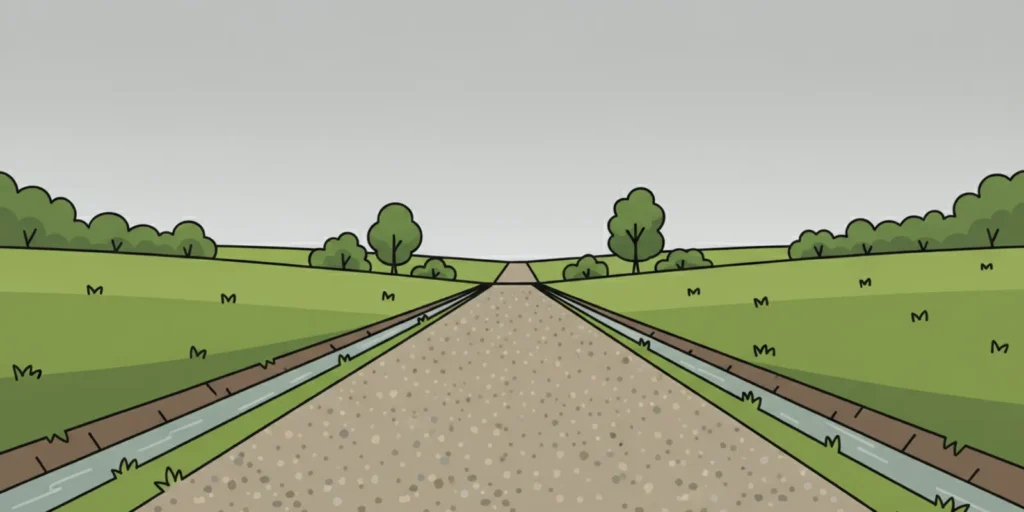
Dust control for gravel roads starts with the road itself. A dry, loose, poorly crowned surface can send fine particles into the air when vehicles pass, but adding a product is not always the first or best answer. Grading, drainage, surface material, traffic, weather, and maintenance timing all affect how much dust a gravel road produces.
Request a gravel road material quote
This Minnesota-specific guide explains how to investigate the cause of road dust, compare practical control options, and plan aggregate delivery or equipment help without assuming that one treatment works for every road. The goal is a road surface that is stable, properly shaped, and easier to maintain through Minnesota’s changing seasons.
What causes dust on a gravel road?
Road dust is usually made of fine particles that become detached from the surface and move into the air. A road may become dusty when its surface has too much loose material, when passing traffic breaks down the aggregate, or when dry conditions remove the moisture that helps hold particles together. Higher speeds and heavier traffic can make the problem more noticeable.
Dust can also point to a road-design or maintenance issue. Common contributing conditions include:
- A weak or uneven surface that is breaking apart under traffic.
- Insufficient crown, ruts, or potholes that collect water and loosen material.
- Ditches, culverts, or driveway crossings that do not move water away from the driving surface.
- Aggregate with an unsuitable blend of larger stone, intermediate particles, and fines for the road’s use.
- Grading during a very dry period without enough moisture for the surface to knit together.
- Vehicle speeds that are too high for a loose or recently graded road.
The Federal Highway Administration’s unpaved-road dust guidance describes chemical treatments as one possible tool for minimizing dust and aggregate loss. That does not mean every road needs a chemical treatment. It does mean dust control should be approached as a road-management decision, not as a single product purchase.
How should you inspect the road before choosing dust control?
Walk or drive the full road before ordering material or scheduling work. Look for patterns rather than judging only the worst section. Dust that appears throughout the road may require a surface and traffic review. Dust concentrated near a hill, intersection, curve, or driveway may point to drainage, speed, or localized wear.
Check the crown and cross slope
A gravel road needs a shape that allows water to leave the wheel paths. A flat surface can hold water, while deep ruts trap runoff and weaken the road. A crown that is too high can also cause vehicles to drive on the edges and wear the surface unevenly. The correct profile depends on road width, material, traffic, and drainage layout, so a visual inspection should come before reshaping.
Look at the ditches and outlets
Water management is central to gravel-road maintenance. Inspect whether side ditches are open, whether culverts are blocked, and whether runoff has a safe outlet. Erosion at a ditch or culvert can put loose sediment back onto the road. The EPA gravel-road maintenance and dust-control reference discusses how moisture and road conditions affect dust and stabilization planning.
Identify traffic and surface patterns
Record the types of vehicles using the road, the busiest times, and the sections that receive repeated braking or acceleration. A road serving homes may have a different wear pattern from a road serving a construction site, farm, or commercial access route. If dust is worst after a fresh grading pass, the surface may need time, moisture, or a different maintenance approach rather than more loose material.
Make a simple inspection record
Before changing the road, note the date, recent weather, approximate traffic, and location of the worst dust. Photograph representative sections from the same position after grading, after rain, and after a busy traffic period. Mark soft shoulders, standing water, washboarding, exposed base, and places where vehicles brake or accelerate. This record helps separate a temporary dry-weather issue from a recurring structural problem and gives a supplier or equipment operator more useful information than a general request for dusty-road gravel.
Measure the sections separately when conditions change. A straight, level segment may need a different quantity or plan from a steep approach or a low area near a culvert. Breaking the project into sections makes it easier to compare material needs, delivery access, and maintenance priorities without treating the entire road as if it has one identical problem.
Which road-maintenance steps can reduce dust?
Good dust control for gravel roads usually combines several basic practices. The right sequence matters because placing new aggregate on a drainage problem can create a short-lived improvement.
- Correct drainage problems first. Clear appropriate outlets and address water entering or crossing the driving surface. Do not place fill where it will block an existing drainage path.
- Restore a workable road profile. Use suitable equipment and a planned grading pass to address ruts, washboarding, and uneven edges. Grading should not simply move loose material from one spot to another.
- Evaluate the surface blend. A road may need additional base material, surface aggregate, or a blend selected for its traffic and moisture conditions. Confirm the intended use before ordering.
- Compact at the right time. Material graded when completely dry may remain loose. Weather, moisture, and equipment access affect when compaction will be useful.
- Manage speed and traffic during vulnerable periods. Lower speeds can reduce the force that lifts loose particles and can limit damage after grading or during extended dry weather.
- Monitor the road after rain and heavy use. Small drainage or rutting issues are easier to address before they become a full-road repair.
A useful work sequence is to address water, loosen and reshape only the material that needs correction, add selected aggregate where the section is deficient, and finish the surface under workable moisture conditions. Afterward, inspect the road again rather than judging success from its appearance immediately after grading. A smooth-looking surface can still shed fines if the underlying section is weak, and a short period of traffic may reveal a crown or compaction problem.
For a material overview, compare Minnesota Aggregates’ Minnesota aggregate project guide and gravel size chart. These resources can help organize questions, but the final selection should account for the specific road section and site conditions.
Which materials should you compare for a dusty gravel road?
There is no universal best material for every gravel road. Material choice should match the road’s foundation, traffic, drainage, slope, and maintenance plan. A surface that works for a lightly used residential access road may not be suitable for repeated heavy truck traffic.
| Option or approach | Where it may fit | What to confirm | Dust-control considerations |
|---|---|---|---|
| Existing surface reshaping | Road with usable aggregate but ruts, washboarding, or poor shape | Drainage, grading depth, moisture, and compaction access | Can reduce loose material when the cause is profile or maintenance related |
| Class 5 gravel | Base and surface-support needs on roads, driveways, and pads | Required depth, specification, quantity, and delivery access | May provide a more stable surface when properly placed and maintained; results depend on site conditions |
| Additional surface aggregate | Road sections that have lost material or need a new wearing layer | Particle blend, traffic load, drainage, and source | Can help limit loose fines when selected material suits the road and is placed correctly |
| Dust suppressant evaluation | Road with appropriate structure where dust remains a recurring concern | Product suitability, application requirements, weather, environmental considerations, and reapplication expectations | Should be evaluated as part of a maintenance plan, not treated as a guaranteed result |
Class 5 is one material homeowners and contractors may consider for a road base or compactable aggregate application. Read Minnesota Aggregates’ Class 5 gravel buyer’s guide and Class 5 delivery information before requesting a quote. Class 5 orders are generally stated at a 3-5 business day delivery window, subject to the order, route, season, and site conditions.
For a road that needs a different surface, a comparison of recycled asphalt and gravel can help frame questions about surface behavior and project goals. Avoid choosing based on appearance alone. Ask how the material is expected to perform under your traffic and how it will be maintained.
How should you compare a material quote?
Compare quotes using the same assumptions. Confirm whether each number covers the same material, estimated quantity, delivery distance, and placement area. A lower material price may not be the lower project cost if the load cannot reach the road section, extra grading is needed, or the stated quantity does not account for planned depth. Ask whether delivery is priced separately from spreading, grading, leveling, or compaction.
Write down road length, average width, target depth, number of sections, and access limitations before requesting prices. If the road has a soft area and a stable area, describe both. This gives the supplier a chance to discuss whether one material and delivery plan fit the whole project or whether the sections should be handled differently.
When is the best time to plan dust-control work in Minnesota?
Timing depends on weather, road condition, traffic, and access. Spring can expose potholes, ruts, and drainage failures after snow and frost-related movement. It can also bring wet conditions that make a road difficult to reshape or compact. Summer may provide workable access, but extended dry periods can increase visible dust. Fall work should account for rain, freezing temperatures, and the time needed for the surface to settle before winter.
Minnesota roads may also face spring load restrictions. If heavy delivery or construction traffic is planned during that period, confirm current local requirements and coordinate the schedule before ordering. A road that is soft or restricted may need a different delivery plan than a dry, stable road.
When delivery is part of the project, provide the supplier with road width, approximate length, access points, turning limitations, overhead obstructions, and seasonal restrictions. General material delivery is typically planned within 3-4 business days, while Class 5 orders are typically planned within 3-5 business days. Request a project-specific quote rather than assuming a material price includes every placement or grading step.
Plan a backup date when work depends on a narrow weather window. Rain can change truck access, while a prolonged dry spell can make grading and finishing less effective. If traffic cannot be stopped, schedule work around the busiest periods and identify which section must remain passable. These details matter for a shared access road, where a delivery plan affects more than one property.
Should you hire equipment help or handle the work yourself?
A small road repair may be manageable for an experienced operator with suitable equipment, but dust problems often involve more than spreading a load. The work may include shaping the road, tying the surface into driveways, correcting drainage, and finishing or leveling material. Errors can move water toward the road instead of away from it.
Ask for help when the road has persistent washboarding, deep ruts, poor access, a significant slope, or drainage concerns. Minnesota Aggregates offers skid steer services for grading and site preparation, which may be relevant when a project needs material handling or surface preparation. Confirm the exact scope before work begins: whether service includes spreading, grading, leveling, hauling, or only equipment operation.
If you are handling a smaller project yourself, estimate material with the cubic yardage calculator, then verify depth and road dimensions. Also review the gravel quantity planning guide so the order reflects the full work area rather than only the visibly dusty section.
Before self-performing the work, confirm that equipment can reach the full road width and that you have a way to finish the surface after delivery. A truck can place aggregate close to the intended area, but placement is not the same as final grading. Plan where excess material will go, how shoulders will be protected, and how vehicles will use the road while the surface is being worked.
What should you ask before ordering material or treatment?
Clear questions can prevent a dust-control project from becoming an unsuitable material delivery. Ask the supplier, contractor, or road manager:
- What is causing the dust: loose fines, traffic, poor drainage, inadequate depth, or several factors?
- Does the road need grading, drainage work, new aggregate, compaction, or a combination?
- What material is recommended, and what road use is it intended to support?
- How much material is needed, and how was the quantity calculated?
- Can the delivery truck reach the placement area without damaging shoulders, ditches, or private improvements?
- What are the expected delivery window and seasonal access restrictions?
- If a suppressant is being considered, what application conditions, environmental precautions, maintenance needs, and reapplication expectations apply?
- What work is included in the quote, and what remains the property owner’s responsibility?
For related planning, see the gravel road base installation guide and gravel drainage guide. Although driveway and road projects are not identical, these resources can help identify questions that affect surface stability and water movement.
Frequently asked questions
What is the first step in dust control for gravel roads?
Inspect the road’s shape, drainage, surface material, traffic, and maintenance history. If water or an unstable profile is causing the surface to break down, applying a suppressant without correcting that condition may not solve the underlying problem.
Does adding gravel always stop road dust?
No. New aggregate may help when the road has lost material or needs a more suitable surface, but results depend on material, depth, grading, moisture, compaction, traffic, and drainage. A material delivery should follow a road assessment.
Can Class 5 gravel be used on a gravel road?
Class 5 may be considered for some road base and compactable aggregate applications. Confirm intended use, required depth, site access, and material specifications before ordering. The existing structure and drainage still matter.
When should a Minnesota gravel road be graded?
Grade when the road is workable and planned maintenance can address the full problem, including ruts, crown, drainage, and loose material. The driest day is not always the best day; moisture and compaction conditions affect the result.
Can a supplier guarantee a dust-free road?
A responsible supplier should not promise a universal result. Dust depends on weather, traffic, road design, material, application, and ongoing maintenance. Ask for a recommendation tied to observed road conditions and a clear scope of work.
Call Minnesota Aggregates at (612) 772-3677
Sources and planning references
For additional background, review the FHWA unpaved-road dust management guidance and the EPA gravel-road maintenance and stabilization reference. These sources can support a conversation with a local road manager or contractor, but site-specific recommendations should account for local conditions and requirements.
A practical dust-control plan begins by finding the cause, improving water movement and road shape, selecting material for the actual use, and scheduling delivery or equipment work when the road can be properly finished and maintained.