
Published October 1, 2026
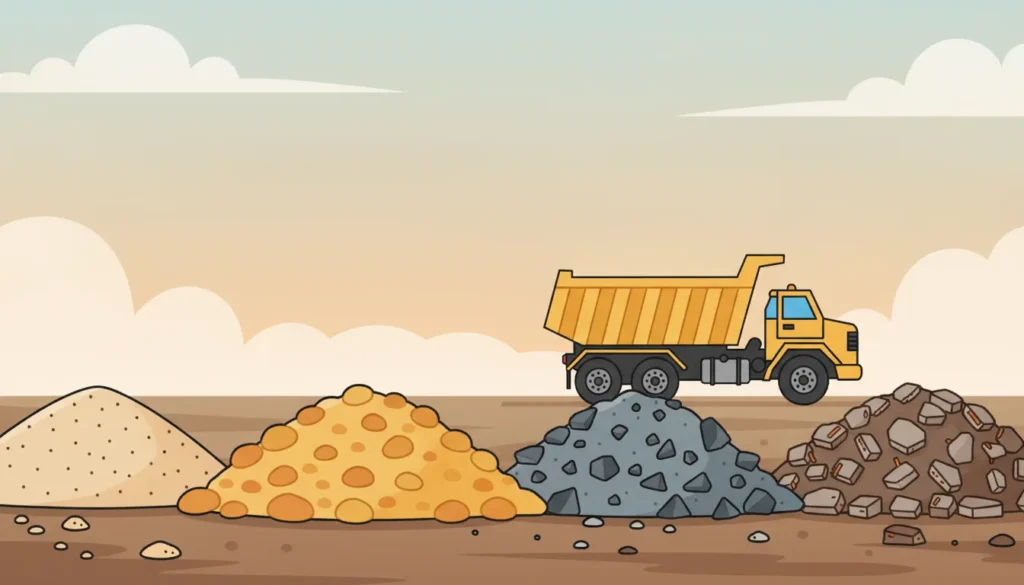
Aggregate is the mineral material that gives many construction and landscaping projects their structure, drainage, and working surface. If you are planning a driveway, parking area, building pad, drainage improvement, or hardscape project in the Twin Cities, understanding the difference between stone, sand, gravel, and recycled aggregate helps you order the right material instead of treating every load as interchangeable.
Request an aggregate quote from Minnesota Aggregates or call 612-772-3677 to discuss your project.
What is aggregate?
Aggregate is a broad term for granular mineral material used by itself or combined with a binder such as cement or asphalt. Natural rock is crushed, screened, or blended into specific size ranges. Sand and gravel may be processed to remove unwanted material or create a more consistent product. Recycled concrete and asphalt can also be processed into useful aggregate for selected base and surface applications.
The word describes a material category, not one single product. A clean sand used for leveling has a different particle size and job than a well-graded crushed stone used beneath a driveway. A material that drains well may not compact into the stable base a vehicle area needs. Choosing aggregate starts with the finished result, the existing soil, the expected load, and the way water will move through the site.
Why does aggregate matter in Minnesota?
Twin Cities projects have to account for wet springs, changing soil moisture, freeze-thaw cycles, and the access conditions at the delivery site. Aggregate can help create a firm working layer, provide a base for paving or hardscape materials, and move water away from areas that would otherwise stay soft. It does not solve every drainage or soil problem by itself, but the right gradation and installation plan can make the finished project more stable and easier to maintain.
Project conditions still matter. A new driveway over weak soil may need excavation, geotextile fabric, a deeper base, or professional grading. A small garden path may need only a thin layer of the correct decorative or leveling material. Before ordering, identify whether the load will support vehicles, provide a construction base, fill a low area, level another material, or serve as a drainage layer.
What are the common types of aggregate?
The best aggregate depends on how the material will perform after delivery. The table below provides a starting point for common project goals. Final material selection should account for site conditions, thickness, access, and local specifications.
| Material type | Common project uses | What to consider |
|---|---|---|
| Crushed stone | Driveway bases, parking areas, paths, drainage layers, and construction bases | Particle size, fines content, compaction, and the required finished surface |
| Sand | Leveling, fill, paver support, drainage-related work, and selected landscaping projects | Cleanliness, texture, moisture, and whether the project needs a compactable or free-draining material |
| Gravel | Driveways, parking areas, access roads, walkways, and general site work | Size, shape, base preparation, traffic, and how the material will be maintained |
| Recycled concrete | Selected driveway, road, parking, and construction base applications | Intended use, gradation, site preparation, and the finished appearance the project requires |
| Asphalt millings | Driveways, parking areas, temporary roads, and other compacted surfaces | Compaction, heat and traffic behavior, drainage, and whether the surface fits the project plan |
| Fill or clay | Raising low areas, backfilling, shaping grades, and preparing a site before top layers | Moisture, compaction, drainage, and separation from topsoil or finish materials |
How is aggregate processed?
Aggregate processing usually starts with a source material that is excavated, recovered, or collected. Crushing reduces larger rock or concrete into usable pieces. Screening separates particles by size, and blending combines sizes to create the gradation needed for a particular application. Some products are washed or otherwise processed when a cleaner or more consistent material is needed.
Processing changes how a load behaves on the job. Larger particles can provide structure, while smaller particles may fill voids and help a base compact. A clean, open-graded material may leave more space for water to move. This is why two products that both look like gravel can perform differently under a driveway, around a drain, or beneath pavers. Ask for the product name, size range, and intended use rather than choosing by color or appearance alone.
What is the difference between aggregate and gravel?
Gravel is one type of aggregate. In everyday project conversations, gravel often means loose rounded or crushed stone used for a driveway, path, parking area, or other surface. Aggregate is the broader category that can include crushed stone, sand, gravel, recycled concrete, and processed asphalt materials.
That distinction matters when you request a quote. Saying that you need "gravel" may not tell a supplier whether you need a compactable base, a clean drainage material, a top layer, or a decorative surface. Describe the project and the performance you need, then ask which product and gradation match it.
How do you choose aggregate for a driveway or parking area?
Start with the traffic and the existing site, not the material name alone. A driveway used by passenger vehicles has different demands from a commercial parking lot or a construction access road. Consider these questions:
- What vehicles will use the area, and how often?
- Is the current soil firm, wet, clay-heavy, or prone to rutting?
- Does the site need excavation, grading, or drainage work before aggregate arrives?
- Will the aggregate be the finished surface, or will another material go above it?
- How much area will the load cover at the planned depth?
- Can a delivery truck reach and safely place the material?
Class 5 gravel is a common base material for driveways, roads, parking areas, and building pads because its blend of stone and fines can compact into a stable layer when properly installed. Review the Class 5 gravel delivery guide for product-specific planning. For an initial quantity estimate, use the cubic yardage calculator, then confirm the order with a supplier because soil conditions, depth, and truck capacity can change the final amount.
When should you use sand instead of crushed stone?
Sand and crushed stone are not interchangeable. Sand may be appropriate for leveling, filling, paver-related preparation, or a project that needs a finer granular material. Crushed stone may be the better fit when the project needs interlocking particles and a compactable base. Some projects use both, with each layer selected for a different job.
Ask about the material’s intended use, screening, cleanliness, and drainage behavior. Minnesota Aggregates explains common options on its sand delivery page. If your project includes pavers, hardscape preparation, or a sensitive finished grade, share the planned layer thickness and the material going above it before ordering.
Can recycled aggregate work for a Minnesota project?
Recycled aggregate can be a practical option when the project allows it and the material’s gradation and cleanliness fit the intended use. Recycled concrete is commonly considered for selected base, road, driveway, and parking applications. Asphalt millings can be used for compacted driveways, parking areas, and temporary roads when the surface and installation plan are appropriate.
Recycled materials still need proper preparation and placement. Confirm what the product contains, how it should be compacted, and whether the finished appearance meets your expectations. For asphalt millings, read the asphalt millings delivery guide before choosing the material for a driveway or parking area.
How much aggregate do you need?
Estimate the volume by multiplying the project’s length by its width and planned depth, then convert the result to cubic yards. The calculation gives you a starting point, but it does not account for every field condition. Uneven ground, excavation, compaction, soft soil, and the material’s delivered density can affect the final order.
Measure each section separately when the project has more than one shape or depth. Add the sections together, document the dimensions, and tell the supplier whether the material will be placed in a driveway, parking area, pad, path, or graded yard. A clear site description helps the supplier recommend a useful quantity and delivery plan.
What should you prepare before aggregate delivery?
Mark the dump location and tell the delivery team about gates, low wires, soft ground, tight turns, slopes, and any areas the truck must avoid. Make sure the access route is firm enough for the truck and that the placement area is clear of vehicles and other obstructions. Wet spring conditions can change access quickly, so confirm the site is ready before the delivery window.
If you need the material spread, graded, or blended into a broader site-preparation project, ask about skid steer services and placement options. For landscaping projects, Minnesota Aggregates also supplies black dirt and topsoil delivery. These are separate materials with different uses, so plan the base and finish layers together.
Aggregate ordering checklist
Before requesting a quote, gather the following information:
- Project type, such as driveway, parking area, building pad, drainage work, path, or landscaping.
- Length, width, and planned depth for each section.
- Current site condition, including soft soil, standing water, slope, or existing material.
- Material above or below the aggregate, if another layer is planned.
- Expected vehicle traffic and whether the surface must support heavy loads.
- Delivery address, access restrictions, preferred placement, and timing.
General material delivery is typically stated as 3-4 business days, while Class 5 orders use a 3-5 business day window. Confirm the current schedule when you request a quote, especially during spring and summer demand or when site access depends on weather.
Contact Minnesota Aggregates for an aggregate delivery quote or call 612-772-3677 to review material, quantity, and site access.
Frequently asked questions about aggregate
Is aggregate the same as concrete?
No. Aggregate is the granular stone, sand, or similar material used on its own or combined with a binder. Concrete is a finished material made by combining cement, water, and aggregate. Aggregate can be part of concrete, but the terms are not interchangeable.
What aggregate is best for a driveway?
There is no single best material for every driveway. The right choice depends on the soil, drainage, traffic, planned depth, and whether the material is a base or finished surface. A compactable base such as Class 5 may fit one driveway, while asphalt millings or another surface material may fit a different project.
Does aggregate help with drainage?
Some aggregate materials create open spaces that allow water to move, while well-graded materials can compact into a stable base with fewer voids. Drainage performance depends on the material, soil, slope, depth, and installation. If water is the primary problem, address grading and the full drainage plan instead of selecting aggregate by name alone.
How is aggregate delivered?
Aggregate is typically delivered by dump truck in a quantity matched to the project and the available access. The truck may place the material in a designated pile or another agreed location. Clear access, firm ground, and precise placement instructions make delivery easier and help protect the site.
Sources
For a technical overview of aggregate materials and their role in pavement construction, see the Federal Highway Administration aggregates resource. For Minnesota roadway aggregate specifications and related materials guidance, see the Minnesota Department of Transportation Grading and Base resources.