
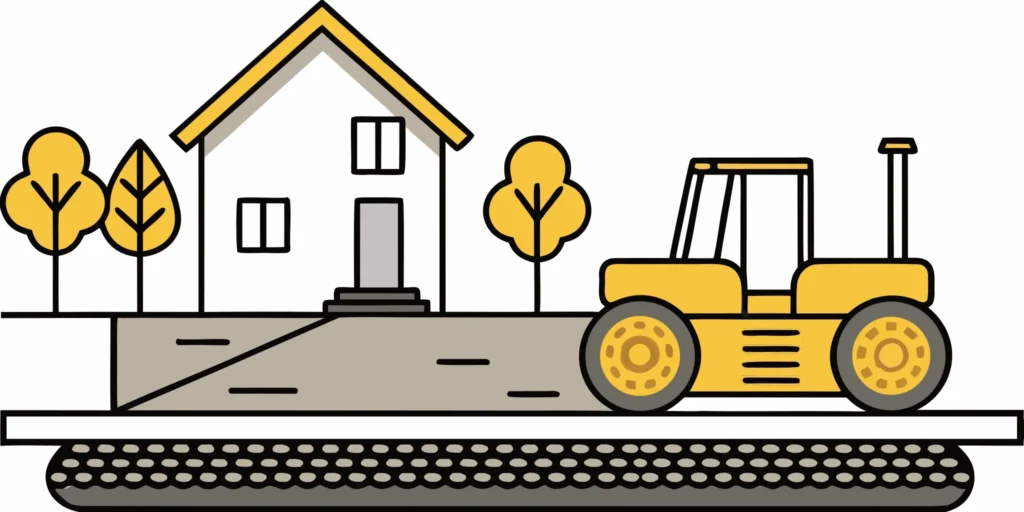
Properly compacted asphalt millings create a semi-solid driveway surface that withstands heavy vehicle traffic.
Request asphalt millings delivery and a quote from Minnesota Aggregates.
Asphalt millings seal harden into a strong driveway surface when you use heavy compaction and the right binding agents. These recycled materials consist of about 95 percent rock and sand and 5 percent aged bitumen that binds under heat and pressure. In Minnesota, the best results come from using a ten-ton vibratory roller to reach high density while the summer sun warms the stone. You can further harden the surface by applying special binding agents like SS-1h emulsion or a cement slurry for high-traffic areas. Sealing the millings is an optional final step. It stops water and gives the driveway a uniform, dark finish. According to experts in the field, this process creates a tough, low-cost surface that survives the local freeze-thaw cycle without the dust and washouts of standard gravel.
Choosing the right material is the first step toward a stable driveway that lasts for years. You must understand how these recycled pieces work together to form a solid base before you start the work. What Are Asphalt Millings and How Do They Become a Driveway Surface? explains why this material is such a strong choice. The path begins with learning
Seal And Harden Asphalt Millings: What Are Asphalt Millings and How Do They Become a Driveway Surface?
Asphalt millings, also known as recycled asphalt pavement (RAP), are small pieces of old roads that have been ground up. When crews rebuild highways in the Twin Cities, they use big machines to mill the top layer of the road. This material is then crushed and screened to a uniform size. Unlike new hot-mix asphalt, millings are cold and easy to move, which makes them a great choice for a high-quality asphalt millings for delivery service.
The Makeup of Recycled Asphalt
Each batch of millings is a mix of two main parts. About 95% of the material is made of hard aggregates like crushed stone and sand. The other 5% is a bit of aged asphalt binder, which is the tar-like glue that holds it all together. Because the stones are already coated in this binder, they soak up less water than plain dirt or rock. Research shows that this coating helps the material resist water damage and stay strong over time, as noted by the Recycled Materials Resource Center.
How Millings Turn Into a Solid Surface
Millings don’t stay loose like gravel. Instead, they undergo a process called rebinding. When you spread millings and apply heavy pressure, the pieces lock together. On a hot Minnesota summer day, the sun warms the old binder, making it sticky once again. This heat, combined with the weight of cars driving over it, helps the asphalt millings seal and harden into a semi-solid path. This results in a surface that is much more stable than a standard dirt or rock driveway.
Comparing Millings to Traditional Gravel
While gravel is a common choice, it has some downsides. Gravel stays loose, so it tends to shift, wash away in rain, or get stuck in your tire treads. You often have to rake it back into place or add new rock every few years. Millings are different because they compact into a single layer that stays put. This creates a surface that feels more like a road and produces less dust than traditional stone. Using millings also helps the planet by keeping tons of old road waste out of local landfills.
Cost and Value for Your Project
One of the biggest wins for millings is the price. Buying millings can save you 40% to 60% compared to the cost of a new hot-mix asphalt driveway. The raw material usually costs about $21 per cubic yard. This low price point allows homeowners to build a durable, long-lasting driveway without the high cost of a paving crew. Since the material is recycled, it is a smart pick for anyone who wants a reliable surface that fits a tight budget.
Why Compaction Is the Most Critical Step for Hardening Asphalt Millings
Compaction is the key to turning loose millings into a solid driveway. Without it, the stones stay loose and shift under tires. Proper pressure binds the aged oils and stones together to create a flat, hard surface. This step is what sets a messy pile of rocks apart from a lasting driveway that handles daily use. In Minnesota, good compaction helps your driveway stay firm through wet springs and cold winters.
Find the Right Moisture Level
You must add a small amount of water to the millings before you roll them. Moisture helps the bits slide into place so they can pack together tightly. Most experts aim for about 1.5% to 2.5% water by weight. A simple squeeze test is the best way to check this at home. If a handful of damp millings holds its shape without dripping, it is ready to roll.
Use the Right Heavy Equipment
A heavy vibratory roller is the best tool for this job. You need a machine that weighs 10 tons or more to get the best results. The shaking moves the stones down while the weight presses them from above. This process helps the mixture reach its maximum bulk density for more strength. To get a smooth finish, you should drive the roller at about three to five miles per hour.
Spread and Grade for Success
Start with a layer of millings about three to four inches deep. If the layer is too thick, the roller cannot pack the bottom part. If it is too thin, the surface may crack or peel away. Using expert skid steer services makes it easy to get an even grade before you start rolling. This makes sure the water drains off the sides instead of sitting in low spots.
- Clean the area and remove any weeds or soft dirt to make a firm base.
- Spread the millings in a flat layer about three to four inches deep across the whole area.
- Mist the millings with a hose until they pass the squeeze test without being too wet.
- Set up edge blocks along the sides to stop the material from spreading out.
- Drive a 10-ton vibratory roller over the surface in four to six slow passes.
- Overlap each pass by about 50% to make sure every inch of the ground gets even pressure.
- Check the surface for any soft spots and roll them again until the ground feels like a solid floor.
Good compaction stops the top layer from staying loose and messy. It creates a semi-solid block that can handle the weight of cars and trucks. For the best seal, you should do this work when it is warm outside. Heat helps the old oils in the millings soften and bond with the stones as you press them down.
Best Binding Agents to Harden Asphalt Millings
Asphalt millings have a small amount of binder, but this bitumen is often dry and hard. Adding a binding agent helps the old material stick together to form a tight, tough driveway surface. The best choice depends on your goals and the amount of traffic your drive will see. For many people, the best way to harden asphalt millings means finding a balance between cost and long-term strength.
Surface Rejuvenators and Emulsions
Rejuvenators like RA-25 help soften and fix the old binder found in crushed asphalt. These oils soak into the millings to wake up the old glue. This helps the stones fuse under heat and weight. This is a great choice for Minnesota driveways that sit in the hot summer sun. For a lighter fix, an SS-1h emulsion acts as a tack coat. It adds a fresh layer of sticky asphalt to the top. This helps stop dust and keeps loose stones from washing away under car tires.
Cement and Lime Stabilization
If your driveway must hold heavy trucks or gear, you may need a stronger bond. Mixing about 3% liquid cement by weight into your millings before you pack them down creates a stiff base. This base stops ruts from forming. You can also use a cement slurry made of one part cement and six parts water. This liquid flows into the gaps and hardens into a strong net. In wet areas, adding 1% to 2% hydrated lime helps soak up water. These steps give a much tougher finish than just rolling the stones, but they take more work.
Comparison of Hardening Agents
Picking the right agent ensures your surface can handle the local weather and traffic. While budgeting for your asphalt driveway, think about how much you want to spend on the base versus the top. The table below shows the most common agents used to fix and set recycled millings.
| Agent Type | Primary Use | Curing Time | Best For |
|---|---|---|---|
| RA-25 Rejuvenator | Restores old binder | 24 to 72 hours | Home driveways |
| SS-1h Emulsion | Surface tack coat | 12 to 24 hours | Dust control |
| Liquid Cement | Rigid stabilization | 3 to 7 days | Heavy trucks |
| Hydrated Lime | Moisture control | Immediate | Wet soil areas |
Good site prep is key for these tools to last. Work from the Minnesota Department of Transportation shows that testing these materials helps them stand up to the cold. Without a solid base, even the best millings can move or shift over time. Always make sure your material is flat and packed tight before you add any liquid agents to get the best result.
Can You Seal Asphalt Millings? Sealer Types and Application Guide
You can seal asphalt millings to create a stronger, more uniform surface. While sealing is not strictly required, it accelerates the bonding process and protects against rain and UV damage. For many homeowners, the improved appearance and added durability make it worthwhile.
Sealer blocks UV rays that dry out the aged binder. It fills gaps between particles to prevent water infiltration and locks surface particles in place, reducing dust.
Coal tar sealer is applied at 0.10 to 0.15 gallons per square yard. Asphalt emulsion sealers (60-80% solids) use two coats at 0.15 gallons per square yard. Wait for full compaction before sealing. Re-apply every two to three years. Check each spring for wear.
Asphalt Millings Curing Timeline: What to Expect in Minnesota
Asphalt millings do not turn into a hard slab like new blacktop. Instead, they form a firm layer that gets stronger over time as the binder resets.
The time it takes for asphalt millings to seal and harden depends on local heat and how well you pack the stones. In the Twin Cities, our warm summers give the heat needed to help the old oils bind the stones back together. This simple work turns a pile of loose rocks into a solid path for your cars.
The first setting phase
In the first few days, the fresh surface is most prone to marks and dents. You should wait before you drive heavy trucks or park big rigs on a new layer of millings. This lets the stones sit and find their place without forming deep tracks or ruts.
Once the top layer feels firm and dry, you can start to use it for light tasks or walking. Most driveways are ready for foot traffic in less than two days.
How heat helps millings set
Minnesota summers often reach heat levels above 70 degrees for many weeks. This heat is vital for the curing stage to work well. Warm sun softens the old tar that coats each of the rocks.
This helps the tar stick to the other parts around it to form a bond. Studies by the Minnesota Department of Transportation show that using used parts can help keep roads in good shape. High heat makes this work much faster than in the cool spring or fall months.
Staying strong for years
Over time, the weight of your car acts as a second roller for the stones. This steady pressure helps the rocks reach their best weight and stay in place. Good grading is also key to stopping water from pooling on the top. This keeps the base safe from the ice that comes during our winter freeze.
You can find more tips on sourcing millings for your project to make sure you get the best items for your home. Proper care will help your new driveway last through many seasons of snow and sun.
- Pack the surface. Use a heavy roller to press the millings into a tight layer right after we drop them off. This removes air and starts the bond right away to prevent loose stones.
- Wait to drive. Stay off the driveway with cars for at least 24 to 48 hours to let it set. Walking on the surface is fine during this short wait while the oils start to grip.
- Wait for a full cure. The stones will take about one week to fully set when the air stays above 50 degrees. In hot weather, this may go even faster as the binder melts and resets.
- Use the path. Drive your car on the stones after the first week to help pack them more. This daily use helps the driveway turn into a solid mat that can handle the weight.
- Check the work. Look at the surface twice a year for any loose spots or cracks. Fix any small gaps within two days with a filler to stop water from getting below the stones.
Asphalt Millings vs. Gravel vs. Traditional Asphalt: Which Is Right for Your Driveway?
Choosing a driveway material involves balancing cost, look, and long-term care. In Minnesota, your choice must also stand up to heavy snow and deep frost. While gravel is the cheapest to start, it often leads to high yearly costs. Standard asphalt looks great but costs much more. Many local homeowners now choose asphalt millings as a smart middle ground. This material offers a semi-solid surface that is more stable than loose stone but less costly than a new paved road.
| Feature | Gravel | Asphalt Millings | Hot-Mix Asphalt |
|---|---|---|---|
| Setup Difficulty | Low | Medium | High |
| Winter Traction | Good | Excellent | Medium |
| Dust Level | High | Low | None |
| Weed Growth | High | Medium | None |
| Seal Needs | None | Optional | Regular |
| Drainage | Fast | Moderate | Slow (Requires Slope) |
| Average Life | 1-5 Years | 10-15 Years | 20+ Years |
Initial and long-term costs
Gravel is the most budget-friendly choice at first. It is easy to buy and spread, but the costs add up fast. You must add new stone every year or two as it sinks into the dirt. Standard asphalt is at the other end of the price scale. It requires expert crews and big machines to lay down hot mix. This makes the upfront price quite high for most people.
Asphalt millings sit right in the center for cost and value. The material is made from recycled road waste, which keeps the price low. You can find more details in our guide on budgeting for your asphalt driveway. Since millings have aged tar in them, they bond together under heat. This means you do not have to replace the stone as often as you would with gravel. Over ten years, the low price and long life of millings usually save you the most money.
Care and strength differences
The care needed for each surface varies greatly. Gravel needs a lot of work. You must regrade the surface often to fix ruts and holes. Weeds also grow through loose stone easily. Hot-mix asphalt needs less daily work but more expert care. You must seal cracks every few years to keep water out. If you skip this, the frost will break the surface apart quickly.
Millings offer a unique mix of strength and ease. To get the best results, you must use a heavy roller during the setup. Proper compaction helps recycled asphalt reach high density so it can support heavy trucks. Once set, the surface does not wash away in heavy rain. It also stays cooler than black asphalt, which helps it last. While they are very tough, you should weigh the pros and cons of crushed asphalt before you start. Most find that the lack of dust and mud makes it the clear winner for local shops and farms.
Lifespan and winter weather results
Minnesota weather is hard on driveways. The constant freeze and thaw can crack a stiff asphalt pad in one season. Gravel stays flexible, but it turns into a muddy mess in the spring. This is where millings shine. They allow for some movement without cracking. They are known as Recycled Asphalt Pavement, or RAP in the road industry. Because they have a small amount of old tar, they stay semi-flexible.
To make the surface even harder, you can use heat or a spray. Many people find that asphalt millings seal harden over time when exposed to the summer sun. As cars drive over the material, the weight and heat press the pieces together. This creates a crust that sheds water well. A well-built millings driveway can last over a decade. It handles snow plows much better than gravel. It also gives you better grip on ice than smooth paving. This makes it the top middle-ground choice for our local climate.
Minnesota Considerations: Freeze-Thaw, Seasonal Timing, and What That Means for Your Project
Minnesota weather is tough on driveways. The state has hot summers and cold winters. These shifts create ice cycles that can break a driveway. If you want your asphalt millings to seal and harden, you must plan for this climate. Picking the right month is just as vital as the material itself. You need to know how the local soil and laws affect your build.
How millings handle freeze-thaw cycles
The big risk in Minnesota is ground shift. When water under a driveway freezes, it pushes the ground up. When it melts, the ground sinks. This causes cracks and soft spots in many surfaces. Recycled asphalt works well here because it can bend. It is not as stiff as concrete, so it does not crack as fast. But this only works if your base is firm and has good drainage.
You must grade the site so water runs away from the path. Wet ground is the biggest threat to your project. Research by the Minnesota Department of Transportation shows that these materials last when you use them right. A pro can help you set up a stable base. Good site prep usually includes:
- Clearing all grass and soft dirt from the area.
- Using a slope of at least two percent to shed water.
- Adding a layer of base stone if the soil is mostly clay.
- Packing the soil with a heavy roller before adding millings.
Navigating seasonal road rules
The build season in the Twin Cities is short. It runs from April through October. But you cannot always get heavy loads sent as soon as the snow is gone. From March to May, the state has spring road rules. These rules limit truck weights to keep roads safe during the thaw. This can limit how much material we can bring to your site in early spring.
Check the pros and cons of crushed asphalt before you start. Early spring is often too wet to pack the ground. If the dirt is soaked, the millings will not settle well. It is better to wait for the ground to dry in late May or June. This makes sure trucks can reach you and the ground stays firm under the load.
Why heat matters for your surface
You need heat to get a hard surface. Asphalt millings have a bit of old oil in them. This oil gets soft when it is warm. To bond well, the air should be at least 70 degrees. Sunlight helps the high-quality asphalt millings for delivery soften and stick together. The heat acts as a tool to help the material bind into a solid sheet.
Summer is the best time for this job. As cars drive over the warm surface, they pack it down even more. This traffic helps the material seal and harden over time. If you put down millings in late fall, they may stay loose until spring. A summer start gives the material time to set before the first freeze. This leads to a smooth path that lasts for many years.
Call (612) 772-3677 for asphalt millings delivery.
Frequently Asked Questions
What should I put on asphalt millings to harden them?
To make asphalt millings hard, you can use a binding agent. For light use, an asphalt emulsion works well. For heavy loads, experts often mix in a small amount of liquid cement or lime. According to Asphalt Calculator, adding about 3% liquid cement helps the mix set like glue. This creates a semi-solid surface that stays in place much better than loose gravel.
Can you use plain asphalt sealer on millings?
Yes, you can use a plain asphalt sealer on millings once they are well packed. A coal tar or asphalt emulsion sealer fills the small gaps between the stones. This blocks out water and sun damage. It also gives the driveway a dark and smooth look. While sealing is not needed, it helps the surface bond faster and last longer. Put it on every two or three years to keep the surface hard and even.
How long does it take for asphalt millings to harden?
Most millings take about 24 to 48 hours to set enough for foot traffic. But they need about a week of warm weather to reach full strength. Heat is key because it helps the old oils in the millings stick back together. In the Minnesota summer, this happens faster when the air is above 50 degrees. Proper use of a heavy roller during install also speeds up how fast the surface hardens.
Will a pile of asphalt millings harden on its own?
No, a pile of millings will not get hard by itself. This stuff needs both heavy weight and heat to bond. Without a roller to pack the stones tight, the pile stays loose and easy to move. According to Minnesota Aggregates, the mix relies on pressure to form a solid layer that can support cars. For a good driveway, you must spread the millings and then use a heavy vibratory roller.
Do asphalt millings hold up well in Minnesota winters?
Asphalt millings perform very well in the cold Minnesota climate. They are flexible, which helps them survive the cycle of freezing and thawing without cracking. Unlike solid asphalt, millings allow some water to drain through them. This reduces the risk of ice heaves that can damage a driveway. As long as the base is graded for drainage, millings stay stable and tough through the harsh winter snow and ice.
Ready to harden and seal your asphalt milling driveway?
Loose millings move under tires and wash away during heavy storms. If you do not seal the surface, you will keep spending money on new fill every year. Fixing the surface now means your driveway will be ready for the next Minnesota winter. You can avoid the mess of mud and deep holes by finishing the job this week. A solid base keeps your yard clean and makes snow clearing much easier. You can find more details on our asphalt milling delivery page. Starting today saves you from the stress of a failing driveway when the ground freezes.