

A gravel driveway can look complete when the final load is spread. Then Minnesota rain, snowmelt, and spring thaw reveal ruts, puddles, or soft spots. The lasting difference is usually below the visible surface: a prepared subgrade, compacted aggregate, a workable crown, and a clear path for runoff. A professional gravel driveway grading service connects those pieces instead of treating delivery as the whole project.
Call 612-772-3677 or contact Minnesota Aggregates to discuss your driveway project.
For homeowners and contractors in the Twin Cities metro, the right scope depends on soil, slope, traffic, drainage, access, and the current condition of the drive. This guide explains what professional grading can include, how it supports freeze-thaw performance, and what to discuss before requesting a quote. It also helps you separate a surface refresh from work that needs deeper preparation.
What Does a Gravel Driveway Grading Service Include?
A gravel driveway grading service can include a site review, unsuitable-soil correction, subgrade shaping, aggregate delivery, base placement, drainage work, crown shaping, spreading, compaction, edge control, and final grading. The scope should match the driveway’s soil, slope, runoff, access, and expected vehicle loads. It should not follow a one-size-fits-all recipe.
Grading and spreading are related but different jobs. Spreading places material over an area. Grading establishes the elevations and slopes that help material support traffic and move water. Planning both together addresses why a driveway fails instead of only covering the latest pothole.
- Site review: Identify ruts, soft spots, standing water, failing edges, and blocked drainage.
- Subgrade preparation: Remove or correct organic and unsuitable material, then shape the footprint.
- Aggregate work: Select, deliver, place, spread, and compact material for the intended use.
- Drainage and finish: Build a practical crown, protect outlets, control edges, and inspect the surface.
Minnesota Aggregates supports Twin Cities projects with Class 5 aggregate delivery and equipment services that can include spreading and site preparation. A project conversation should clarify whether the driveway needs maintenance grading, localized correction, a new base, or a more complete rebuild. For machine support, review the company’s skid steer services.
How Does Site Preparation Build Driveway Stability?
Site preparation improves stability by correcting organic matter, unsuitable soil, soft areas, and poor elevations before aggregate is placed. That preparation keeps new gravel from simply covering weak spots that may settle, rut, or hold water after traffic, rain, snowmelt, and seasonal moisture changes.
The work begins with an inspection of the driveway and its surroundings. The review should account for vegetation, roots, topsoil, debris, wheel ruts, low areas, and places where runoff crosses the driving lane. Truck access, turning space, nearby lawns, structures, culverts, and the road connection also affect the plan.
Organic material is a poor foundation because it can decay and leave voids. Saturated or loose soil can deform beneath equipment and vehicle loads. Depending on site conditions, unsuitable material may need to be removed or corrected before base aggregate is placed. Covering a recurring soft spot with another thin layer often hides the symptom without resolving the support problem.
Moisture also affects the timing and quality of compaction. The University of Minnesota Extension’s runoff guidance reinforces the need to consider how water moves across a property. A responsible plan evaluates ground conditions instead of compacting saturated soil simply to keep a schedule.
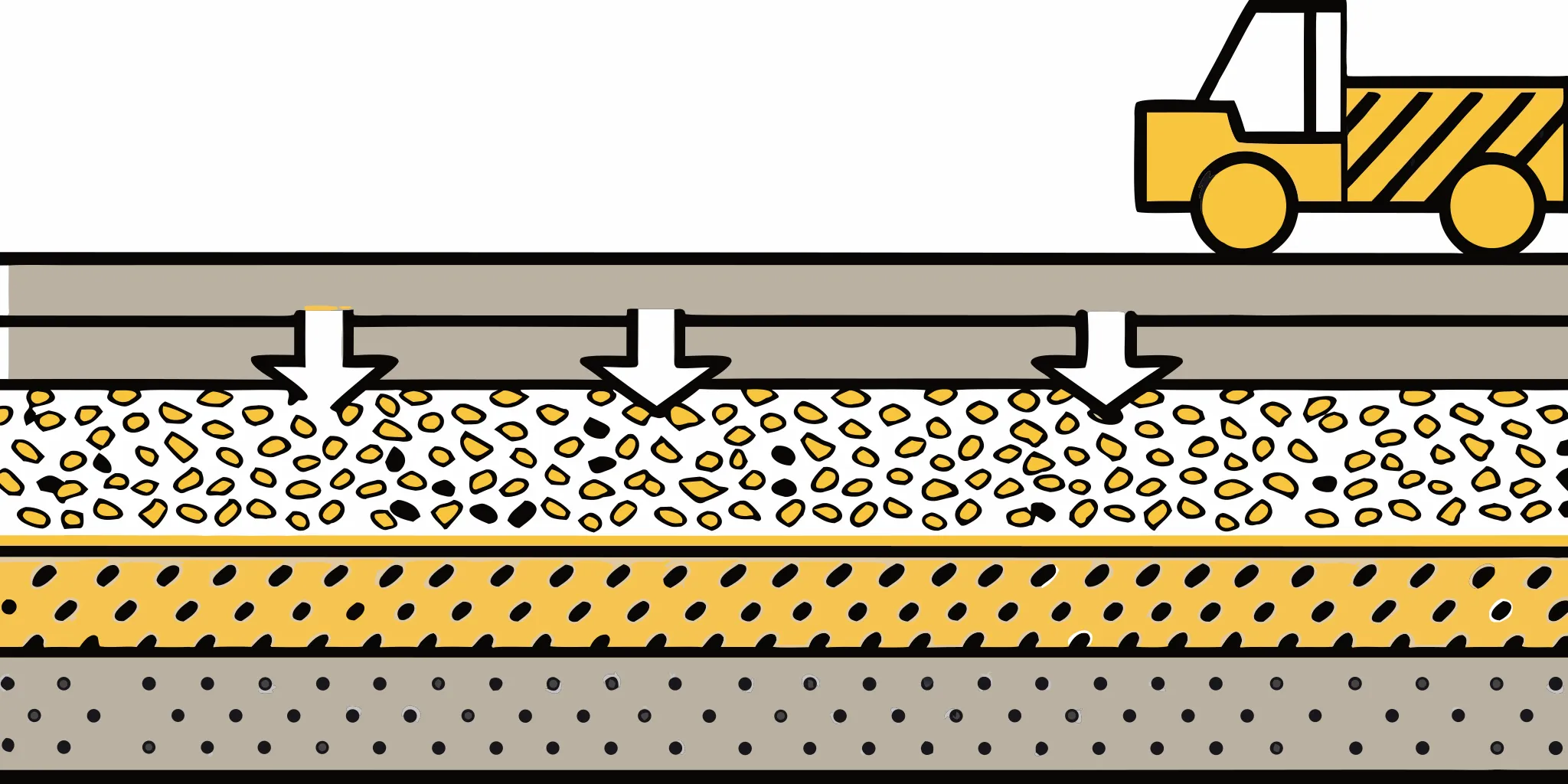
Once the subgrade is suitable, the footprint can be shaped to the intended width and transitions. This creates a consistent platform for the base. Homeowners planning the material portion can review Class 5 gravel for driveway preparation before ordering.
How Do Base and Surface Layers Work Together?
The base and surface layers perform different jobs. A compacted base provides structural support and distributes vehicle loads, while a compatible surface layer creates a smoother driving finish. Together, they form a more reliable system than a single layer of loose stone placed over an uneven or weak subgrade.
A driveway base commonly uses angular crushed aggregate. Irregular faces help pieces interlock when the material is placed and compacted. Even good aggregate can rut when the supporting soil is weak, saturated, or poorly shaped.
The surface layer should fit everyday use, drainage, traction, and the desired finish. Material selection depends on soil, slope, traffic, drainage, access, and whether the drive serves passenger vehicles, trailers, or heavier deliveries.
| Layer | Primary role | Important consideration |
|---|---|---|
| Prepared subgrade | Support the aggregate system | Correct weak areas before placement |
| Structural base | Distribute traffic loads | Use suitable angular aggregate and compact it |
| Driving surface | Provide a practical finish | Balance traction, drainage, and daily use |
Compaction should follow the condition of the material and site. A roller or other suitable equipment can densify aggregate. Equipment cannot repair poor drainage or an unstable subgrade. The goal is a firm, even layer that resists early rutting and limits prolonged saturation.
Homeowners comparing materials can use Minnesota Aggregates’ guide to the best gravel for a driveway as a starting point. A site-specific recommendation is more useful than assuming one aggregate fits every property. Before ordering, measure the usable length and width, note the intended depth, and identify any soft shoulder or narrow access point. Those details help the supplier plan the load and placement approach.
Why Do Crown and Drainage Matter in Minnesota?
A driveway crown raises the center slightly so water can move toward the edges instead of remaining in the wheel paths. The crown must work with shoulders, ditches, culverts, and safe outlets. Correcting those connected drainage features helps limit saturation, erosion, potholes, and uneven seasonal movement.
A surface that appears flat is not necessarily performing well. Depressions can collect rain and snowmelt, while blocked edges can keep water inside the aggregate system. A practical grading plan considers where water enters the property, crosses the driveway, leaves the driving area, and reaches an appropriate outlet.
Build the Crown Into the Whole Profile
The crown should be consistent rather than a sharp ridge. The surface slopes from the center toward the edges, and the shoulders should not form a raised barrier that traps runoff. Curves, entrances, transitions, and low points deserve extra attention because they can collect water even when the main stretch is shaped correctly.
Keep Ditches and Culverts Functional
Ditches and culverts are part of the driveway system. Leaves, sediment, grass, and displaced gravel can reduce their capacity. An entrance culvert must remain open so water can pass below the driveway instead of backing up against the base.
Freeze-thaw conditions add another reason to prioritize drainage. Water around a driveway can freeze, thaw, and weaken supporting soil over time. Recurring damage should prompt a review of the crown, edge drainage, base, and subgrade instead of repeated surface patching alone.
What Do Professional Spreading and Finishing Add?
Professional spreading turns delivered aggregate into a consistent driving surface by placing material across the intended width. The operator corrects thin and thick areas, shapes the crown, blends transitions, and checks the edges. Final grading and compaction help the driveway function as one connected surface instead of a collection of gravel piles.
Equipment and technique should match the site. A compact residential entrance has different access limits from a long private drive, steep approach, or route that must handle delivery vehicles. The operator needs room to place material without damaging lawns, structures, drainage paths, or existing improvements.
Spreading in controlled passes makes it easier to find thin spots and areas where material has collected. It also reduces the risk of burying a drainage path or leaving ridges between passes. The finished width should be clear, and the edges should transition without abrupt drop-offs that allow aggregate to migrate into landscaping.
For a homeowner handling part of the work, Minnesota Aggregates explains how to spread gravel on a driveway. The finished result still depends on grade, drainage, base condition, and equipment access.
A final check should look for tire depressions, loose ridges, exposed base, edge drop-offs, and places where water could collect. Finishing is a functional part of the project, not merely a cosmetic extra.
How Can You Maintain a Graded Gravel Driveway?
Maintenance keeps a graded driveway working by catching drainage problems, ruts, potholes, edge movement, and thin areas early. Inspect after major storms and spring thaw. Keep ditches and culverts open, correct recurring low spots, and refresh material with grading and compaction instead of dumping loose gravel into isolated holes.
- Inspect after significant weather: Look for standing water, new channels, soft spots, exposed base, and gravel pushed toward the edges.
- Correct ruts before they deepen: Loosen, fill, shape, and compact damaged areas so the repair bonds with the surrounding surface.
- Protect the drainage path: Clear culverts, ditches, and outlets of sediment, leaves, and displaced aggregate.
- Review recurring defects: A pothole or rut that returns quickly may indicate a low area, weak base, or subgrade issue.
- Plan seasonal checks: Pay particular attention to spring thaw, summer washouts, and winter plow displacement.
Loose gravel moves under tires, runoff, snowplows, and turning traffic. New material can restore a thin area, but it should be spread and shaped across the affected section rather than dumped into a depression. If damage returns in the same place, review the underlying grade and drainage.
For more detail on preserving a driveway after installation, see Minnesota Aggregates’ gravel driveway maintenance guidance. Recording where defects appear and when they return can help identify a structural pattern.
When Should You Hire a Gravel Driveway Grading Service?
Consider a professional grading service when a driveway repeatedly develops ruts or potholes, holds water, or has a failing crown. It may also help when the drive needs a new base or spreading beyond the available equipment. A site review can distinguish routine maintenance from a deeper drainage or foundation problem.
Professional help is also useful before a driveway expansion, parking-pad addition, heavy-use change, or new aggregate delivery. Planning the grade and material together can reduce rework. Minnesota Aggregates provides aggregate delivery and skid steer support for projects in the Twin Cities metro, with scope and timing based on the property and requested materials.
What Should You Discuss Before Requesting a Quote?
Share the driveway dimensions, current problems, desired finish, site access, and traffic expectations. Also explain whether you need delivery only or grading and spreading support.
Ask how the proposed work addresses water movement and weak areas. Delivery timing varies by material, season, route, and site conditions. Minnesota Aggregates generally schedules deliveries within 3 to 4 business days. Class 5 orders may require 3 to 5 business days and more advance planning during peak season.
There is no universal layer thickness or single material recipe for every driveway. Soil, slope, drainage, vehicle loads, access, and local conditions all affect the recommendation. A clear scope makes it easier to compare quotes and understand which work is included.
Call 612-772-3677 or request a driveway project quote from Minnesota Aggregates.
Frequently Asked Questions
What Does a Gravel Driveway Grading Service Include?
A gravel driveway grading service can include site inspection, unsuitable-soil correction, subgrade shaping, drainage work, aggregate delivery, base and surface placement, spreading, compaction, crown shaping, edge control, and final grading. The exact scope depends on the driveway’s soil, slope, drainage, access, and expected traffic.
How Does Grading Help a Gravel Driveway Handle Minnesota Weather?
Grading helps establish a firm base and gives rain, snowmelt, and spring runoff a path away from the driving lane. Good drainage limits prolonged saturation. Proper preparation and compaction can also reduce rutting and uneven movement during freeze-thaw cycles.
Does Every Gravel Driveway Need a New Base?
No. Some driveways need routine reshaping or a surface refresh. Others have weak soil, drainage problems, or a damaged base that requires more extensive correction. A site inspection can help separate a surface maintenance issue from a foundation problem.
Can Minnesota Aggregates Deliver Gravel and Help With Spreading?
Minnesota Aggregates offers aggregate delivery throughout the Twin Cities metro. Equipment support can include spreading and site preparation. The appropriate service depends on the material, driveway condition, access, and requested project scope.