
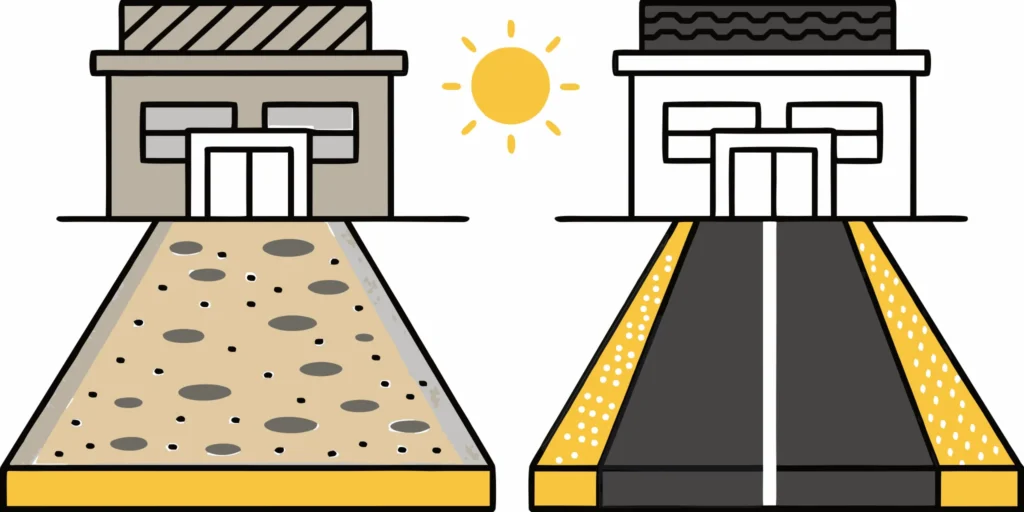
If you live in Minnesota, you know that any outdoor project has to be built to last. Our seasons are no joke, and your driveway bears the brunt of it all, from heavy snowplows in the winter to torrential rain in the summer. That’s why selecting the right surface material is so critical. You need something that won’t crack under the pressure of freeze-thaw cycles or wash away during a spring downpour. This brings many people to the central question: class 5 vs asphalt milling for driveway? Both are tough, reliable options, but they perform differently in our specific climate. This article will compare them head-to-head, focusing on how each stands up to Minnesota weather.
Key Takeaways
- Know your material’s trade-offs: Class 5 gravel provides a classic, natural look but requires regular maintenance like raking to stay smooth. Asphalt millings are a recycled, eco-friendly option that hardens into a durable, low-maintenance surface with less dust.
- Consider both upfront and long-term costs: Class 5 gravel is typically cheaper to install, making it a great budget-friendly choice. However, asphalt millings often save you money over time because their durability means fewer repairs and less need for new material.
- Match the material to your priorities: Choose asphalt millings for a strong, long-lasting driveway with minimal upkeep, which is ideal for a low-maintenance lifestyle. Opt for Class 5 gravel if a lower initial cost and a natural aesthetic are more important, and you don’t mind performing seasonal maintenance.
What Are Class 5 Gravel and Asphalt Millings?
When you’re planning a new driveway, you’ll quickly come across two popular materials: Class 5 gravel and asphalt millings. They might look similar from a distance, but they have different compositions and benefits that can make a big impact on your project’s outcome and longevity. Understanding what each one is will help you figure out which is the right fit for your property, budget, and the demanding Minnesota climate. Let’s break down the basics of each material so you can make a confident choice.
What Is Class 5 Gravel?
Think of Class 5 gravel as a specific recipe of crushed rock, sand, and a bit of clay, all mixed to meet standards set by the Minnesota Department of Transportation. This isn’t just any pile of rocks; the precise blend is designed to pack down tightly, creating a super stable and solid surface that still drains well. That’s why it’s a go-to material for building the essential base layer for roads, parking lots, and building foundations. For homeowners and contractors, it’s one of the most popular choices for a classic gravel driveway that needs to withstand heavy use and harsh weather. Our reliable Class 5 delivery service can get this foundational material right to your job site, exactly when you need it.
What Are Asphalt Millings?
Asphalt millings are essentially recycled asphalt pavement. When old roads or parking lots are removed for repaving, the old asphalt is ground up into small, gravel-like pieces. This process gives the material a second life, making it an eco-friendly option for new projects. The real magic is the residual tar in the millings, which helps the pieces bind together over time, especially in the summer heat. This creates a strong, low-maintenance surface that produces less dust and fewer loose stones than traditional gravel. Because they are durable and cost-effective, our asphalt milling delivery is a popular service for driveway installations across Minnesota, offering a semi-paved feel without the cost of new asphalt.
Pros and Cons of a Class 5 Driveway
Class 5 gravel is a classic choice for driveways across Minnesota, and for good reason. It’s affordable, widely available, and gets the job done right. But like any material, it has its strengths and weaknesses. Understanding these can help you decide if it’s the right fit for your property and how much upkeep you’re willing to take on. Let’s break down what you can expect from a Class 5 driveway.
The Pros of Class 5
One of the biggest advantages of Class 5 is its composition. It’s a carefully balanced mix of crushed rock, sand, and a binder like clay, which allows it to compact into a firm, stable surface. This makes it an excellent material for building everything from driveways and parking pads to the foundational base for future asphalt or concrete projects. Its versatility and reliability are why so many people depend on Class 5 delivery for their projects. When properly installed and compacted, it creates a durable surface that holds up well under the weight of everyday vehicles, providing a solid, dependable driveway for years.
The Cons of Class 5
While Class 5 is sturdy, it does require some ongoing attention. Over time, the surface can develop potholes or ruts, especially after heavy rain or spring thaws when the ground is soft. You’ll likely need to perform regular maintenance, like raking or grading the driveway, to keep it smooth and level. Dust can also be a nuisance during dry, windy summer months. Another thing to consider is that loose gravel can get kicked up by tires, potentially ending up in your lawn. These issues are manageable, but they are part of the long-term commitment to maintaining a gravel driveway.
Pros and Cons of an Asphalt Millings Driveway
Asphalt millings are a popular and practical choice for driveways across Minnesota. Made from recycled asphalt, they offer a unique blend of durability and sustainability. But like any material, they have their own set of advantages and potential drawbacks. Understanding both sides can help you decide if a milling driveway is the right fit for your property, your budget, and your long-term plans. Let’s walk through what makes them a great option and what you should keep in mind before scheduling a delivery.
The Pros of Asphalt Millings
One of the biggest draws of asphalt millings is their eco-friendly nature. Because they are made from ground-up, reclaimed asphalt, you’re choosing a recycled material that reduces landfill waste and conserves natural resources. Over time, the pieces of asphalt bind together and harden, creating an incredibly durable and low-maintenance surface that stands up well to Minnesota’s weather extremes. This process results in a strong driveway that produces less dust and mud than traditional gravel. Many homeowners also appreciate the unique, dark gray appearance that offers a more polished look than standard gravel.
The Cons of Asphalt Millings
While millings are a fantastic material, there are a few things to consider. Since they are a recycled product, the quality and composition can vary from one batch to the next. That’s why it’s so important to source your materials from a reliable supplier. The installation process is also more involved than simply spreading gravel. To get a solid, long-lasting surface, the millings need to be properly graded and compacted, which often requires professional skid steer services. Finally, the final look, while neat, won’t be the smooth, uniform black surface of a newly paved hot-mix asphalt driveway.
Comparing Costs: Class 5 vs. Asphalt Millings
When you’re planning your driveway project, the budget is always a big piece of the puzzle. It’s helpful to look at both the initial price tag and the long-term expenses that come with each material. The cost of a new driveway isn’t just about the material itself; it also includes installation and future upkeep. Let’s break down how Class 5 and asphalt millings stack up financially so you can make a choice that fits your wallet now and for years to come.
Upfront Installation Costs
If your main focus is keeping initial project costs down, Class 5 gravel is often the more budget-friendly option. The material itself is typically less expensive, and the installation process is generally simpler and faster. This makes it an attractive choice for homeowners and contractors looking to complete a project without a large upfront investment. Getting a Class 5 delivery is a straightforward way to get the materials you need quickly. Asphalt millings, on the other hand, can have a slightly higher initial cost because they are a recycled product that goes through processing before they get to you.
Long-Term Maintenance and Upkeep
This is where the cost comparison gets interesting and where asphalt millings really start to pay off. Over time, the residual asphalt binder in the millings hardens and fuses together, creating a durable, pavement-like surface that stands up to Minnesota weather. This means you’ll spend far less time and money on maintenance down the road. In contrast, a Class 5 driveway needs more regular attention. You can expect to rake, grade, and add new gravel every few years to fill in ruts and low spots. While these tasks aren’t difficult, the recurring costs for material and labor can add up, making an asphalt milling delivery a smart long-term investment.
How Do They Perform in Minnesota Weather?
Minnesota’s weather isn’t for the faint of heart, and the same goes for your driveway material. From heavy snow and ice in the winter to summer downpours and the constant freeze-thaw cycles in between, your driveway takes a serious beating. Choosing a material that can stand up to these conditions is essential for longevity and less maintenance down the road. Both Class 5 gravel and asphalt millings have their own ways of handling the state’s demanding climate.
The right choice depends on how each material reacts to moisture, temperature swings, and the weight of vehicles day in and day out. Let’s look at how they compare in three key areas: durability, traffic handling, and drainage. Understanding these differences will help you pick the best surface for your property, ensuring it holds up season after season.
Durability and Weather Resistance
When it comes to standing strong against the elements, asphalt millings have a unique advantage. Over time, the residual asphalt binder in the millings allows the material to compact and harden, creating an incredibly durable surface that resists harsh weather and heavy use. This process makes it less prone to the kind of damage that freeze-thaw cycles can inflict.
Class 5 gravel is also a tough material, known for its stability and load-bearing capacity. However, it can be more susceptible to developing potholes and ruts, especially after a long, wet winter. Water can seep into the gravel, and when it freezes and expands, it can displace the aggregate, leading to an uneven surface that needs attention come spring.
Handling Heavy Traffic
If your driveway sees a lot of action from heavy vehicles like trucks or equipment, you need a material that won’t buckle under pressure. An asphalt milling delivery can create a driveway that is just as strong and resilient as one paved with new asphalt. As the millings settle and bind together, they form a solid, stable surface that holds up well against heavy traffic and resists rutting. This means less fixing and a longer-lasting driveway, even with constant use.
Class 5 is an excellent base material for this very reason, but as a top layer, it can shift and groove under the weight of heavy vehicles. While it can certainly handle daily car traffic, consistent use by heavier equipment might require more frequent regrading to keep the surface smooth and even.
Drainage and Water Runoff
Managing water is a big deal in Minnesota, and your driveway material plays a key role. Asphalt millings perform well here, especially in winter. Their dark color absorbs more sunlight, which helps melt snow and ice faster than lighter-colored materials. This reduces the chance of icy patches forming, making your driveway safer.
Class 5 gravel offers great drainage, allowing water to percolate through rather than pool on the surface. This helps prevent damage from freezing and thawing. The main drawback comes during snow removal. It’s difficult to plow a gravel driveway without scraping up and moving the stones along with the snow, which often means you’ll need to rake it back into place later.
What Does Installation Involve?
Putting in a new driveway is a bit more complex than just spreading some material around. The installation process is what truly determines how well your driveway will hold up over the years, regardless of whether you choose Class 5 or asphalt millings. Proper installation ensures your driveway can handle vehicle weight, resist Minnesota’s weather, and drain water effectively to prevent pooling and ice patches. The first step for any project is clearing and grading the area to create a stable, level foundation. This is a critical part of the process that prevents future sinking and shifting.
From there, the steps begin to differ based on your chosen material. Both options require careful layering and compaction, but the specific techniques and equipment vary. It’s also important to get your measurements right from the start. Ordering too little material can halt your project, while ordering too much is a waste of money. Using a cubic yardage calculator can help you estimate the exact amount you’ll need for your specific driveway dimensions. While some homeowners enjoy a good DIY project, driveway installation often requires heavy equipment and a bit of expertise to get just right.
Site Prep and Base Layers
A strong driveway starts with a solid foundation. For both Class 5 and asphalt millings, this means preparing a sturdy base layer that can support the surface material and distribute weight evenly. For a Class 5 delivery, the material itself serves as an excellent base. It’s a dense mixture of gravel, sand, and clay that compacts tightly to form a stable foundation. It’s typically laid down in layers, with each layer being compacted before the next is added to ensure maximum stability.
Asphalt millings also require a well-prepared base. You can’t just spread them over soft dirt and expect good results. The area must be graded and compacted first, often with a base layer of gravel. Once the foundation is set, the asphalt milling delivery can be spread evenly across the surface before being compacted down.
Equipment and Professional Help
The tools you need will largely depend on your material choice. A Class 5 driveway is more approachable for a determined DIYer, but it still requires effort. You’ll need tools to spread the gravel evenly and a plate compactor to pack it down. For larger projects, professional skid steer services can make quick work of grading and spreading the material, ensuring a professional finish.
Installing an asphalt millings driveway is generally a job best left to the pros. Achieving that smooth, pavement-like surface requires heavy machinery, like a vibratory roller, to properly compact the millings and bind them together. Without the right equipment and technique, the surface can end up loose, uneven, and less durable. Professional installation ensures the millings are compacted correctly for a long-lasting, stable driveway.
Common Myths About Driveway Materials
When you’re weighing your options for a new driveway, it’s easy to get bogged down by conflicting advice and old myths. Misconceptions about cost, maintenance, and environmental impact can steer you in the wrong direction. Let’s clear up some of the most common myths surrounding driveway materials so you can feel confident in your choice between Class 5 gravel and asphalt millings. Understanding the facts will help you pick the material that truly fits your property, budget, and lifestyle for years to come.
Myths About Upkeep and Lifespan
A big misconception is that materials like asphalt millings require constant, demanding upkeep. The reality is much more manageable. While some periodic maintenance will extend the life of any driveway, it’s not a non-stop chore. With proper installation, an asphalt milling driveway actually hardens over time, becoming stronger and more stable. This durability counters the myth that these driveways have a short lifespan. In fact, when installed correctly, they can last for many years, providing a reliable surface that stands up to Minnesota’s tough weather without needing constant attention.
Myths About Cost and Environmental Impact
Many people believe that asphalt-based materials are expensive and not very eco-friendly, but that’s not the full story. While you should always consider your budget, materials like asphalt millings are often more cost-effective over the long term. Their durability means you’ll spend less on repairs down the road compared to other options. Furthermore, the idea that they are bad for the environment is a major myth. Asphalt millings are a 100% recycled product, making them one of the more sustainable choices you can make for your driveway. You’re giving old material a new life and keeping it out of landfills.
How to Choose the Right Material for Your Driveway
Making the final call between Class 5 gravel and asphalt millings comes down to your priorities. Think about your budget, how much maintenance you’re willing to do, and the final look you want for your property. Both materials create a solid, reliable driveway, but they offer different benefits. Let’s walk through the specific situations where one might be a better fit than the other to help you make a confident choice.
When to Choose Class 5
You should choose Class 5 gravel if you’re looking for a cost-effective solution with a classic, natural aesthetic. Made from a specific mixture of rock, sand, and clay, it packs down well to create a stable surface. This material is a great option if your upfront budget is a primary concern or if you prefer a rustic look that blends seamlessly with a more rural landscape. Keep in mind that it does require more upkeep, like occasional raking and refilling, to manage ruts and weeds. If you don’t mind a little seasonal maintenance and want a dependable driveway material, our Class 5 delivery can get your project started right away.
When to Choose Asphalt Millings
Asphalt millings are your best bet if you want a durable, low-maintenance driveway that will last for years. Because they are made from recycled asphalt, they are an eco-friendly choice. Over time, exposure to the sun and the weight of vehicles helps the millings bind together, creating a hard, semi-paved surface that stands up well to Minnesota’s weather. This hardening process also means less dust and fewer weeds. If your goal is a long-term investment that saves you time and effort on upkeep, asphalt milling delivery is the way to go for a clean, modern-looking driveway that gets stronger with age.
A Quick Checklist for Your Decision
Still weighing your options? Here’s a simple breakdown to guide your choice.
Go with Class 5 if:
- You prefer a natural, rustic appearance.
- A lower initial cost is your top priority.
- You don’t mind performing regular maintenance to keep it looking its best.
Go with asphalt millings if:
- You want a durable, long-lasting surface with minimal upkeep.
- An eco-friendly, recycled material is important to you.
- You’re willing to invest more upfront for long-term savings and convenience.
Once you’ve decided, you can use our cubic yardage calculator to figure out exactly how much material you’ll need for your project.
Related Articles
- Class 1 vs Class 5 Gravel: Which Should You Use?
- What is the Best Gravel for a Driveway? 5 Types Compared
- Asphalt Millings, Black Dirt, Sand, & Class 5 in Projects
- 6 Best Types of Gravel for Driveways Compared
Frequently Asked Questions
Can I install asphalt millings directly over my old gravel driveway? Yes, you often can, and it’s a great way to upgrade your existing driveway. The key is making sure your current gravel base is solid and well-graded. Before spreading the millings, you’ll want to ensure the gravel surface is smooth, even, and properly compacted. This creates the stable foundation the millings need to settle and bind correctly, giving you a durable, long-lasting result.
How long does it take for an asphalt millings driveway to fully harden? The hardening process for asphalt millings is gradual and depends on factors like heat, sunlight, and traffic. You’ll notice it starting to firm up within the first few weeks, especially during warm summer months. The real magic happens over the first year as the residual tar binder cures and the pieces lock together. The more you drive on it, the more it compacts and solidifies into a strong, pavement-like surface.
Which material is easier to plow in the winter? Asphalt millings generally make snow removal easier. Once they have had time to compact and harden, they create a solid surface that a plow blade can glide over smoothly, much like a paved driveway. With a Class 5 gravel driveway, it’s very easy for a plow to scrape up and push away the loose stones along with the snow, which often means you’ll need to do some raking and redistribution in the spring.
What does “regular maintenance” for a Class 5 driveway actually involve? For a Class 5 driveway, regular maintenance usually means a few seasonal tasks to keep it in good shape. You can expect to rake the surface periodically to smooth out any ruts or low spots that form from traffic and weather. About every two to three years, you may need to add a fresh layer of gravel to fill in compacted areas and maintain a consistent depth. It also involves pulling weeds that might pop up during the warmer months.
Will an asphalt millings driveway look like a brand-new paved driveway? While an asphalt millings driveway provides a dark, clean look, it won’t be identical to a hot-mix asphalt surface. Instead of a smooth, solid black finish, you’ll have a more textured, gravel-like appearance that is dark gray or black. Over time, it becomes a tightly packed surface that looks more uniform than loose gravel but still retains some of its unique, recycled character.