
A grading project can look simple until you account for wet soil, tight gates, material volume, and the direction water needs to travel. The right tool for smoothing a small low spot is not necessarily the right choice for moving fill, shaping a slope, or preparing a stable base.
Talk with Minnesota Aggregates about grading equipment and operator support
Yard grading equipment ranges from hand tools for minor touch-ups to compact tractors and skid steer loaders for reshaping ground, spreading material, and preparing drainage. The best choice depends on the project area, access, soil conditions, material quantity, and how much control the final grade requires.
Grading reshapes ground into a level base or an intentional slope, helping direct water away from structures and reduce ponding. Before choosing a machine, it helps to separate rough grading from the finer work that follows, then match each stage to the equipment and operator control it requires.
What counts as yard grading equipment?
Yard grading equipment is any tool or machine used to reshape, move, spread, level, or finish soil and aggregate. The right choice depends less on the label on the machine and more on the work your property needs. A small lawn repair, a new patio base, and a drainage correction may all involve grading, but they require different levels of control, material handling, and access.
Rough grading moves the major material
Rough grading establishes the basic shape of the site. It may involve cutting down high spots, moving soil into low areas, backfilling an excavation, or placing aggregate across a larger work area. The goal is not a perfectly smooth surface yet. It is to create a workable base and an overall direction for the ground.
Hand tools can handle shallow low spots, small touch-ups, layout, and limited final adjustment. They become inefficient when the project requires repeated excavation or moving a significant volume of soil or aggregate. A skid steer, compact tractor, or similar equipment can handle more material, but the machine is only part of the decision. The attachment, operator control, ground conditions, and available turning space matter too.
Fine grading and leveling create the usable surface
Fine grading follows the major earthmoving work. It smooths uneven areas, blends transitions, and prepares the surface for a lawn, garden, driveway, patio, or other improvement. Leveling does not always mean making the entire yard perfectly flat. It can mean creating an even base or a deliberate slope that helps water move where it should.
Material selection is part of this stage. Class 5 gravel can provide a stable, compactable base for projects such as driveways and building pads. Clean screened sand may be useful for leveling, filling, paver bases, or drainage-related preparation. Black dirt is generally used during final grading for lawns and gardens. Each material behaves differently, so the equipment and spreading method should match the material as well as the finished surface.
Drainage preparation requires more than a smooth yard
Drainage grading focuses on water movement. The finished ground should direct water away from structures and reduce conditions that lead to ponding or erosion. Before choosing equipment, consider soil moisture, access through gates, low wires, turning radius, and whether the ground is firm enough to support the work. Minnesota freeze-thaw cycles can also affect how a graded surface performs over time.
For a broader explanation of what land grading does, start with the relationship between surface shape and drainage. Equipment selection should follow the task, material volume, site access, and desired finish. That approach keeps a simple touch-up from becoming overcomplicated while identifying projects where operator skill and professional assessment are important.
Which equipment works best for rough grading and moving soil?
Rough grading is the part of a project that changes the shape of the site. You may need to cut down high spots, move fill into low areas, backfill an excavation, or create a broad slope before the final surface is smoothed. The best yard grading equipment depends less on a machine label than on the amount of material, the space available, the ground conditions, and how much control the work requires.
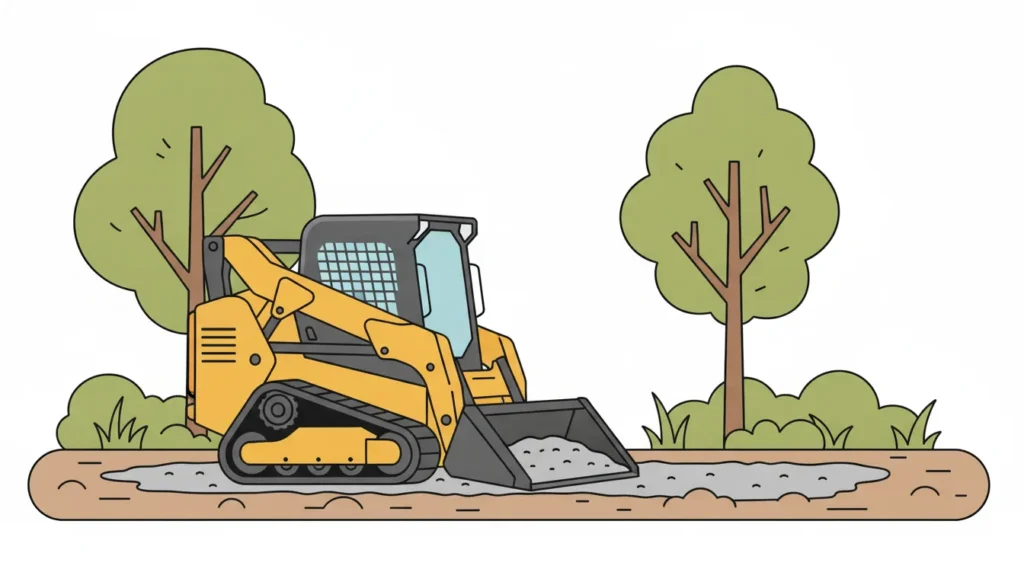
Professional skid steer for active earthmoving
A skid steer is usually the most flexible choice when the project involves moving a meaningful amount of soil or aggregate. With the appropriate attachment and an experienced operator, it can support rough grading, leveling, backfilling, filling low spots, and material spreading. The operator can work through a sequence instead of treating each task as a separate job: cut the high area, reposition the material, fill the low area, and leave the site ready for finer grading.
Access still determines whether this approach fits. A tight gate, limited turning space, low wires, soft ground, or a difficult placement area can change the plan. Those conditions should be reviewed before equipment arrives, not after material has been delivered. Minnesota projects also need to account for local soil, seasonal ground conditions, and freeze-thaw effects. Professional skid steer services can be provided with equipment and an operator, with material delivery coordinated when that fits the project.
Compact tractor with a grading implement
A compact tractor can make sense for a property owner or contractor maintaining a broader area, especially when the work involves repeated surface shaping rather than concentrated excavation. A suitable grading implement can help pull down minor high spots, distribute loose material, and maintain an existing driveway or open yard. The important questions are whether the implement matches the soil and material, whether the tractor can reach the work area, and whether the operator can maintain the intended grade.
It is not a substitute for planning. A tractor may be less practical around tight residential access or where soil must be moved, not simply dragged and spread. It also takes judgment to avoid creating a surface that looks level but sends water toward a structure.
Hand tools for small corrections
Shovels, rakes, wheelbarrows, hand tampers, and similar tools remain useful for small touch-ups, shallow low spots, edges, and final smoothing. They provide close control around landscaping, steps, utilities, and other areas where larger equipment cannot work comfortably. They become inefficient when the job requires substantial excavation, repeated movement of fill, or broad changes in elevation.
Choose the equipment that matches the actual task and access, not the largest machine available. When rough grading affects drainage, a foundation, or a large volume of material, operator experience and site assessment matter as much as the equipment itself.
What equipment is best for leveling and spreading material?
The best choice depends on the material, the area to cover, the access available, and the finish you need. A hand rake may be enough for a small garden bed, while a loader with a grading attachment is more practical for distributing aggregate across a driveway or shaping a larger yard. Think about the entire task, including placement, leveling, and preparation for compaction, rather than choosing a machine by size alone.
| Task | Practical option | Best fit | Limitation |
|---|---|---|---|
| Small touch-ups and final smoothing | Landscape rake, shovel, hand tamper, or plate compactor | Small low spots, garden edges, narrow areas, and finish work | Slow for moving or distributing a large volume of material |
| Broad surface shaping and routine maintenance | Compact tractor with a compatible grading implement | Driveways, larger lots, and repeated maintenance where access allows | Requires suitable implement compatibility, room to turn, and operator control |
| Spreading aggregate and filling low areas | Skid steer with a bucket or grading attachment | Class 5 gravel for a stable base, driveway work, backfilling, and site preparation | Needs a firm travel path, adequate clearance, and careful control near structures |
| Final lawn or garden grade | Hand tools for small areas, or a skid steer grading attachment for broader areas | Black dirt for final grading before lawns, gardens, and new growth | Black dirt is a finish material, not a substitute for correcting major base or drainage problems |
Match the machine to the material
Aggregate for a driveway or base needs to be spread evenly before compaction. Class 5 gravel for a stable base contains a blend of aggregate and fines that supports mechanical compaction, but the right placement method still depends on the site. A bucket can place material in sections, while a grading attachment helps distribute it across the surface. Clean screened sand may suit leveling, filling, paver bases, or drainage work, but it should not be treated as interchangeable with base gravel.
Account for access and finish quality
Measure gates, check for low wires, consider turning space, and identify where the material will be placed before equipment arrives. Soft ground and wet conditions can limit travel and leave ruts. For larger or drainage-sensitive work, professional skid steer services can combine equipment, attachments, operator control, and material delivery. The goal is not simply to move material. It is to leave a surface shaped for its intended use and ready for the next stage of compaction or landscaping.
How should Minnesota soil and drainage affect equipment choice?
The right equipment depends on more than the size of the yard. Minnesota soil moisture, site access, the material being moved, and the drainage goal all affect how efficiently a grading project can be completed. A machine that works well on firm, open ground may be a poor fit for a soft spring yard or a narrow side entrance.
Check ground conditions before bringing in equipment
Wet soil can rut under tires or tracks and become harder to shape cleanly. If the ground is soft, waiting for more workable conditions may protect the existing yard and produce a better finish. The University of Minnesota Extension explains how soil moisture can be evaluated by feel and appearance in its soil-moisture guidance. Freeze-thaw cycles can also change the ground after grading, especially where water collects or the soil lacks a stable base. Seasonal planning should account for local soil conditions and, for larger projects, possible spring load restrictions.
Access is just as important. Measure gates and identify low wires, fences, landscaping, and other obstacles before selecting equipment. The available turning radius and the distance to the placement area help determine whether a compact machine can work without damaging the property. Material volume matters too. Hand tools may suit a shallow low spot or final touch-up, while larger quantities of aggregate, sand, or dirt call for equipment matched to spreading and leveling.
Match the machine to the drainage objective
Grading reshapes the ground into a level base or an intentional slope. The goal may be to move water away from a structure, reduce ponding, prepare a driveway base, or create a surface ready for a lawn. That objective determines whether the work needs rough excavation, material placement, fine grading, or a combination of tasks. What land grading does depends on the existing elevations, soil, material, and surrounding drainage paths.
Drainage-sensitive work deserves more care than simply pushing soil away from a visible low spot. Grading near a foundation, retaining feature, outbuilding, driveway, or meaningful drainage path can redirect water toward another problem area. If the intended result depends on precise transitions or correcting persistent ponding, a professional assessment can help identify the right equipment and sequence.
For projects involving material placement, leveling, and site preparation, professional skid steer services may provide both equipment and operator support. Minnesota Aggregates can also coordinate equipment work with material delivery, so the plan accounts for access, soil conditions, and where the material needs to go.
Can you grade a yard yourself?
Yes, a homeowner can often handle a small grading project when the work involves a limited area, modest material movement, and a clear surface goal. The decision changes when water is reaching a foundation, a structure could be affected, or the project requires moving substantial soil or aggregate. Use this sequence before choosing yard grading equipment.
- Inspect the existing drainage and access. Walk the area after rain if possible. Look for ponding, erosion, low spots, and places where water moves toward a home, garage, retaining wall, or other structure. Note gates, overhead wires, soft ground, and turning limitations. These conditions may rule out certain equipment or make professional help the safer choice.
- Measure and mark the work area. Mark the edges of the section you want to change and identify high spots, depressions, and areas that should remain undisturbed. Think about the finished use, such as lawn, garden, walkway, patio, or driveway. The goal is not simply to make the surface look flat. Grading creates a level base or an intentional slope that directs water where it should go.
- Plan the material before you start. Decide whether you are cutting down high soil, filling low areas, or building a stable base. Material choice depends on the finished surface. Class 5 gravel can support a compactable base, clean screened sand can help with leveling or filling, and black dirt is generally used for final grading before lawns or gardens. Plan where removed soil will go and how material will reach the work area.
- Match the tool to the amount of work. Hand tools can handle layout, shallow low spots, small touch-ups, and final smoothing, but they become inefficient when you must excavate or move much material. A compact machine may be appropriate for a larger accessible area, provided its attachment and operator control match the task. Do not choose equipment by size alone. Access, soil condition, and the finish you need matter just as much.
- Work only when conditions support a stable finish. Wet soil can rut easily and may not hold the shape you create. Consider local soil, weather, seasonal conditions, and the effect of Minnesota freeze-thaw cycles. Work in manageable passes, avoid damaging areas that should remain firm, and prepare for compaction when the project requires a stable base.
- Check the result before calling it finished. Inspect the surface from several directions and watch where water moves after rainfall. Look for remaining ponding, erosion, settlement, or flow toward a structure. If the grade is not performing as intended, or the work affects a foundation, structure, or major drainage path, stop and seek professional assessment rather than adding more material by guesswork.
For a small surface correction, DIY work may be reasonable. Larger grading, difficult access, drainage-sensitive areas, and substantial material movement are better matched with professional skid steer services and an operator who can coordinate the equipment and material plan.
When should you hire professional grading equipment and an operator?
Professional yard grading equipment and an operator make sense when the project involves more than smoothing a small patch by hand. If you need to reshape a meaningful area, remove high spots, move substantial soil, spread aggregate, or create an intentional slope, machine control can make the work more manageable and consistent. The right choice still depends on the site, material, access, and final use of the ground.
Consider professional help when grading affects drainage. Water needs a planned path away from buildings, patios, driveways, and other structures. A poorly placed cut or fill can leave low spots, send runoff toward a foundation, or create erosion farther downslope. Professional grading is especially worth considering when you are correcting recurring ponding or changing the slope near a home. What land grading does depends on more than making the surface look level.
Foundation and structure proximity are another clear decision point. Work around a house, retaining feature, utility area, or other structure requires careful control of where material is removed and placed. Backfill and compaction also depend on soil type and moisture, so a project near a foundation should not be approached as a simple equipment-rental job. If you are unsure whether the planned grade protects the structure or handles runoff appropriately, pause and get site-specific guidance.
Access can also justify hiring an operator. Tight gates, low wires, soft ground, limited turning space, and a narrow placement area affect both equipment selection and how material can be moved. An operator can help coordinate the sequence of cutting, filling, leveling, and spreading instead of leaving you to solve each movement while operating unfamiliar equipment. Difficult access is a planning issue, not just a machine-size issue.
Minnesota Aggregates provides professional skid steer services for grading, leveling, spreading, backfilling, site preparation, and final grades. The work can be arranged on its own or coordinated with material delivery. Depending on the project, that may include Class 5 gravel for a stable base, sand for leveling or filling, black dirt for final grading, or another suitable aggregate. Planning the material and equipment together can reduce handoffs and help keep the work sequence practical.
Talk with Minnesota Aggregates about professional skid steer grading
Frequently Asked Questions
What is the best tool for grading a yard?
The best choice depends on the work. Hand tools can handle small touch-ups and final smoothing, while a compact tractor may suit broad surface maintenance. A skid steer is often a better fit for moving fill, cutting high spots, spreading aggregate, backfilling, and preparing a larger area. Access, soil moisture, turning space, and the amount of material matter as much as the machine itself.
Can you grade your yard yourself?
Yes, a homeowner can handle a small project when the changes are shallow and the drainage plan is clear. Start by identifying high and low areas, checking where water flows, and choosing material for the intended finish. Stop and seek help when the project involves substantial excavation, foundation drainage, buried utilities, difficult access, or more material than hand tools can reasonably move.
What equipment helps with drainage preparation?
Equipment that can shape a deliberate slope and place fill accurately is useful for drainage preparation. The right tool also depends on soil and moisture because wet or clay-heavy ground may compact differently than dry, sandy soil. Grading should direct water away from structures without creating runoff problems for downhill areas. See the overview of what land grading does for more context.
What material should be used after rough grading?
Material depends on the finished use. Class 5 gravel can create a stable, compactable base for driveways and similar surfaces. Clean screened sand can support leveling, filling, paver bases, and some drainage applications. Black dirt is generally used during final grading for lawns, gardens, and new growth, after the underlying grade is established.
Ready to plan your Minnesota grading project?
The right equipment and material approach can make rough grading, leveling, and drainage preparation more manageable from the start. If you are comparing options for your yard, request project guidance or a quote based on your site needs, access, and planned work. Contact us to get started with Minnesota grading, material delivery, or skid steer support.