
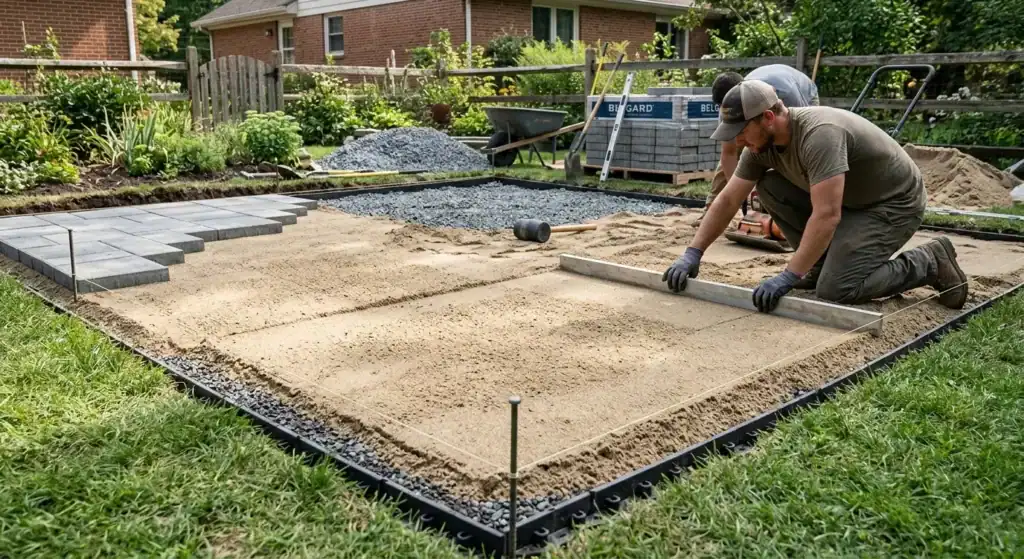
For the bedding layer directly beneath pavers, use coarse, washed concrete sand. Its angular particles compact into a stable, level surface while leaving space for drainage, which helps protect patios, walkways, and driveways through Minnesota freeze-thaw cycles. Avoid fine masonry or playground sand because it can wash out and allow pavers to shift. Planning a project in the Twin Cities? Request a sand delivery quote from Minnesota Aggregates.
Key Takeaways
- Choose Coarse Sand for a Stable Base: The success of your project depends on using a coarse, washed concrete sand. Its angular grains interlock to create a firm foundation that drains properly, while fine sands like playground or masonry sand will wash out and cause pavers to become uneven.
- Use Different Sand for the Base and Joints: Your project requires two distinct types of sand. A one-inch layer of coarse bedding sand creates a stable cushion underneath the pavers, while a polymeric joint sand is swept between them to lock the surface together and prevent weeds.
- Compact Every Layer for Lasting Results: A professional finish comes from proper compaction. Use a plate compactor on your gravel base and again on the finished paver surface to settle everything firmly, eliminate air pockets, and create a solid, interlocked patio that won’t shift over time.
Why Use Sand for a Paver Base?
When you’re planning a new paver patio, walkway, or driveway, it’s easy to focus on the pavers themselves—the color, the shape, the pattern. But what lies beneath them is just as important. The thin layer of sand directly under your pavers, known as the bedding sand, is the unsung hero of your entire project. It’s not just filler; this layer is critical for creating a durable, level surface that will look great for years to come. Think of it as the mattress for your pavers. It provides a firm yet forgiving cushion that serves three essential functions: creating a stable foundation, ensuring proper drainage, and locking the pavers securely in place. Getting this layer right is the key to a professional-grade installation that can withstand weather, foot traffic, and time. Without a proper sand base, pavers can shift, sink, or become uneven, turning your beautiful new hardscape into a tripping hazard. It’s the component that ties the whole system together, from the compacted gravel below to the finished surface on top.
It Creates a Stable Foundation
The primary job of the paver sand base is to provide a perfectly level and stable surface to set your pavers on. After you’ve laid and compacted your gravel base, the sand layer smooths out any minor imperfections, giving you a uniform bed to work with. Coarse sand is ideal because it packs down incredibly well, creating a firm foundation that prevents the pavers from shifting, rocking, or sinking over time. This stability is what keeps your surface smooth and even, avoiding those frustrating dips and wobbles that can appear in poorly installed projects. A solid foundation is the first step to ensuring your hard work pays off with a beautiful, long-lasting result.
It Ensures Proper Drainage
Water is the biggest threat to any paver installation. If water gets trapped underneath, it can erode the base materials and cause pavers to heave during Minnesota’s freeze-thaw cycles. This is where the right kind of sand is crucial. A coarse, washed concrete sand allows water to drain freely through the joints and the bedding layer, directing it away from the surface. The angular particles create small gaps that prevent water from pooling, protecting the integrity of the entire system. Proper drainage not only prevents shifting and damage but also helps stop moss and weeds from growing between your pavers, keeping your project looking clean and new.
It Keeps Pavers Locked in Place
Have you ever wondered how individual pavers stay so tightly packed together? The secret is in the sand. The coarse, angular grains of bedding sand interlock when compacted, creating a powerful grip on the bottom of each paver. This process, known as shear strength, prevents the pavers from sliding or moving horizontally. Once the pavers are set and the joint sand is swept in, the entire system locks together into a single, flexible surface. This interlocking action distributes weight evenly across the patio or driveway, ensuring it can handle foot traffic and vehicles without coming apart. The right sand delivery provides the perfect material to hold everything together.
What’s the Best Sand for a Paver Base?
When you’re laying pavers, the sand you choose for the base is one of the most critical decisions you’ll make. It’s the difference between a patio that looks great for years and one that starts shifting after the first winter. While it might all look the same from a distance, not all sand is created equal. The right type provides a stable, level cushion that locks your pavers in place and allows water to drain away effectively.
The best choice for a paver base is a coarse, washed concrete sand. This specific type has the ideal properties to support the weight of the pavers and any foot traffic they’ll endure. Using the wrong sand, like fine playground sand or masonry sand, can lead to a host of problems, including uneven surfaces, weed growth, and poor drainage that can damage your project over time. Let’s break down what makes concrete sand the industry standard and how it contributes to a durable, professional-looking finish.
The Advantages of Washed Concrete Sand
Washed concrete sand is the go-to material for a paver base, and for good reason. It’s a coarse sand that has been washed to remove fine particles like silt and clay. This process is key because it leaves behind angular grains that compact tightly to form a solid, stable foundation. This stability helps lock the pavers in place, preventing them from shifting or wobbling. Plus, the spaces between the coarse grains allow water to drain through freely, which is essential for preventing frost heave and water damage underneath your pavers. When you need reliable materials for your project, a quality sand delivery ensures you get the right product for the job.
Why Coarse Sand Beats Fine Sand
The secret to a strong paver base lies in the shape and size of the sand grains. Coarse, angular sand grains are superior because they interlock with one another, creating a firm, unmoving surface. Think of it like a puzzle—the pieces fit together snugly. On the other hand, fine sands like playground or masonry sand have rounded, smaller particles. These grains don’t lock together and can easily be washed away by rain, causing your pavers to become uneven. Masonry sand also tends to hold moisture instead of letting it drain, which can lead to major issues. Sticking with coarse sand is the best way to ensure your paver project has a solid footing from the start.
How Quality Sand Guarantees Better Results
Starting with high-quality sand is the first step, but proper installation is what truly ensures a lasting result. A well-laid paver base is about creating a perfectly level and compacted surface. After spreading the sand, it needs to be “screeded,” or leveled, to a consistent depth. This ensures your pavers sit evenly and maintain their alignment. According to a 10-step guide from Oregon State University, using a mechanical plate compactor afterward is crucial. This step settles the pavers firmly into the sand bedding, locking them together and minimizing any chance of future settling or shifting. Quality sand makes this entire process smoother and delivers a far more durable outcome.
What to Look for in a Quality Paver Sand
When you’re sourcing materials for your paver project, it’s easy to think that all sand is pretty much the same. But the sand you choose for your base is the literal foundation of your patio or walkway, and picking the right kind is critical for a job that lasts. The best paver sand isn’t just any sand; it has specific characteristics that professionals look for to guarantee stability, proper drainage, and a long-lasting, even surface. Using the wrong type—like fine play sand or unwashed sand full of silt—can lead to a whole host of problems, from wobbly pavers and weed growth to serious drainage issues that cause heaving during our Minnesota winters. Getting this foundational layer right is the single most important step to ensure your hard work pays off. Before you place an order, you need to know what to look for. The right sand will have angular grains that lock together, a specific particle size with very little dust, excellent drainage capabilities, and great compaction properties. Understanding these key features will help you select a material that not only makes installation easier but also protects your investment from the elements for years to come. Let’s break down exactly what each of these qualities means for your project.
Angular Grains That Interlock
Think about the difference between stacking building blocks versus a pile of marbles. The blocks lock together, while the marbles just roll apart. The same principle applies to sand. Quality paver sand is made of coarse, angular grains with sharp edges. Unlike rounded sand (like play sand), these angular grains interlock with each other when compacted. This creates a strong, stable base that prevents pavers from shifting, sinking, or wiggling over time. When you’re investing time and money into a beautiful paver feature, this interlocking action is your best defense against an uneven surface down the road.
The Right Grain Size with Minimal Dust
The size of the sand particles matters just as much as their shape. You’re looking for a coarse sand with particles around 1/8 inch in size. This texture is large enough to create space for water to drain but small enough to compact into a firm, solid layer. It’s also important to choose a washed sand with minimal dust or silt. Fine particles and dust can easily wash away with rain, creating tiny empty pockets under your pavers. Over time, this erosion causes the pavers to settle and become uneven. A quality sand delivery will provide clean, properly-sized material ready for your project.
Excellent Water Drainage
In Minnesota, we’re no strangers to rain and snow. Proper drainage is non-negotiable if you want your paver installation to survive our freeze-thaw cycles. The right paver sand is coarse and permeable, allowing water to pass through it freely instead of pooling on the surface or in the base. When water gets trapped and freezes, it expands and can heave the pavers upward, creating a hazardous, uneven surface. Using a coarse concrete sand for the base layer is an excellent choice because it packs down well while leaving enough space between particles for water to drain through effectively, protecting your investment for years to come.
Great Compaction Properties
A stable paver base is a well-compacted one. The goal is to create a dense, solid layer that won’t settle any further once the pavers are laid on top. High-quality paver sand, with its angular grains, is designed for superior compaction. When you run a plate compactor over it, the sharp particles lock together tightly, eliminating air pockets and forming a rigid foundation. For the best results, professionals recommend compacting the base material in layers to ensure stability throughout the entire depth of the base. This solid, unmoving foundation is what will support the weight of your pavers, furniture, and foot traffic without budging.
Which Types of Sand Should You Avoid?
Choosing the right sand for your paver base is just as important as choosing the pavers themselves. Using the wrong type can undo all your hard work, leading to a lumpy, unstable surface that fails within a year or two. It’s a frustrating and costly mistake, but thankfully, it’s an easy one to avoid. Certain sands might seem like a good idea at first glance—they might be cheaper or more readily available—but they lack the specific properties needed for a durable foundation.
To keep your patio, walkway, or driveway looking great for years, you need to know which materials to leave at the store. The wrong sand won’t compact properly, will trap water, and can wash out from under your pavers, causing them to sink and shift. Let’s walk through the common types of sand that simply aren’t cut out for the job. Making sure you get a quality sand delivery of the correct material is the first step toward a successful project.
The Problem with Playground Sand
It might feel soft and look uniform, but playground sand is one of the worst choices for a paver base. Its grains are very fine and rounded, which is great for sandboxes but terrible for construction. Because the particles are so smooth, they don’t interlock or compact well. Instead, they just slide past each other. This creates a weak foundation that won’t provide the stability your pavers need. As one expert from Tuscany Pavers notes, this fine sand “washes away, making pavers wobbly and uneven.” Over time, you’ll end up with a shifting, unstable surface that’s a tripping hazard.
The Limitations of Masonry Sand
Masonry sand is another material that’s perfect for its intended purpose—making mortar—but not for paver bases. Like playground sand, its grains are fine and uniform. This consistency is ideal for creating smooth mortar, but it prevents the sand from packing down tightly to form a solid base. Masonry sand doesn’t create the necessary friction between particles to lock everything in place. More importantly, it can hinder drainage. The fine texture tends to hold water instead of letting it flow through, which can lead to frost heave and damage during Minnesota’s harsh winters. Save the masonry sand for your brickwork projects.
Why to Steer Clear of Sand Topping Mix
You should absolutely avoid any product labeled “sand topping mix.” While it has “sand” in the name, this material is essentially a fine concrete mix containing cement. When you add water, it hardens into a solid, rigid slab. This is the exact opposite of what you want for a paver base. A proper base needs to be firm yet flexible enough to allow for slight ground movement and excellent drainage. A hardened base will crack over time and won’t let water escape, causing major issues for the pavers on top. As a user on a Reddit home improvement forum wisely warned, this mix “will harden, which is not what you want under pavers.”
How Fine Sand Causes Drainage Issues
The common thread among all these unsuitable sands is their fine texture. Fine sand particles create a dense layer that doesn’t allow water to pass through easily. Instead of draining away, rainwater and snowmelt get trapped within the base, turning it into a soupy mess. This water saturation weakens the entire foundation. According to the experts at Braen Supply, loose-fill sand “washes away easily in the rain,” and a saturated base is much more likely to erode. This erosion leads directly to sinking pavers and an uneven surface. For a long-lasting paver project, always choose a coarse, angular sand that promotes excellent drainage.
Bedding Sand vs. Joint Sand: What’s the Difference?
When you’re planning a paver project, you’ll hear a lot about sand. But it’s crucial to know that not all sand is created equal. The sand you use under your pavers is completely different from the sand you use between them. Using the wrong type can undo all your hard work, leading to shifting pavers, weeds, and drainage problems. Let’s break down the two main types you’ll need: bedding sand and joint sand. Understanding their unique roles is the key to building a patio or walkway that lasts.
Bedding Sand: The Cushion Underneath
Think of bedding sand as the firm cushion that your pavers rest on. Its main job is to create a smooth, level surface over your compacted gravel base, providing a stable foundation for the pavers to sit on. The best material for this is a coarse, washed concrete sand. Its angular particles interlock tightly when compacted, which prevents the pavers from shifting or settling over time. This type of sand also allows for excellent drainage, so water doesn’t pool underneath your pavers and cause issues down the road. Getting a quality sand delivery for this step ensures your project starts on the right foot.
Joint Sand: The Filler Between the Cracks
Joint sand is the material you sweep into the gaps between your pavers once they’re all laid out. This is what locks everything together into a single, solid surface. While you can use regular fine sand, most pros recommend polymeric sand. This is a special blend of fine sand and polymer additives that harden when you wet them. This hardening effect is a game-changer—it creates a durable bond that resists erosion from rain, prevents weeds from sprouting in the cracks, and even keeps ants from building nests between your pavers. It’s the finishing touch that keeps your paver surface strong and low-maintenance.
When and How to Use Each Type
The order of operations is simple but non-negotiable. After you’ve laid and compacted your gravel base, you’ll spread a one-inch layer of bedding sand. Screed it smooth to create a perfectly level bed for the pavers. Once the pavers are set in place, you can sweep the joint sand over the surface, allowing it to fill all the gaps. For polymeric sand, you’ll lightly mist it with water to activate the polymers, locking the sand in place as it dries. Never mix them up—using fine joint sand for your base will lead to a squishy, unstable foundation, while coarse bedding sand won’t properly fill the tight gaps between pavers.
How to Install Paver Sand the Right Way
Getting the installation right is just as important as choosing the right materials. A solid installation process ensures your patio, walkway, or driveway looks great and lasts for years. It all comes down to creating a stable, level surface where every paver is securely locked in place. Following these steps will help you build a paver project that can withstand Minnesota’s weather and years of foot traffic. It’s a process that requires patience and attention to detail, but the professional-looking results are well worth the effort.
Prepare and Excavate Your Base
Your paver project is only as strong as its foundation. Start by excavating the area to the proper depth, removing all grass, roots, and topsoil. The next step is to lay down your base material. This layer, typically made of a well-graded aggregate, provides the primary structural support and drainage. We recommend using a material like Class 5 gravel for its excellent compaction and stability. Spread the gravel in layers, compacting each one thoroughly with a plate compactor until you have a solid, even base that’s ready for the next step.
Layer and Screed the Sand
Once your gravel base is compacted and level, it’s time to add the bedding sand. This layer creates a crucial cushion that allows you to set the pavers evenly and securely. Spread about one inch of coarse sand over the entire base. To get it perfectly level—a process called screeding—lay two pipes or rails on opposite sides of the area and pull a straight 2×4 board across them. This removes excess sand and creates a smooth, flat surface. This step ensures your pavers won’t rock or settle unevenly over time. A reliable sand delivery can get you the right material for this critical layer.
Compact for a Solid Finish
Compaction is the key to a long-lasting paver installation. After you’ve laid the gravel base, you need to run a plate compactor over it until it’s firm and stable. Once you’ve placed all your pavers on the screeded sand bed, you’ll use the compactor again. This final pass over the top of the pavers locks them into the sand bedding, settling them firmly in place and creating a tight, interlocked surface. Don’t skip this step—it’s what gives your project its final strength and prevents shifting down the road.
Common Mistakes to Sidestep
Even small errors can lead to big problems later on, so it’s important to get the details right. Here are a few common mistakes to avoid:
- Forgetting water: A little moisture helps most base materials compact more effectively. Lightly spray the gravel with a hose before running the plate compactor over it.
- Skipping the final compaction: Running a compactor over the finished pavers is not optional. This final step is what truly sets the pavers into the sand and locks everything together.
- Ordering the wrong amount: Miscalculating your material needs can bring your project to a halt. Use a cubic yardage calculator to ensure you have enough sand and gravel from the start.
Find Quality Paver Sand in Minnesota
Now that you know exactly what to look for, the next step is finding a reliable source for your paver sand here in Minnesota. Getting the right material is especially important in our climate, where harsh freeze-thaw cycles can easily damage a poorly constructed paver project. You need a quality sand that will provide a stable, long-lasting foundation.
The best choice is a washed concrete sand, sometimes called bedding sand. As the experts at Tuscany Pavers explain, this type of sand is perfect for a paver base because it drains well and compacts tightly to provide a stable foundation. Its coarse, angular particles interlock to create a solid base that resists shifting and prevents water from pooling underneath your pavers—a must for preventing frost heave during our tough winters.
While you might find bagged sand at a local home improvement store, sourcing it from a dedicated aggregate supplier ensures you get a consistent, high-quality product. For larger projects, having the material delivered directly to your site saves you time, money, and a lot of heavy lifting. At Minnesota Aggregates, we provide fast and reliable sand delivery across the state. We make sure you get the right material for your project, exactly when you need it, so you can build a beautiful and durable paver surface that stands the test of time.
Related Articles
- Minnesota Sand Delivery | Quality Sand Fast & On Time
- Minnesota Class 5 Delivery | Gravel for Driveways & Projects
- The Secret Ingredient: Enhancing Construction Projects with the Best Aggregates – Minnesota Aggregates
- From Foundations to Finishes: Innovative Uses of Asphalt Millings in Every Project – Minnesota Aggregates
Frequently Asked Questions
Can I just use cheap play sand for my paver base? While it might be tempting to grab a few bags of play sand, it’s one of the worst materials you can use for a paver base. Play sand has very fine, rounded grains that don’t lock together. This creates a weak foundation that will shift and wash away over time, causing your pavers to become uneven and wobbly. For a stable, long-lasting project, you need a coarse, angular sand that compacts into a solid, interlocking base.
How do I figure out how much sand I need to order? Guessing your material needs can lead to project delays or wasted money. The best way to get an accurate number is to first measure the length and width of your project area to find the square footage. Then, decide on the depth of your sand layer, which is typically one inch. You can plug these numbers into an online cubic yardage calculator to determine exactly how much sand you’ll need to order for delivery.
Do I use the same sand for the base and for the joints between the pavers? No, these two applications require different types of sand. The base, or bedding layer, needs a coarse, washed concrete sand to provide a stable and well-draining cushion for the pavers. The sand for the joints is much finer, designed to fill the small gaps and lock the pavers together. Many people opt for polymeric sand for the joints because it contains additives that harden to prevent weed growth and erosion.
Why is coarse sand so much better than fine sand for a paver base? The secret is in the shape of the particles. Coarse sand has angular, sharp-edged grains that interlock like puzzle pieces when compacted, creating a strong and stable foundation. Fine sand, on the other hand, has rounded particles that just slide past one another and can hold moisture. This leads to a weak base that doesn’t drain well, making your pavers susceptible to shifting and frost heave, especially during Minnesota winters.
Is it really necessary to use a plate compactor on the sand? Yes, absolutely. Compaction is a critical step you shouldn’t skip. After you lay your pavers on the sand bed, running a plate compactor over the top settles them firmly into the sand. This action locks the pavers into the base and into each other, creating a single, solid surface that distributes weight evenly. Without this final compaction, your pavers are much more likely to shift, sink, or become uneven over time.