
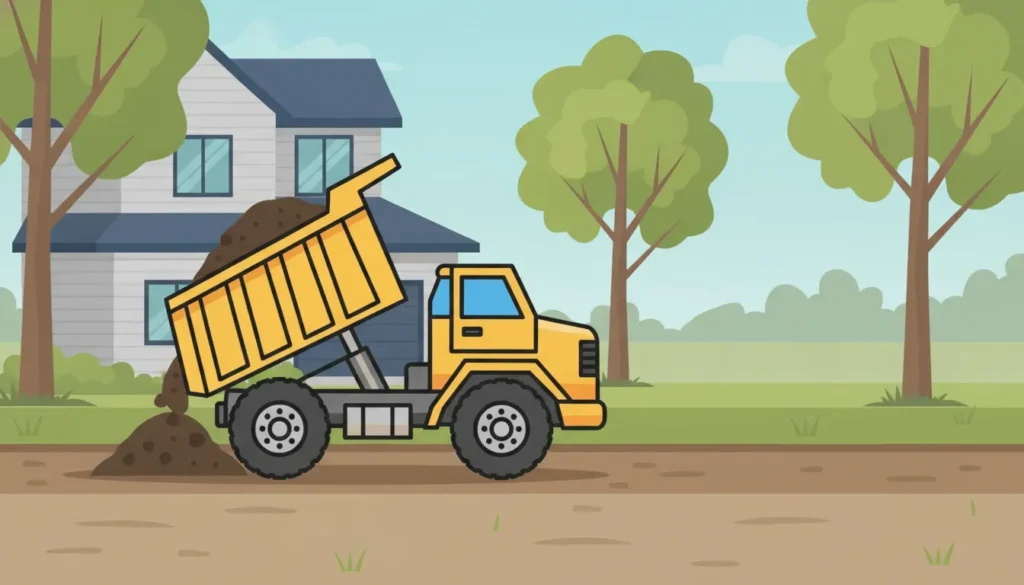
Planning screened topsoil delivery in Minnesota’s South Metro? The material you order and the place it is dumped can determine whether your lawn or garden project moves smoothly or turns into extra handling. This guide covers what screened topsoil is, when it makes sense, how to estimate the amount, and how to prepare a practical drop location in Burnsville, Eagan, Apple Valley, Lakeville, Prior Lake, and nearby communities.
Call Minnesota Aggregates at 612-772-3677 for a screened topsoil quote.
What is screened topsoil?
Screened topsoil is black dirt that has been processed through a screen to remove larger rocks, sticks, clumps, and other coarse debris. The result is a more uniform material that is easier to rake, spread, and finish than non-screened dirt. Minnesota Aggregates offers screened and non-screened black dirt for different lawn, garden, landscaping, fill, and grading needs.
Screening does not turn soil into a finished lawn or guarantee that every site will grow the same way. It gives you a cleaner, more consistent starting material. Your existing soil, drainage, seed or sod choice, watering, and final grading still affect the result.
| Material choice | Best fit | What to plan for |
|---|---|---|
| Screened black dirt or topsoil | New lawn areas, garden beds, planting areas, and visible finish work | Smoother spreading and less hand-sorting before raking or planting |
| Non-screened black dirt | Bulk fill, rough grading, and deeper areas where a fine surface is not the immediate goal | More variation in texture and a greater need to remove or work around coarse material |
For a lawn or garden that will be seen and worked by hand, screened material is usually the more practical starting point. For a low spot or broad rough-grade area, ask whether non-screened material is a better first layer, then plan a screened finish layer if the project requires it.
When should you order screened topsoil for a South Metro project?
Order screened topsoil when the next step depends on a relatively smooth, workable soil surface. That commonly includes repairing bare lawn areas, building a new lawn bed, filling planting areas, improving a landscape bed, or finishing a graded section of a residential property. The right choice depends on the surface you need to create, not only on the color of the soil.
Think through the work that follows delivery:
- New lawn: plan for a consistent layer that can be graded, firmed, seeded, or sodded.
- Garden or planting bed: confirm the material and depth fit the plants and the existing soil.
- Low area: determine whether you need fill for the deeper portion before adding a screened top layer.
- Landscape renovation: remove unsuitable debris, establish the desired grade, and leave room for edging or other finish materials.
- Contractor project: confirm the delivery sequence so the pile does not interfere with equipment, access, or the next trade.
The University of Minnesota Extension recommends soil testing and site preparation before establishing a home lawn. A test can help you understand your existing soil before you bring in amendments or new topsoil. Read the UMN Extension guidance on seeding and sodding Minnesota lawns when the delivery is part of a new lawn project.
How much screened topsoil do you need?
You need enough material to cover the measured area at the planned depth, expressed in cubic yards. Measure the length and width of each section, convert the planned depth to feet, and divide the total cubic feet by 27. For irregular yards, break the area into rectangles or smaller shapes, calculate each section, and add the results before requesting a quote.
Use this simple planning formula:
Length in feet x width in feet x depth in feet / 27 = cubic yards
For example, a 20-foot by 30-foot area at a 4-inch depth is calculated as 20 x 30 x 0.333, divided by 27. That produces approximately 7.4 cubic yards before you account for the way the site will be graded and finished. The example is a measurement illustration, not a recommendation for every lawn or garden.
Several details can change the final order:
- Measure separate lawn, garden, and low-spot areas instead of treating the whole property as one rectangle.
- Use the actual depth you intend to install, not the depth of the existing hole unless the material will fill that entire space.
- Account for slopes and transitions so the finished surface does not block drainage or bury walkways and edging.
- Discuss whether the project needs one uniform layer or a combination of fill and screened topsoil.
- Compare your estimate with the load size and placement plan before the truck arrives.
Minnesota Aggregates provides a cubic yardage calculator to help estimate material volume. Treat the result as a planning number and include the area dimensions, planned depth, and site conditions when you request a quote. That gives the delivery team better information than a guess based only on the size of the yard.
How should you prepare the site before delivery?
Prepare the site by deciding the finished grade, clearing the work area, and making the truck route and dump location easy to identify. The ground should be firm enough for access, the route should have adequate clearance, and the pile should be placed where equipment or people can spread it without creating a second delivery problem.
- Mark the project boundaries. Identify the lawn, garden, bed, or grading area and note any places where soil must not be piled.
- Remove obstacles. Clear toys, branches, vehicles, landscape materials, and loose debris from the access route and intended drop zone.
- Check overhead and side clearance. Look for low wires, branches, narrow gates, retaining walls, parked vehicles, and tight turns that could prevent safe truck access.
- Protect surfaces. Do not assume a soft lawn, saturated soil, paver walk, or freshly graded area will support a loaded truck without damage.
- Plan the final grade. Keep doors, steps, sidewalks, drains, fences, and property edges in mind before the pile arrives.
- Share placement instructions. A marked or clearly described location helps avoid an unnecessary move after delivery.
Wet spring conditions and thawing ground can make a site less stable in the South Metro. If the route is soft, tell Minnesota Aggregates when you request the quote so the placement plan can be discussed before scheduling. Do not promise that a driver can reach a location that has not been checked for clearance and ground conditions.
Where should the driver place the topsoil?
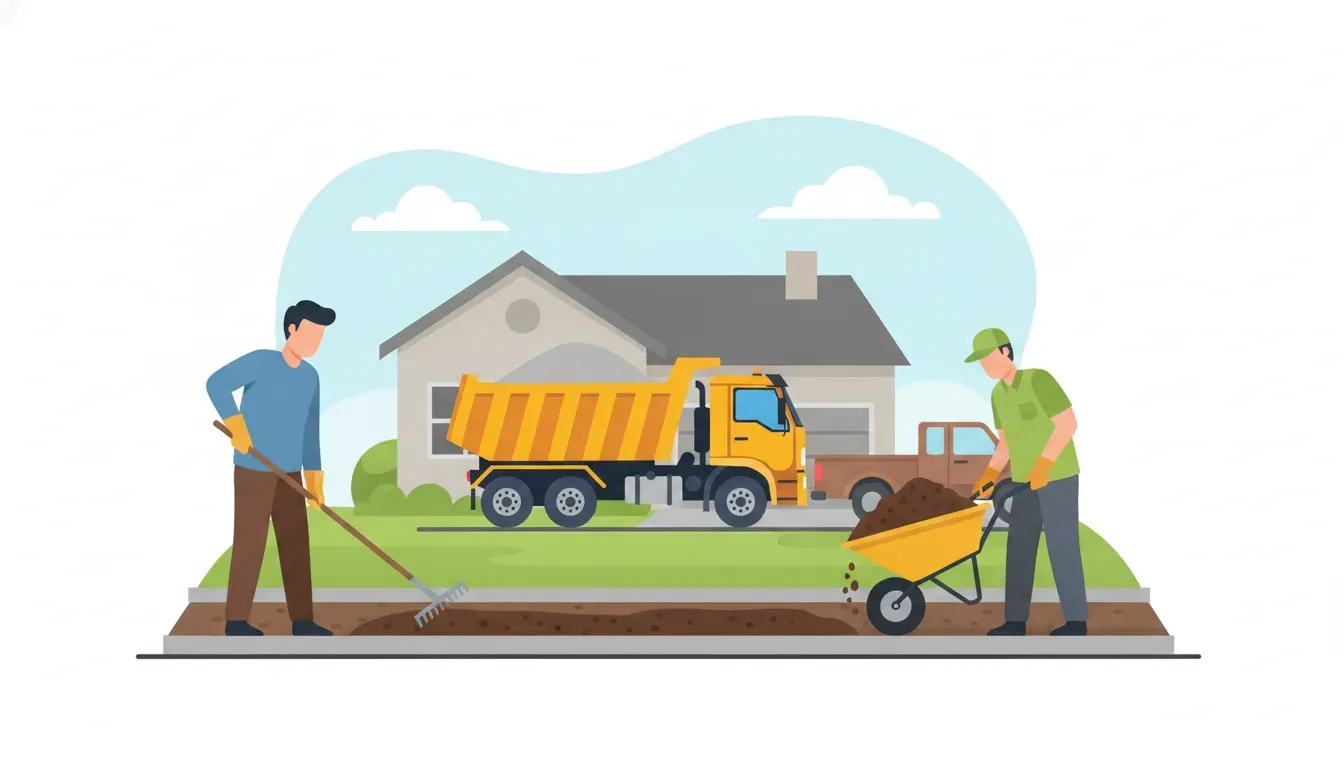
The best dump location is a firm, accessible spot close enough to the work area to reduce handling, while staying clear of structures, utilities, drainage paths, and surfaces that could be damaged. A good placement plan considers both the truck’s approach and the equipment or wheelbarrows that will move the material afterward.
| Placement question | Why it matters |
|---|---|
| Can the truck reach the spot? | Access can be limited by soft ground, narrow gates, low branches, wires, steep turns, or parked vehicles. |
| Is the spot firm and clear? | A clean, stable area reduces the risk of rutting, stuck equipment, or blocked access. |
| Is it close to the work? | Shorter movement distances make spreading more efficient and reduce manual handling. |
| Will the pile block drainage or structures? | Soil should not be placed where it can obstruct a drain, bury a walkway, press against a structure, or change water flow unintentionally. |
| Can the site support the next step? | Leave room for a skid steer, wheelbarrow, rake, or other planned spreading method. |
If your project has a tight backyard, a long distance between the driveway and the lawn, or a slope, mention it before delivery. Minnesota Aggregates also offers skid steer services for grading, leveling, spreading, and site preparation. Ask whether equipment support fits the project rather than assuming it is included with a material delivery.
How does delivery work in Burnsville, Eagan, and nearby cities?
Start with the project location, material choice, estimated cubic yards, intended use, and preferred placement area. Minnesota Aggregates serves South Metro communities including Burnsville, Eagan, Apple Valley, Lakeville, and Prior Lake, along with nearby Twin Cities projects. Delivery details depend on the order and site, so provide enough information for a practical quote and schedule conversation.
Before you contact a supplier, have these details ready:
- Project address or service area
- Screened topsoil intended for lawn, garden, landscaping, or finish work
- Approximate length, width, and depth
- Preferred truck access and dump location
- Any soft ground, slope, gate, wire, branch, or clearance concern
- Whether you need material only or want to ask about spreading and site preparation
The site’s stated aggregate delivery fact is within 1 to 2 business days, but your specific date should be confirmed when the order is quoted and scheduled. Weather, site access, load requirements, and seasonal demand can affect planning. Requesting the delivery window before you start site preparation helps keep the rest of the project organized.
Request a screened topsoil delivery quote for your South Metro project.
Frequently asked questions
What is the difference between screened and non-screened topsoil?
Screened topsoil has been processed to remove larger rocks, sticks, clumps, and coarse debris, giving it a more uniform texture for lawns, gardens, and visible finish areas. Non-screened black dirt may be a better fit for bulk fill or rough grading where a fine surface is not the immediate goal.
How much topsoil should I order?
Calculate length times width times depth in feet, then divide by 27 to estimate cubic yards. Measure separate sections and explain slopes, low areas, and the planned finished grade. Minnesota Aggregates can use those details to help discuss the material and delivery plan.
When should I schedule screened topsoil delivery in Minnesota?
Schedule after you have measured the project, selected the material, cleared the route, and identified a safe dump location. Ask Minnesota Aggregates to confirm the current delivery window. Avoid sending a loaded truck across ground that is soft from thawing or heavy rain.
Where can topsoil be dumped?
Topsoil should be dumped on a firm, accessible surface with enough clearance for the truck and enough room to spread the pile afterward. Keep the location away from low wires, branches, structures, drains, walkways, and areas where the pile would block traffic or change drainage.
Is screened topsoil ready for a new lawn or garden?
Screened topsoil provides a cleaner, more uniform starting material, but the site still needs preparation. Test existing soil when appropriate, establish the grade, prepare the surface, and follow the requirements for your chosen seed, sod, or plants. The University of Minnesota soil testing guidance explains how testing can inform lawn and garden decisions.