
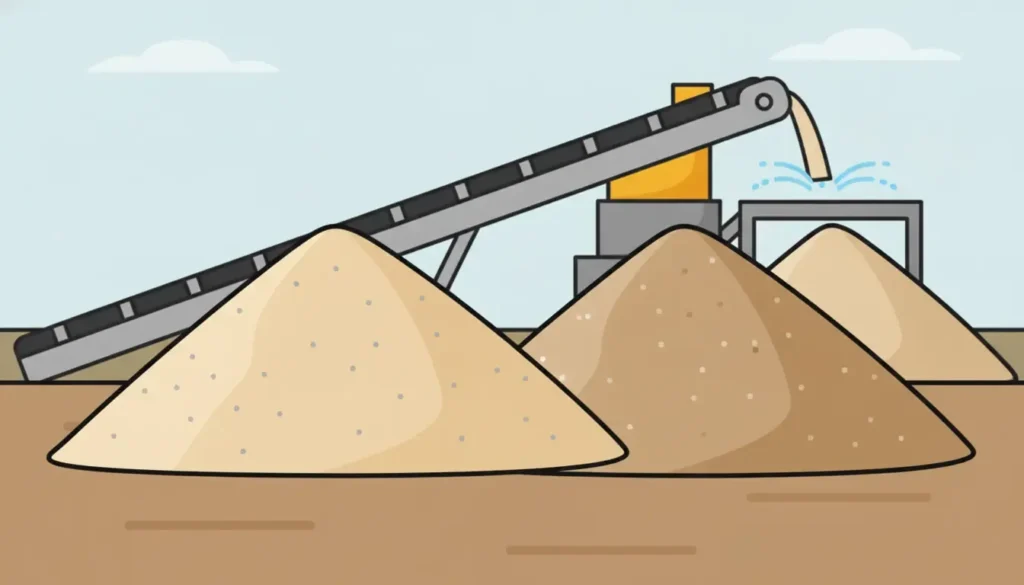
Choosing between screened sand and washed sand is less about picking the cleaner-sounding name and more about matching the material to the job. The key differences are how the sand is processed, how much fine material it contains, how it handles water, and whether the project needs a firm, compactable layer or a cleaner, more consistent aggregate.
Call Minnesota Aggregates at 612-772-3677 to discuss your sand project.
Screened Sand vs Washed Sand: What Is the Difference?
Screened sand is separated by size through a screen, while washed sand is processed with water and often scrubbing or classification to remove clay, dust, organic material, or other unwanted fines. A sand product can be screened, washed, or both, so the final gradation and intended use matter more than the label alone.
| Factor | Screened sand | Washed sand |
|---|---|---|
| Primary processing | Passed through screens to separate oversized material and size ranges | Rinsed, scrubbed, classified, and dewatered as needed to remove unwanted fines |
| Texture | Can retain useful fines and may feel more varied, depending on the gradation | Typically feels cleaner and more consistent, depending on the product specification |
| Drainage | Depends on the amount and type of fines left in the material | Can drain well when washing reduces clogging fines, but gradation still controls performance |
| Compaction | May compact firmly when its blend of particles fills voids effectively | May be less self-locking if it is uniformly graded and has very little fine material |
| Common decision | Choose when size separation and a workable, compactable material are priorities | Choose when cleanliness and reduced clay, dust, or organic material are priorities |
The important qualification is that neither term is a complete engineering specification. Ask for the product’s gradation, cleanliness, moisture condition, and intended application when a project has a defined performance requirement.
How Are Screened and Washed Sand Processed?
The processing method changes what is removed from the raw material. Screening focuses on particle size. Washing adds water-based cleaning and separation. Understanding that distinction helps explain why two sands can look similar in a pile but behave differently under pavers, in a trench, or in a mix.
What screening does
Screening sends raw sand through mesh or vibrating screens that separate material by size. Oversized rocks and debris can be removed, while the usable fraction is collected for a particular market. A screened product may still contain fine particles because fines can be part of the desired gradation.
What washing does
Washing uses water, and sometimes scrubbing and classification, to separate unwanted clay, dust, organic impurities, and other fine material from the sand. The U.S. Environmental Protection Agency describes screens, washers, and classifiers as different tools used together in sand and gravel processing. The EPA sand and gravel processing report explains how screening separates size ranges while washing and scrubbing help free sand from clay and organic impurities.
Washing does not automatically mean the product is the right size for every job. It improves cleanliness, but the final gradation, particle shape, moisture, and specification still determine how the material performs.
Which Sand Compacts Better?
Screened sand often has an advantage when the project needs a blend of particles that can settle into a stable layer, but compaction depends on the actual gradation and moisture content. Washed sand can be clean and consistent yet less self-locking when it lacks enough fines to fill voids.
- For a firm working layer: look for a product with a gradation suited to compaction, not simply a product described as screened.
- For a clean bedding or mixing material: a washed product may be preferable when excess clay or dust would interfere with the next step.
- For either material: prepare the subgrade, place the correct lift thickness, manage moisture, and compact with equipment appropriate to the job.
Sand is not a substitute for every aggregate base. For a driveway or heavy-use area, Minnesota Aggregates commonly pairs sand selection with a stable Class 5 gravel base when the project calls for load-bearing support.
When Is Screened Sand the Better Fit?
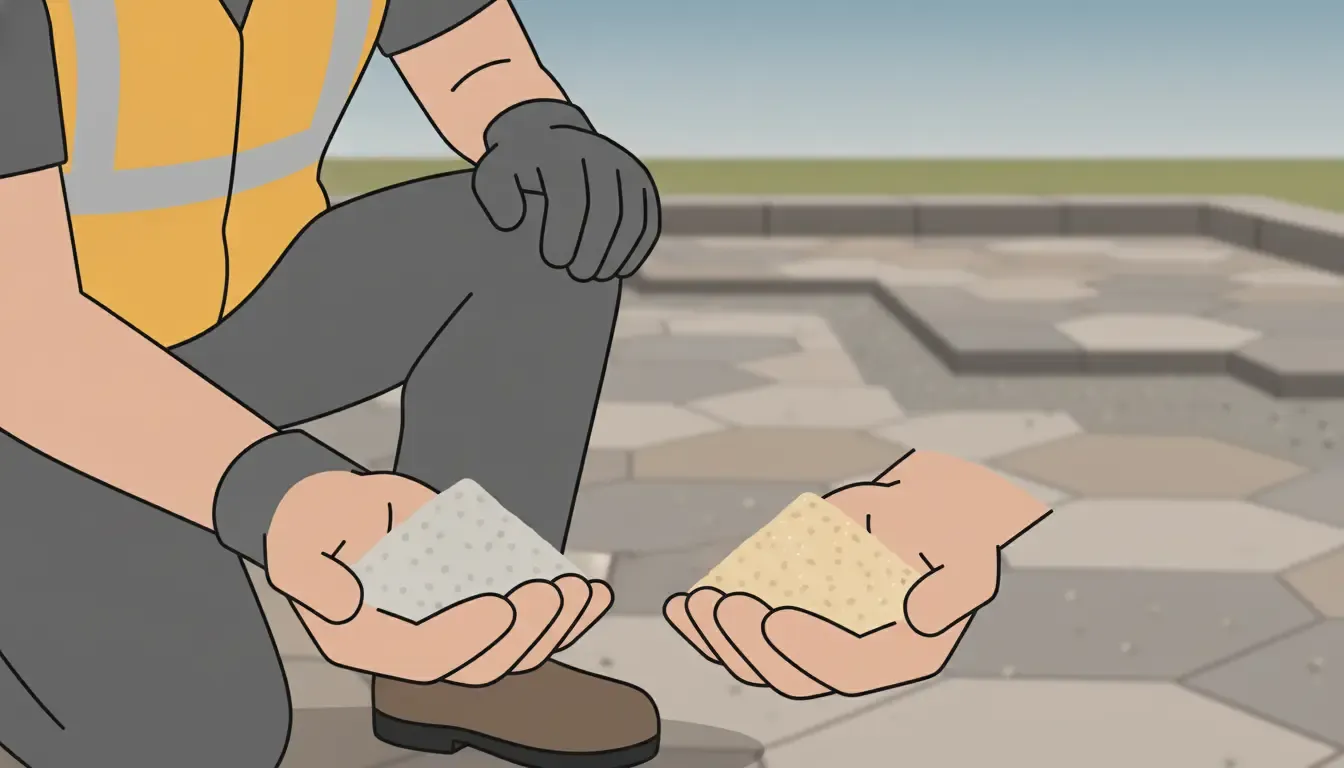
Screened sand is often a practical choice for general construction and landscaping work when the project needs a clean, size-controlled material that can be spread and shaped. It may fit leveling, filling low spots, some paver preparation, utility backfill, and other applications where the supplier’s gradation matches the job.
Consider screened sand when you need:
- A consistent size range with oversized rocks and debris removed
- A workable material for leveling or filling
- Some fines available to help fill voids during placement
- A sand product for a general residential or landscaping application
- Material that can be ordered in bulk and placed where the project needs it
Screened does not mean every screened product is interchangeable. A sand used to correct a low spot may not be the same product specified for a concrete mix or a specialty recreational surface. Describe the finished use before ordering rather than asking only for the cheapest sand.
When Is Washed Sand the Better Fit?
Washed sand is often the better starting point when excess clay, dust, or organic material could affect the next stage of work. It may suit applications that place a higher value on a clean, consistent aggregate, such as certain concrete or mortar mixes, specialty surface work, or projects where unwanted fines could reduce performance.
Consider washed sand when you need:
- Reduced clay, dust, or organic impurities
- A cleaner surface or mixing ingredient
- More consistent material for a specification-driven application
- Lower risk that unwanted fines will interfere with drainage or bonding
- Confirmation that the product meets the requirements of the intended mix or system
Washed sand is not automatically the best choice for a base that must lock together. Removing too much fine material can change how a sand settles and compacts. If the material will support pavers, a slab, a trench, or vehicle traffic, confirm the complete base design instead of choosing by the word washed alone.
Does Washed Sand Drain Better Than Screened Sand?
Not always. Drainage is controlled by particle-size distribution, the amount of fine material, the surrounding soil, slope, and compaction. Washing can reduce clay and silt that would otherwise clog voids, but a washed sand with a tight or unsuitable gradation may not solve a drainage problem by itself.
For Minnesota projects, water management matters because wet spring soils and freeze-thaw cycles can expose weak preparation. Consider the whole section: subgrade, aggregate base, sand layer if appropriate, surface, slope, and where water will go. The Minnesota Aggregates sand delivery page lists common uses such as leveling, backfill, paver work, and drainage-related projects, but the right material still depends on the site and intended load.
How Do You Choose the Right Sand for Your Project?
Start with the finished use, then confirm the material properties that control performance. A short conversation about the site can prevent ordering a sand that is clean but too loose, compactable but too dirty, or simply not specified for the application.
- Name the application: leveling, trench backfill, paver preparation, concrete or mortar, playground, pool, drainage, or general fill.
- Describe the load: foot traffic, vehicles, a slab, equipment, or no structural load.
- Ask about gradation: find out the approximate particle-size range and whether useful fines remain in the blend.
- Ask what washing removes: if cleanliness matters, confirm whether clay, dust, organic matter, and excess fines are controlled.
- Plan quantity and placement: use the cubic yardage calculator for a starting estimate, then confirm depth, access, and placement with the supplier.
If you are unsure, send the supplier a description of the project instead of requesting a material by label only. A material supplier can help identify whether screened sand, washed sand, another sand type, or a layered aggregate design makes sense for the application.
Request a quote from Minnesota Aggregates for the right sand and delivery plan.
Screened Sand vs Washed Sand FAQs
Is screened sand the same as washed sand?
No. Screening separates material by size, while washing uses water and related separation steps to remove unwanted fines and impurities. A product can be screened, washed, or both, so ask about the actual gradation and intended use.
Which is better for pavers, screened sand or washed sand?
It depends on the complete paver system and the product specification. The bedding layer needs a compatible material and consistent depth, while the base below it handles most of the structural support. Do not choose solely because a product is called screened or washed.
Can washed sand be used for concrete or mortar?
Washed sand may be a good candidate when a mix requires clean aggregate, but the exact product must meet the mix design or project specification. Confirm the required gradation and cleanliness before ordering.
Does screened sand contain more fines?
It can, because screening removes oversized material but does not necessarily remove all fine particles. Some applications benefit from fines that fill voids, while others require cleaner sand. Ask for the product’s gradation rather than assuming from the name.
How much sand should I order?
Measure the length, width, and planned depth of the area, then use Minnesota Aggregates’ cubic yardage calculator as a starting point. Confirm the estimate with the supplier before delivery, especially if the area has irregular edges or a variable grade.