
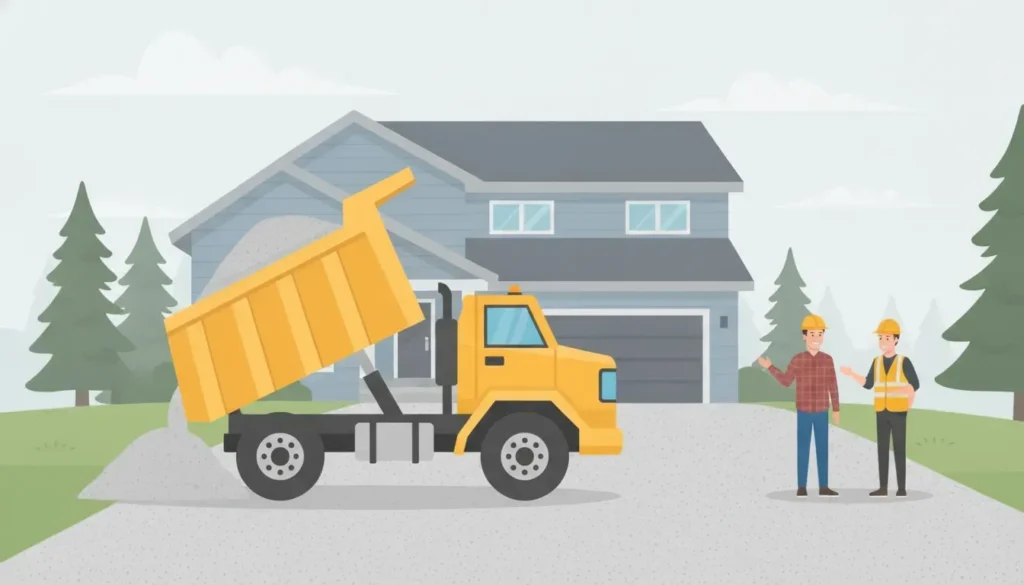
Good aggregate delivery starts before the truck arrives. Whether you are ordering gravel for a driveway, sand for a leveling project, black dirt for a lawn, or asphalt millings for a parking area, the delivery site affects safety, placement, cleanup, and how efficiently the material can be used. A few minutes spent planning the route and drop area can prevent a load from being placed where it blocks access or creates extra work.
Request an aggregate delivery quote from Minnesota Aggregates or call 612-772-3677 to discuss your project.
What to Confirm Before Your Aggregate Delivery
Start with the basic facts of the order. Know which material is arriving, the approximate quantity, the delivery address, and the surface or project area where you want it placed. If you are still choosing between materials, describe the intended use instead of guessing at a product name. A driveway base, a paver base, a lawn low spot, and a temporary access road can require different materials and preparation.
Ask the supplier to confirm the expected delivery window, truck size, and placement options. Minnesota Aggregates uses delivery trucks ranging from small loads to larger loads, so the available access route can affect which truck is appropriate. Do not assume the truck can reach the final work area simply because a passenger vehicle can. A loaded dump truck needs more room to turn, more vertical clearance, and a surface that can support its weight.
| Question | Why it matters | What to prepare |
|---|---|---|
| Which material is arriving? | Different materials suit different bases, fills, surfaces, and finish work. | Confirm the product name and intended use before delivery day. |
| How much is arriving? | Quantity affects the drop area, truck size, and room needed for spreading. | Clear enough space for the full load, not only the first wheelbarrow or skid steer pass. |
| Where should it be placed? | Placement determines how much extra handling the project requires. | Mark one or more acceptable drop zones and explain them before the truck arrives. |
| What route can the truck use? | Low branches, narrow gates, soft ground, and parked vehicles can stop access. | Walk the route from the public road to the drop area and remove obstacles. |
How to Choose a Safe Delivery Route
Walk the route in advance and look at it from the perspective of a large delivery truck. Measure narrow gates and note fences, retaining walls, mailboxes, parked vehicles, landscaping, utility lines, and low branches. A route that works in dry weather may become soft after rain. A route that works for one load may not be suitable for repeated deliveries.
Check width, height, and turning room
Look for the narrowest point, not the average width. A gate opening, bridge, culvert, or tight corner can control the entire route. Check overhead clearance near tree limbs, garages, carports, and utility lines. Do not ask a driver to move close to a line or structure that has not been assessed. If the truck must turn around, identify the turning area before delivery day. Backing farther than necessary can increase risk and may make precise placement more difficult.
Protect soft ground and finished surfaces
Wet soil, recently graded ground, and thawing areas may not support a loaded truck. Mark any areas that should not be driven over, including septic components, drain fields, irrigation lines, newly seeded lawns, and decorative paving. Tell the supplier about soft or restricted areas when you request the quote. The safest drop point may be closer to the road, followed by spreading or moving the material with suitable equipment.
Do not use a public sidewalk, roadway, neighboring driveway, or shared access area as a temporary storage plan without permission. Keep the delivery area within the property and leave a clear path for residents, emergency access, and other workers.
Prepare the Drop Area Before the Truck Arrives
The drop area should be firm, accessible, and large enough for the complete load. Remove vehicles, trailers, tools, toys, branches, loose debris, and other items that could be damaged or buried. If you are ordering more than one material, plan separate areas for each product so they do not mix.
Use stakes, cones, or visible markers to show the preferred placement area, but keep them far enough away from the truck path that they cannot become a hazard. If the driver will need a specific angle to unload, explain that before the load is raised. A short conversation at the start can prevent a misplaced pile and a second handling step.
Keep the work area ready for the next step
Think about what happens after unloading. If a skid steer, tractor, wheelbarrow, or hand crew will spread the material, preserve enough room to work around the pile. Do not place a load directly against a fence, foundation, garage door, or retaining wall unless that placement has been planned. Leave room to shape the material and maintain access to the project.
For a driveway or parking area, prepare the subgrade and address drainage before placing the surface material. For a lawn or planting area, remove unwanted debris and identify low spots that need fill or topsoil. For asphalt millings, confirm that the base is ready for placement and compaction. Material delivery is only one part of the project, so coordinate the drop with the grading and spreading schedule.
Locate Utilities and Mark Areas That Need Protection
Before any digging, grading, excavation, or ground disturbance, check for underground utilities. Gopher State One Call identifies itself as Minnesota’s one call notification system and serves as the communication link between facility operators and people planning to break ground. Use the official process for your project rather than relying on memory or an old site sketch.
Utility locating is especially important when preparation includes removing soil, cutting into a slope, installing edging, setting posts, improving drainage, or widening an access route. Mark private lines that may not be covered by a public locate, such as irrigation, landscape lighting, private electric lines, or lines serving detached structures. Share the marked limits with everyone working on the project.
Also identify septic systems, wells, drain fields, buried tanks, invisible pet fences, and other site features that a delivery driver or equipment operator should avoid. The delivery team needs clear information about no-go areas before the truck enters the property.
Match the Material to the Project Stage
Preparation is easier when the delivery is scheduled for the stage of work where the material will be used. Ordering too early can leave a pile in the way. Ordering too late can leave a crew or equipment waiting. Confirm who will spread or grade the load and how soon that work will begin.
Driveways and parking areas
For a driveway or parking area, identify the finished travel path, the high and low points, and the location where water should move. Minnesota weather can expose weak areas through repeated wet, freezing, and thawing cycles. If the project needs a compactable base, ask about a suitable aggregate before ordering a decorative or finish material.
Minnesota Aggregates describes Class 5 as a crushed limestone base material with particles from 3/4 inch down to fine material. Its Class 5 delivery page provides a product-specific starting point for customers planning a driveway, road, parking area, or building pad. The correct depth, grading, and compaction plan still depends on the site and intended use.
Lawns and low areas
For lawn work, decide whether the order is intended for rough fill, grading, planting soil, or a combination of stages. Place fill where equipment can spread it without crossing areas that must remain protected. If you need black dirt for finish work, plan a clean drop zone so it does not mix with gravel, demolition debris, or unsuitable soil.
The black dirt delivery service is a useful reference when planning a topsoil or lawn-improvement order. Confirm whether screened or non-screened material matches the work, and ask how the delivery should be staged with grading and final spreading.
Sand, pavers, and construction work
Sand may be used for filling, leveling, paver bases, drainage, or other construction and landscaping applications. Prepare a stable area that will keep the sand clean and dry enough for the next step. If the material will be placed near pavers or a foundation, keep the drop zone away from areas where wind or runoff could carry material into a drain or finished surface.
Review the sand delivery options before ordering and describe the exact application. A clear use case helps the supplier discuss the appropriate material and delivery arrangement.
Plan for Equipment, Spreading, and Cleanup
A pile is not the finished project. Decide how the material will move from the drop area to the final grade. Small jobs may use hand tools, while larger areas may need a skid steer, tractor, or other equipment. If you are hiring equipment or an operator, schedule that work close enough to the delivery that the pile does not block the property for days.
Professional grading and spreading can also help when the property has tight access, uneven ground, or a drainage goal. Minnesota Aggregates offers skid steer services for grading, leveling, spreading, and site preparation. Ask whether delivery and equipment work should be coordinated as one visit or separate steps based on the project.
Plan where excess material, packaging, brush, and other project debris will go. Do not bury debris beneath a driveway base or use aggregate to conceal an unaddressed drainage problem. A clean, deliberate preparation plan makes it easier to evaluate the final grade and maintain the surface later.
Schedule Delivery Around Weather and Site Conditions
Weather affects access, material handling, and the condition of the drop area. Check the forecast before delivery and notify the supplier if heavy rain, rapid snowmelt, or a freeze-thaw period changes the site. Do not wait until the truck is on the road to mention that the planned route is flooded or blocked.
Ask for the applicable delivery window for the material you are ordering. General material delivery is commonly stated as 3 to 4 business days, while Class 5 orders use a 3 to 5 business-day window. These are planning windows, not a substitute for confirming the actual schedule, route, and site conditions for your order.
Seasonal conditions can also change the best placement decision. A pile placed on frozen ground may settle differently after thawing. Wet soil may rut under traffic. If the final work cannot begin immediately, choose a temporary placement area that will not create a new drainage or access problem.
Use a Simple Delivery-Day Checklist
Review this checklist the day before the delivery:
- Confirm the material, quantity, delivery address, and expected window.
- Confirm the acceptable drop area and any backup placement area.
- Walk the route for width, height, turning room, soft ground, and obstacles.
- Move vehicles, trailers, tools, branches, and loose debris from the route.
- Mark utilities, septic features, drain fields, private lines, and no-go areas.
- Make sure the drop area is firm enough and large enough for the full load.
- Tell the supplier about gates, slopes, low branches, neighbors, and restricted surfaces.
- Schedule spreading, grading, or equipment work so the pile does not block access.
- Keep children, pets, and unnecessary people away from the truck and unloading area.
- Take a final look at the route after rain or other weather changes.
On delivery day, remain available to answer placement questions, but stay outside the truck’s operating area. Follow the driver’s instructions and do not stand behind the truck or near a raised bed. If the planned drop point is no longer safe, choose the backup location rather than forcing the original plan.
Contact Minnesota Aggregates to plan your aggregate delivery site or call 612-772-3677 for project guidance.
Frequently Asked Questions
How much room does a dump truck need for delivery?
The needed room depends on the truck, route, turning movement, overhead clearance, and placement plan. Measure the narrowest point and identify obstacles before scheduling. Share photos or site details with the supplier if access is tight.
Can aggregate be delivered onto a lawn?
It may be possible in some conditions, but wet or soft ground can rut under a loaded truck. Mark protected areas and discuss the surface with the supplier before delivery. A road, driveway, or firm staging area may be a safer choice.
Should I prepare the driveway before ordering material?
Prepare as much of the route and project area as practical before ordering. Confirm the subgrade, drainage plan, access, and drop area so the delivered material can be used without unnecessary rehandling.
Do I need to locate utilities before aggregate delivery?
You need to check utilities before digging or ground disturbance, including grading, drainage work, excavation, and posts. Use Minnesota’s official one-call process and identify private lines or site features that also need protection.
Can delivery and spreading be scheduled together?
Depending on the project, delivery and spreading can be coordinated as connected steps. Discuss the material, access, quantity, placement, and grading needs when requesting a quote so the schedule matches the work plan.
Final Takeaway
Preparing for aggregate delivery means more than clearing a driveway. Confirm the material and schedule, inspect the full truck route, protect utilities and finished surfaces, choose a stable drop area, and plan the next stage of work. That preparation helps the driver place the load safely and gives you a cleaner path to grading, spreading, compaction, or installation.
For material options and delivery planning across the Twin Cities and Minnesota, review the asphalt millings delivery information, cubic yardage calculator, and the product pages linked above. When the site conditions or order size are unclear, contact Minnesota Aggregates before choosing a drop location.