
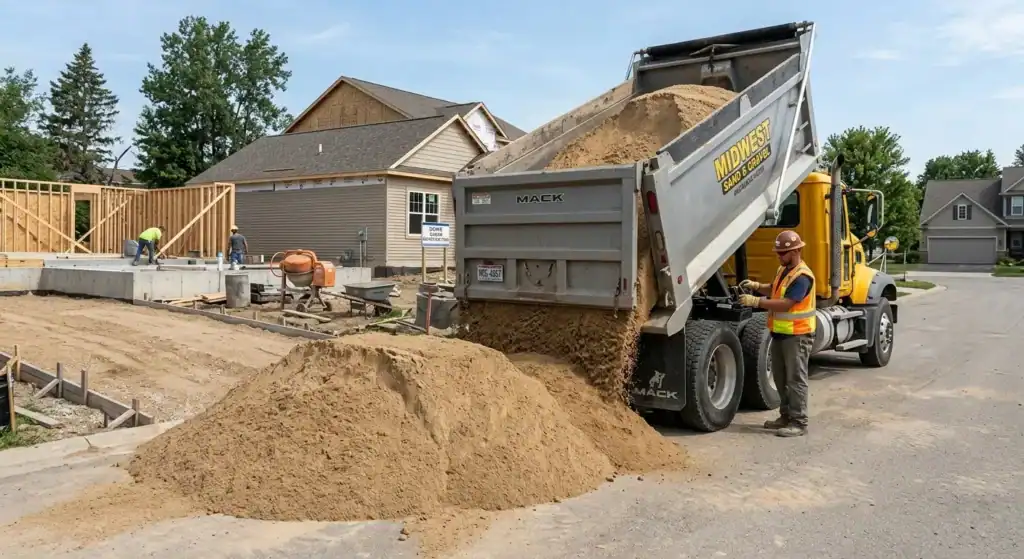
There’s a special kind of satisfaction that comes from completing a DIY project that looks truly professional. Whether you’re laying a new paver patio for summer barbecues or setting up an above-ground pool for the kids, the secret to a lasting, high-quality finish lies in the foundation. That’s where mason sand comes in. Its clean, fine consistency provides the perfect stable base and creates those clean, tight joints that make the work look polished. But ordering bulk material can feel intimidating. This guide is here to help, breaking down the entire process so you can feel confident from the moment you measure your space to the day of your mason sand delivery.
Key Takeaways
- Measure Twice, Order Once: Use a cubic yardage calculator to determine the exact amount of sand you need, and add 5-10% extra to account for compaction. This prevents costly delays from ordering too little or wasting money on excess material.
- Your Supplier is a Project Partner: Look beyond the price per yard and choose a supplier with a strong reputation for high-quality, consistent sand and reliable, on-time delivery. Good service is crucial for keeping your project on schedule.
- A Prepared Site Ensures a Smooth Handoff: Before delivery day, clear a safe and accessible path for the truck and designate a specific drop-off spot, preferably on a tarp. This simple prep work makes the delivery process fast, safe, and clean.
What Exactly Is Mason Sand?
If you’ve ever admired a perfectly smooth brick patio or a flawless stucco wall, you’ve likely seen mason sand in action. It’s a fine-grained, clean sand that’s a go-to material for a wide range of masonry and landscaping projects. Unlike the coarse sand you might find on a construction site, mason sand has a uniform texture that makes it incredibly versatile. Think of it as the finishing touch that gives projects a professional, polished look.
Whether you’re a contractor laying a foundation for a new walkway or a homeowner setting up an above-ground pool, understanding what mason sand is and how to use it is the first step. Its unique properties make it ideal for jobs where precision and a smooth finish are key. It’s not just about looks, though; its composition also provides the strength and durability needed for projects that have to stand the test of time.
What it’s made of
So, what gives mason sand its signature qualities? It’s typically made from finely crushed granite or gneiss rock. The rock is ground down and then washed and screened to remove large particles, clay, and silt. This process results in a product with very fine, uniform grains, which is why it feels so soft and consistent. This clean, fine texture is crucial for its performance, especially when mixed into mortar or used as a base. The granite composition also makes it a strong, long-lasting material you can count on for your most important projects.
Mason sand vs. other common sands
It’s easy to think that all sand is the same, but the differences are significant. Compared to coarse concrete sand, which has larger, more angular grains, mason sand is much finer and more uniform. This is why it’s the preferred choice for mortar and plaster—it creates a smoother, more workable mix. When you need reliable sand delivery for your project, choosing the right type is critical. While play sand is also fine, it’s often not as clean as mason sand, which can affect the integrity of a masonry mix. Mason sand strikes the perfect balance of being fine, clean, and strong.
Top uses for your project
Mason sand is a true workhorse, useful for far more than just bricklaying. Its versatility makes it a valuable material for both contractors and DIY enthusiasts. While you might use Black Dirt for your garden beds, mason sand is what you’ll want for the hardscaping around them.
Here are some of its most popular applications:
- Mortar and Stucco: Its fine texture creates a smooth, strong, and easy-to-work-with mix for laying bricks, blocks, or stones.
- Paver Base: It provides a stable and level bed for setting pavers for patios, walkways, and driveways.
- Pool Liners: It creates a soft, puncture-resistant base under above-ground pool liners.
- Joint Filler: It’s perfect for sweeping into the joints between pavers to lock them in place.
- Volleyball Courts and Sandboxes: Its clean, soft texture makes it a great choice for recreational areas.
How Much Mason Sand Do You Need?
Figuring out the right amount of mason sand for your project is one of the most important steps. One of the most common hiccups on a project is miscalculating material needs. Ordering too little means you’ll face delays and potential extra delivery fees to get more. On the other hand, ordering too much leaves you with a pile of sand you have to figure out what to do with. Getting it right from the start saves you time, money, and a lot of hassle.
The key is to measure your space accurately and account for a few variables, like how the sand will settle over time. It might seem a little intimidating, but it’s really just a bit of simple math. Whether you’re filling a sandbox, creating a base for pavers, or mixing mortar, taking a few minutes to calculate your needs will ensure your project goes smoothly from the moment your sand delivery arrives. We’ll walk you through exactly how to do it, so you can order with confidence.
Calculate the right amount for your project
To figure out how much sand you need, you’ll want to calculate the volume of your project area in cubic yards. Start by measuring the length and width of the space in feet. Next, determine how deep you want the sand to be, but make sure you convert that measurement to feet, too. For example, if you need 3 inches of sand, you’ll use 0.25 feet for your calculation (3 inches ÷ 12 inches/foot).
Once you have your three measurements, multiply them together: Length (ft) x Width (ft) x Depth (ft). This gives you the total volume in cubic feet. Since sand is sold by the cubic yard, you’ll do one last step: divide your total cubic feet by 27 to get the number of cubic yards you need to order.
Use our cubic yardage calculator
If doing math by hand isn’t your thing, don’t worry. You can skip the manual calculations and potential errors by using a tool designed for the job. We created a straightforward cubic yardage calculator to make your life easier. Just plug in the length, width, and depth of your project area, and it will instantly tell you how many cubic yards of material you need. It’s the fastest and most accurate way to get your numbers right, so you can spend less time with a calculator and more time planning your project. It works for sand, gravel, black dirt, and more.
Factor in compaction and waste
Once you have your base number, it’s smart to add a little extra to your order. Sand naturally settles and compacts once it’s in place, so the volume you calculated is slightly less than what you’ll actually need to fill the space perfectly. A good rule of thumb is to add an extra 5% to 10% to your total to account for this compaction. This small buffer ensures you won’t come up short halfway through your project. For example, one cubic yard of sand will cover about 100 square feet at a 3-inch depth, but having that little extra on hand is always a good idea for peace of mind.
What Affects Mason Sand Delivery Costs?
When you’re budgeting for a project, it’s easy to focus on the price of the materials themselves. But when it comes to bulk materials like mason sand, the delivery cost is a major part of the final bill. It’s not just about the sand; it’s about the logistics of getting it to you safely and on time. Several key factors influence how much you’ll pay to get that sand from the supplier’s yard to your job site, and they can vary quite a bit depending on your specific needs.
The final price you see on your invoice is a combination of the material cost and the transportation services. Things like how much sand you order, how far away your project is, and even the time of year can all impact the total. Understanding these variables will help you plan your budget more accurately and avoid any unexpected expenses down the road. A good supplier will be transparent about these costs, but it’s always smart to know what questions to ask. Let’s break down the main components that go into the total cost of your sand delivery so you can feel confident when placing your order and ensure your project stays on track.
Your order size
The amount of sand you order plays a big role in your per-yard cost. Generally, buying in bulk is more economical. A full truckload costs less per cubic yard than a smaller, partial load because the supplier’s fixed costs—like driver time and fuel—are spread over more material. Before you place an order, it’s smart to figure out exactly how much you need to avoid multiple deliveries, which can quickly add to your expenses. Using a cubic yardage calculator can help you get an accurate measurement for your project. Planning ahead to get everything in a single delivery is one of the easiest ways to keep your project on budget.
Your project’s location
Where your project is located is another critical factor. The further the delivery truck has to travel from the supplier’s yard to your site, the higher the delivery fee will be to cover fuel and the driver’s time. Choosing a supplier that’s located relatively close to you can make a significant difference in the final price. That’s why working with a local company that serves your area is often the most cost-effective option. At Minnesota Aggregates, we provide reliable delivery across the state, ensuring you get your materials without paying excessive travel fees. Always confirm a supplier’s service area to ensure your site is within their standard delivery zone.
The time of year
Believe it or not, the season can affect the price of your sand delivery. Demand for construction and landscaping materials spikes in the spring and summer when building season is in full swing across Minnesota. With more people tackling projects, suppliers are busier, and this increased demand can lead to higher prices and longer wait times for delivery slots. If your project timeline is flexible, you might find better pricing during the slower fall and winter months. If you must order during peak season, be sure to schedule your delivery as far in advance as possible to lock in your spot and avoid potential delays.
Potential extra fees
Beyond the base cost of the sand and standard delivery, a few other charges could pop up on your invoice. Some suppliers may add a fuel surcharge, especially when gas prices are high. If you need a delivery on short notice, you might face a rush fee. Similarly, if your site is difficult to access or if the driver has to wait around because the drop-off spot isn’t ready, you could be charged for the extra time. The best way to avoid surprises is to ask for a clear, itemized quote upfront. A transparent supplier will be happy to explain all potential costs so you know exactly what you’re paying for.
How to Choose a Reliable Mason Sand Supplier
Finding the right mason sand for your project is only half the battle; you also need a supplier you can count on. The right partner ensures your materials arrive on time and meet your quality standards, keeping your project on track. A less-than-reliable supplier, on the other hand, can cause delays, budget overruns, and a lot of frustration. Think of it as choosing a team member for your project—you want someone dependable, communicative, and committed to quality.
When you’re vetting potential suppliers, it’s about more than just finding the lowest price. You’re looking for a company that offers a combination of excellent product, reliable delivery, and great service. Taking the time to check a few key areas before you place an order will pay off in the long run, giving you peace of mind and helping your project go smoothly from start to finish. Here’s what to focus on to find a supplier that won’t let you down.
Check for consistent product quality
The success of your masonry work, whether it’s a patio, a retaining wall, or a sandbox for the kids, depends heavily on the quality of the sand. Low-quality sand can contain impurities like clay, silt, or organic matter, which can compromise the strength and appearance of your mortar. You want sand that is clean, fine, and consistent in particle size. A reliable supplier should be able to guarantee the quality of their sand delivery. Don’t be afraid to ask questions about where they source their sand and how they ensure its consistency. When it arrives, give it a quick inspection to make sure it looks and feels right.
Confirm their delivery area
This might seem obvious, but it’s a crucial first step. Before you spend time getting quotes or discussing project details, confirm that the supplier actually delivers to your location. Some companies have a limited service radius, while others, like Minnesota Aggregates, cover a wider area. A local supplier often means more flexible scheduling and potentially lower delivery fees. Checking their delivery map or simply giving them a call to confirm they can reach your job site will save you from any last-minute surprises. This simple step ensures you’re only considering suppliers who can realistically get the materials to you when you need them.
Look for great customer service
When you’re in the middle of a project, the last thing you want is a supplier who is hard to reach. Good customer service is a sign of a professional and reliable operation. Are they easy to get in touch with? Do they answer your questions clearly and patiently? A supplier with great customer service will work with you to schedule a convenient delivery time and communicate proactively if there are any delays. They should be a helpful resource, ready to assist with order adjustments or answer questions about their products. This level of support can make a huge difference in your overall experience.
Vet their reputation and reviews
Before you commit, do a little digging to see what other customers have to say. A quick search for online reviews and testimonials can give you a good sense of a supplier’s reputation. Look for comments about product quality, on-time delivery, and customer service. Consistent positive feedback is a great sign that you’re dealing with a trustworthy company. If you’re a contractor working on a large project, you could even ask for references. Hearing directly from past customers provides valuable insight into what you can expect and helps you make your decision with confidence.
Understanding Your Delivery Options
Getting your materials on time is just as important as getting the right materials. A delayed delivery can throw your entire project schedule off track, whether you’re a contractor on a tight deadline or a homeowner tackling a weekend project. That’s why it’s so important to work with a supplier who makes the delivery process smooth and predictable.
When you’re coordinating a sand delivery, you’ll want to think about a few key things: how soon you need it, what kind of equipment is required, and how much flexibility you have with timing. A reliable supplier will communicate clearly about these options, helping you plan effectively and keep your project moving forward without any frustrating surprises. Let’s walk through what you can expect.
Same-day vs. scheduled delivery
Most projects benefit from planning ahead, which is where scheduled delivery comes in. By scheduling your mason sand to arrive on a specific day, you can coordinate its arrival with other parts of your project, like having your crew ready or finishing site prep. This is the best way to ensure a seamless workflow. However, sometimes things don’t go as planned. You might run short on material or have an unexpected opportunity to get work done. For those moments, some suppliers offer same-day delivery to help you out of a jam and keep your project from stalling.
Delivery methods and equipment
Mason sand is heavy, and getting it to your site requires the right equipment. Professional suppliers use heavy-duty trucks designed to handle and unload bulk materials safely and efficiently. When the truck arrives, the driver will place the sand in your designated drop-off spot. It’s also helpful to know that once the sand is on your property, you’ll need a way to move it to the exact work area. If you don’t have the equipment on hand, we offer skid steer services to help with material handling and other site work.
Scheduling and timing flexibility
Your project has its own unique timeline, and a good supplier will work with you to find a delivery window that fits your schedule. Clear communication is key. When you place your order, be upfront about your preferred delivery date and time. A flexible supplier will do their best to accommodate your needs and will let you know what their availability looks like. This partnership helps you plan with confidence, knowing your materials will show up when you’re actually ready for them, preventing delays and keeping your job site organized.
How to Prep Your Site for Delivery
A smooth delivery day starts long before the truck arrives. Taking a little time to prepare your property ensures your sand delivery is quick, safe, and hassle-free. When our truck pulls up, the last thing you want is a delay because of a blocked path or confusion about where to dump the material. A well-prepared site means our driver can get in, place your mason sand exactly where you need it, and get out without any issues. These simple steps will help you get ready for a seamless delivery, protecting your property and keeping your project on track from the very beginning.
Clear a path for the truck
Our delivery trucks are big, and they need plenty of room to maneuver safely. Before we head your way, take a walk from the street to your desired drop-off spot. Look for any potential obstacles that could get in the way. Are there any low-hanging tree branches, overhead wires, or parked cars that could block access? Make sure the path is wide enough and the ground is firm enough to support the weight of a heavy vehicle. A clear, accessible route is the most important step to prevent any damage to your property or our equipment and ensures we can complete your delivery efficiently.
Designate a drop-off spot
Decide exactly where you want the sand pile before the truck arrives. Choose a spot that’s convenient for your project, minimizing the distance you’ll have to move the material later. It’s a great idea to lay down a large tarp first; this keeps the sand clean and makes for a much easier cleanup afterward. Having a clearly marked and accessible spot also allows you to inspect the sand upon arrival to ensure it meets your project’s standards. If the ideal drop-off location is tricky to get to, you may need a plan to move the sand, which is where our skid steer services can come in handy.
Plan for a safe delivery
Beyond just clearing a path, think about the overall logistics for a safe drop-off. Be sure to communicate any potential challenges—like a steep driveway, soft ground after a rain, or tight corners—when you place your order. It’s also best if you or another responsible person can be on-site to guide the driver. This helps avoid any misunderstandings and ensures the sand ends up in the right place. To prevent any accidents, keep children and pets safely inside and away from the delivery area. A little proactive planning goes a long way in making sure the entire process is safe and successful.
Common Mistakes to Avoid When Ordering Mason Sand
Ordering mason sand seems straightforward, but a few common slip-ups can throw your project off schedule and over budget. A little planning goes a long way in making sure your delivery is smooth and successful. By thinking through your quantity, timing, quality requirements, and site prep, you can prevent frustrating delays and extra costs. Let’s walk through the most frequent mistakes so you can sidestep them and keep your project moving forward without a hitch.
Miscalculating how much you need
One of the most common errors is simply ordering the wrong amount of sand. Coming up short means halting your work to place another order, while over-ordering leaves you with a pile of material to deal with later. Failing to accurately calculate the quantity you need can cause serious delays. The best way to avoid this is to measure your project area—length, width, and depth—before you call. If math isn’t your strong suit, a good cubic yardage calculator can do the heavy lifting for you. It’s always a good idea to add a small buffer (around 5-10%) to account for compaction and any minor spills.
Scheduling your delivery at the wrong time
Timing is everything. Having your sand delivered too early means it could get in the way, get contaminated by rain and debris, or become a neighborhood eyesore. If it arrives too late, your entire crew could be left waiting around, which costs you time and money. Coordinate your sand delivery with your project’s timeline. Make sure you’re ready to use the material shortly after it arrives and that you have the necessary people and equipment on-site. A well-timed delivery ensures your project flows smoothly from one step to the next without any costly interruptions.
Forgetting to specify quality
Not all sand is created equal, and the quality can make or break your project. For masonry work, you need sand with a consistent, fine grain, free of large pebbles, clay, or organic matter. When your sand arrives, take a moment to inspect it. Poor-quality sand can compromise the structural integrity and appearance of your mortar, pavers, or plaster. Always work with a supplier who guarantees high-quality, properly screened materials. This ensures you get a professional, durable finish every time and don’t have to worry about inconsistent results in your masonry work.
Not preparing your site properly
Even with the right amount of high-quality sand, a lack of site preparation can cause major headaches. The delivery truck needs a clear, safe path to your desired drop-off spot. Make sure to remove any vehicles, equipment, or other obstacles. Designate a specific area for the sand pile, preferably on a tarp to prevent it from mixing with the soil below and to make cleanup easier. If the drop-off spot is far from your work area, you’ll also need a plan to move the material. Having wheelbarrows ready or arranging for skid steer services can save you a lot of manual labor.
Get Your Mason Sand Delivered by Minnesota Aggregates
When your project calls for mason sand, you need a supplier who delivers a quality product on time, every time. At Minnesota Aggregates, we handle the logistics so you can focus on getting the job done right. We combine high-grade materials with dependable service to ensure your project stays on track from start to finish. Whether you’re a contractor managing a large commercial site or a homeowner tackling a weekend DIY, we’re here to provide the materials you need with the reliability you deserve.
Serving projects across Minnesota
Mason sand is a true workhorse material, essential for everything from laying patios and building retaining walls to creating sandboxes and improving garden soil. Because it’s so versatile, we make sure our Sand delivery service covers projects of all sizes across the state. From a small residential job in the Twin Cities to a major construction site up north, our team is equipped to get you the materials you need, right where you need them. We understand that every project is important, and our statewide reach ensures you have a reliable source for quality sand no matter your location.
Our commitment to quality and reliability
The success of your project depends on the quality of your materials. That’s why we take our commitment to you seriously. We source our mason sand to ensure it’s clean, consistent, and perfect for your masonry work. But our promise doesn’t stop with the product. We know that delays can be costly, which is why Minnesota Aggregates is built on a foundation of reliability. You can count on us for on-time deliveries that keep your work flowing smoothly, helping you meet your deadlines without any last-minute stress.
The right equipment for your job
Getting your sand to the site safely and efficiently is a critical part of the process. We use well-maintained, professional-grade trucks and equipment to handle every delivery with care. Our experienced drivers know how to place your materials precisely where you need them, minimizing disruption to your property and job site. And if your project requires more than just a delivery, our professional skid steer services are available to help with spreading and site preparation. We have the right tools to support every phase of your project.
Frequently Asked Questions
Can I use regular construction sand for my paver patio instead of mason sand? While you technically could, it’s not the best choice for a lasting result. Coarse construction sand has larger, more angular particles that don’t lock together as tightly. Mason sand is much finer and more uniform, allowing you to create a perfectly smooth, stable base that prevents pavers from shifting or settling unevenly over time. Using mason sand is a small step that makes a big difference in the professional finish and long-term durability of your patio.
Is it really necessary to order 5-10% extra sand? Think of it as project insurance. Sand naturally settles and compacts once it’s spread and tamped down, so the volume you measure is always a bit more than what you’ll end up with. Ordering that little bit extra ensures you won’t have to halt your project midway through to place a second, smaller delivery, which can be costly and cause delays. It’s much better to have a small amount left over than to run out at a critical moment.
What if I have a tricky drop-off spot, like a narrow driveway or a backyard location? The best thing you can do is communicate with us when you place your order. Let us know about any potential challenges like tight turns, steep slopes, or overhead obstacles. We can often find a solution, but we need to know what to expect. In cases where the truck can’t reach the ideal spot, we can place the material as close as possible, and our skid steer services are always an option to help move the sand exactly where it needs to go.
Can I just pick up the sand myself to save on delivery fees? Our service is designed around delivering bulk materials safely and efficiently directly to your site. Handling cubic yards of sand, which can weigh over a ton, requires heavy-duty equipment that most standard trucks aren’t built for. Our professional delivery service saves you the time, hassle, and potential wear and tear on your vehicle, ensuring the material arrives right where you need it, ready to go.
How is mason sand different from the play sand I see at the hardware store? While both are fine-grained, they are processed for very different purposes. Play sand is washed and screened to be safe for kids, but it isn’t held to the same structural standards. Mason sand is specifically processed to be free of clay, silt, and other impurities that could weaken a mortar mix or compromise the integrity of a paver base. For any construction or hardscaping project, you need the clean, consistent quality of mason sand.