
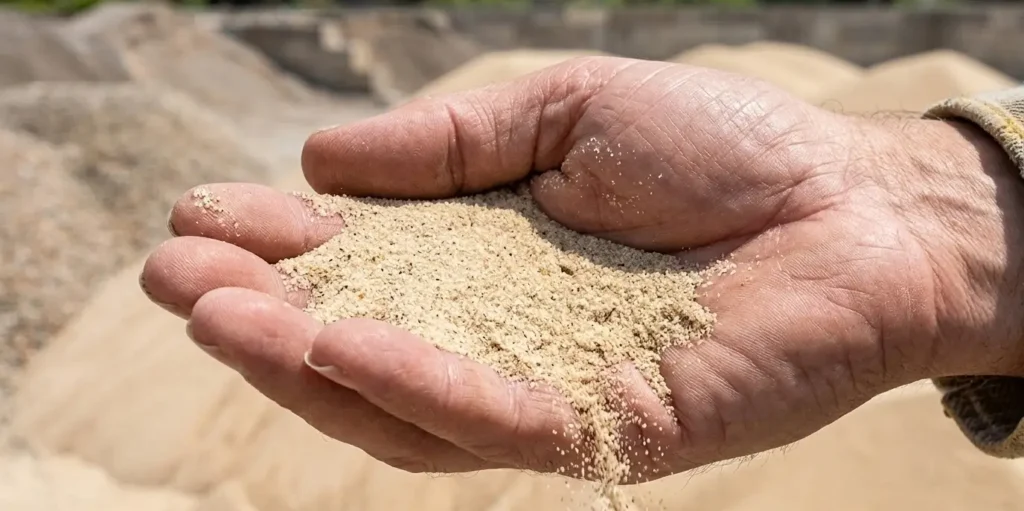
If you think sand is just for mixing concrete or filling a child’s sandbox, you might be surprised by the versatility of mason sand. This finely graded material is a go-to for masons, landscapers, and homeowners for a huge range of applications. Its smooth texture makes it ideal for creating strong mortar for brickwork, locking pavers into place, and even providing a soft, protective base under a new pool liner. Because it’s so useful for larger jobs, it’s almost always more economical to purchase mason sand by the yard rather than by the bag. This guide is your complete resource for understanding how this powerhouse material can improve your next project, how to calculate the right amount, and what to expect on delivery day.
Key Takeaways
- Understand when to use mason sand: Its fine, uniform texture is perfect for creating workable mortar, locking pavers in place, and building a soft, stable base for pools and play areas.
- Calculate your needs to avoid waste: Measure your project area and use a cubic yardage calculator to get the right amount from the start; ordering in bulk is far more economical for most projects than buying individual bags.
- Partner with a trustworthy supplier: A dependable company ensures you get high-quality sand delivered on time, so check customer reviews and prepare your site for a smooth delivery day to keep your project on track.
What is Mason Sand?
If you’re planning a project that involves brickwork, pavers, or even a backyard sandbox, you’ve probably come across the term “mason sand.” So, what exactly is it? Mason sand, sometimes called masonry sand, is a finely graded sand that’s washed and screened to ensure a consistent, smooth texture. Think of it as the go-to material for creating strong mortar for laying bricks or stones and for filling the joints between pavers for a clean, stable finish. Its uniform particles make it incredibly workable, which is why masons and landscapers rely on it for projects that need a polished look. When you need a reliable material for your next job, getting quality sand delivery ensures your project starts on the right foot.
Its Key Characteristics
What makes mason sand special are its distinct qualities. First, it’s incredibly fine and uniform. Unlike coarser sands, its particles are all a similar small size, which gives it a soft, smooth feel. This consistency is key for workability, especially when mixing mortar. It allows the mortar to spread easily and create strong, thin bonds between bricks or blocks. This fine texture also helps create a stable, yet flexible, base for things like above-ground pools or a soft landing surface in a playground. Essentially, its smoothness and uniformity are what make it so versatile for both construction and landscaping tasks.
Mason Sand vs. Other Sand Types
It’s easy to think all sand is the same, but the differences are important. Mason sand is made by crushing rocks like granite, limestone, or gneiss, then screening it to remove larger, coarse pieces. This process results in its signature fine, clean texture. In contrast, concrete sand is much coarser and has larger particles, which is necessary for creating the strength required in concrete mixes. Play sand is also fine, but it undergoes a more rigorous cleaning process to ensure it’s safe for children. Understanding these types of sand helps you choose the right material. Using a coarse sand for mortar, for example, would result in a weak, lumpy mix and a frustrating workday.
How to Use Mason Sand
Mason sand is one of the most versatile materials you can have delivered for your home or construction projects. Because of its fine, uniform texture, it’s useful for much more than just mixing concrete. From creating the perfect patio to building a safe play area for your kids, this sand is a go-to for jobs that require a smooth, clean finish. Let’s walk through some of its most popular applications.
For Mortar and Masonry
This is what mason sand was born to do. Its fine, evenly graded particles create a smooth and pliable mortar that’s easy to work with. When you’re laying bricks, blocks, or stones, you need a mix that holds everything together without being gritty or difficult to spread. Mason sand provides that perfect consistency, ensuring strong bonds and clean joints for a professional-looking finish. If you have a masonry project on the horizon, getting a quality sand delivery is your first step.
For Pavers and Joints
If you’re planning a new patio or walkway, mason sand is your best friend. It serves two key purposes in paver installation. First, you can use it as a thin leveling layer on top of your gravel base to create a perfectly smooth surface for setting the pavers. Second, once the pavers are in place, you can sweep the fine sand into the joints. This locks the pavers together, prevents them from shifting, and helps keep weeds from growing through the cracks. It’s a simple step that makes a huge difference in the stability and appearance of your finished project.
For Playgrounds and Sandboxes
Because it’s clean and soft, mason sand is an excellent choice for children’s play areas. Its fine texture is gentle on little hands and feet, making it ideal for sandboxes. It also provides a soft, cushioning surface under swing sets and other playground equipment, which can help make falls a little safer. Unlike coarser sands, it doesn’t contain large pebbles or sharp fragments, giving you peace of mind while the kids are playing. It’s a simple way to create a fun and safer backyard.
For Pool Bases and Soil
Setting up an above-ground pool requires a perfectly flat and smooth foundation to protect the liner from punctures. Mason sand is easy to spread and compact, creating a stable base that won’t damage your pool. Just a couple of inches can make all the difference in the longevity of your pool liner. You can also use mason sand in landscaping to amend heavy clay soil. Mixing it in can improve drainage and aeration, creating a better environment for certain plants to grow alongside quality black dirt.
How Much Mason Sand Do You Need?
Figuring out exactly how much sand you need can feel like a bit of a guessing game, but it doesn’t have to be. Ordering too little means project delays, while ordering too much leaves you with a pile of sand and a lighter wallet. The key is to measure your space and do a little math before you place your order. Getting the quantity right from the start saves you time, money, and a lot of hassle.
Whether you’re filling a sandbox, setting a paver patio, or mixing mortar, calculating the correct volume is the first step to a successful project. Let’s walk through how to determine the right amount for your job and a few other factors you’ll want to keep in mind.
Calculate Your Coverage
To figure out how much sand you need, you’ll want to measure the length, width, and desired depth of your project area in feet. A good rule of thumb is that one cubic yard of mason sand covers about 150 square feet with a two-inch layer. So, if you have a 10-foot by 15-foot area you want to cover, one cubic yard is just about perfect for that two-inch base.
If math isn’t your favorite thing, don’t worry. Most suppliers offer tools to help you get an exact number. To make it even easier, you can use a cubic yardage calculator to get a precise measurement. Just plug in your dimensions, and it will tell you exactly how many cubic yards to order.
Factors Affecting How Much You Need
Beyond the basic dimensions of your project, a few other details can influence your final order. For instance, if you’re working on a larger project that requires multiple materials, like sand and Class 5 gravel, you may need separate deliveries to keep them from mixing. This could mean an additional delivery fee, so it’s something to plan for in your budget.
You also need to think about where the delivery truck will drop the sand. Make sure there is a clear, safe path for the truck to access your property. Obstacles like low-hanging branches, power lines, or a narrow driveway can complicate the sand delivery process. Thinking through these logistics ahead of time ensures a smooth drop-off on delivery day.
What Does Mason Sand Cost?
Figuring out the cost of mason sand for your project involves more than just the price per pound. You’ll need to think about how much you need, where you’re getting it from, and how it will get to your site. Let’s break down the key cost components so you can create an accurate budget.
Understanding Price Factors
The price of mason sand can vary quite a bit depending on a few key things. Generally, you can expect sand to cost between $15 and $50 per cubic yard. This range is influenced by your location, the supplier’s pricing, and the overall quality of the material. A local supplier can often provide a more competitive price on materials and delivery than a big-box store. The best way to get a precise number for your project is to request a quote directly from a provider that offers sand delivery in your area. This ensures you get an accurate, all-in price based on your specific needs.
Buying in Bulk vs. by the Bag
For small patch jobs or filling a few paver joints, buying mason sand by the bag might seem convenient. However, for most projects, purchasing in bulk by the cubic yard is far more cost-effective. A single cubic yard of sand is a surprisingly large amount, typically covering a 100 to 125-square-foot area at a depth of two to three inches. If you’re working on a patio, pool base, or sandbox, buying in bulk will save you money and multiple trips to the store. To figure out exactly how much you need, you can use a cubic yardage calculator to avoid over- or under-ordering.
Factoring in Delivery and Other Costs
When you order mason sand, the price of the material itself is only part of the total cost. Delivery is almost always a separate fee, which can range from $50 to $150 per trip depending on the distance from the supplier to your project site. It’s a good practice to confirm the final cost, including delivery fees and any applicable taxes, before you place your order. This transparency helps you avoid any surprises on the final bill. A reliable supplier will be upfront about all costs, ensuring your materials arrive on time and within your budget, keeping your project running smoothly.
Where to Buy Mason Sand
Once you know how much mason sand you need, the next step is figuring out where to get it. You have a few great options, and the best one for you will depend on the size of your project and whether you can transport the material yourself.
Minnesota Aggregates Delivery
For larger projects, getting your mason sand delivered is often the easiest and most efficient choice. You won’t have to worry about hauling heavy bags or making multiple trips. Here in Minnesota, a delivered truckload of sand typically costs between $15 and $50 per yard. At Minnesota Aggregates, we specialize in providing fast, on-time sand delivery across the state. We handle all the logistics so you can focus on your project. Ordering a delivery is perfect when you need a specific amount of high-quality sand brought directly to your home or job site, saving you time and effort.
Local Suppliers and Big-Box Stores
Your local landscape supplier or a big-box home improvement store can be a good source for mason sand, especially for smaller jobs. These places usually sell sand in different quantities, from individual bags to half or full cubic yards. This flexibility is great if you only need a small amount for a weekend project, like filling a sandbox or re-pointing a few bricks. While convenient for grabbing what you need on the spot, keep in mind that you’ll be responsible for getting it home. For anything more than a few bags, you’ll likely need a truck.
Ordering Online for Pickup
A hybrid option that works well for many DIYers is ordering online for pickup. Many local suppliers allow you to place an order on their website and then swing by to have your truck loaded. This saves you the time of shopping in-store and ensures the material is ready when you arrive. You can often buy it by the scoop, which is usually about one cubic yard. For reference, one cubic yard of sand will cover about 100 to 125 square feet at a depth of two to three inches. This is a fantastic choice if you have a vehicle that can handle the weight but don’t need a full-scale delivery.
Getting Your Mason Sand Delivered
Once you’ve figured out how much mason sand you need, the next step is getting it to your project site. A smooth delivery process is just as important as the quality of the sand itself. Knowing what to expect and how to prepare can save you a lot of time and prevent headaches, ensuring your project stays on schedule. At Minnesota Aggregates, we focus on making sand delivery straightforward and reliable, so you can get back to work.
Same-Day vs. Scheduled Delivery
Depending on your project’s timeline, you’ll likely have a choice between same-day and scheduled delivery. If you’re in a pinch or miscalculated your initial order, same-day delivery can be a real project-saver. It’s perfect for those urgent situations where you need materials right away. For most projects, however, scheduling your delivery in advance is the way to go. It allows you to coordinate the arrival of your sand with your work plan, ensuring you have everything you need exactly when you need it. Planning ahead also guarantees your supplier has the quantity you need in stock and can fit you into their delivery schedule without a rush.
Minimum Orders and Delivery Zones
Before placing an order, it’s a good idea to check two things: minimum order requirements and the supplier’s delivery zone. Some companies have a minimum quantity, like one cubic yard, for delivery. It’s also important to confirm that your project site is within their service area to avoid any last-minute surprises. Delivery fees are standard and are typically based on your distance from the supplier. At Minnesota Aggregates, we cover a wide area and are transparent about our delivery costs, so you’ll know the full price upfront. Always double-check these details to make sure the delivery is both possible and cost-effective for your location.
Delivery Day: What to Expect
On the day of your delivery, a little preparation goes a long way. First, decide exactly where you want the sand dropped. Choose a spot that’s accessible for a large truck and convenient for your project. Make sure the path is clear of any obstacles like parked cars, low-hanging branches, or equipment. Remember that the delivery driver’s job is to safely drop the material, not to move or spread it. You’ll need a plan to get the sand from the pile to its final destination. If you’re dealing with a large amount, you might consider our skid steer services to make the job much faster and easier.
How to Choose the Right Supplier
Finding the right supplier is about more than just getting a good price on mason sand. You’re looking for a partner who can help your project run smoothly from start to finish. The right company will deliver high-quality materials exactly when you need them, while the wrong one can lead to frustrating delays and inconsistent results. When you’re vetting potential suppliers, it’s helpful to focus on three key areas: the quality of their sand, what other customers are saying about them, and how reliable their service is.
Think of it this way: your project’s success depends on the materials you use and the people you work with. A great supplier understands that their job is to make your job easier. They provide a dependable product and a seamless experience, so you can focus on getting the work done. Taking a little extra time to find a supplier who checks all these boxes will save you a lot of potential headaches down the road. It’s the difference between a project that flows and one that feels like a constant struggle against poor materials and missed deadlines. A trustworthy supplier becomes an extension of your team, ensuring you have what you need, when you need it.
Look for Consistent Quality
When it comes to mason sand, quality is all about consistency. You need sand that is finely graded with a uniform particle size. This smooth texture is what makes it perfect for creating workable mortar, filling paver joints cleanly, and providing a soft base for a playground. A reliable supplier should be able to tell you about the properties of their sand and assure you that every delivery will meet the same standard. You don’t want to get a perfect batch for one part of your project, only to have the next load be completely different.
Inconsistent materials can compromise the structural integrity and appearance of your work. That’s why it’s so important to choose a company known for its high-quality sand delivery. When you can trust your supplier, you can be confident that your project will look great and stand the test of time.
Check Customer Reviews
Before committing to a supplier, take a few minutes to see what past customers have to say. Customer reviews are an honest look into what it’s actually like to work with a company. You can find them on Google, social media, or the supplier’s website. Look for comments that go beyond just price. Do people mention the quality of the sand? Are they happy with the customer service they received? Do they talk about friendly, knowledgeable staff who helped them get exactly what they needed?
A pattern of positive feedback is a strong indicator that you’re dealing with a reputable company. Pay attention to reviews from people with projects similar to yours, whether they’re contractors or fellow homeowners. A supplier with a solid reputation has earned it by consistently taking care of its customers.
Prioritize Reliable Service
Great sand is only useful if it arrives on time. A supplier’s reliability can make or break your project schedule. Look for a company that has a reputation for prompt, dependable delivery. Clear communication is key here. A good supplier will give you a clear delivery window and have professional drivers who know how to handle the material and respect your property. This level of service shows that they value your time and your business.
Beyond just dropping off the sand, some suppliers offer additional help, like skid steer services, which can be a huge help for spreading and placing your materials. When a company offers reliable delivery and helpful services, it shows they are invested in your project’s success. Always confirm delivery details beforehand to ensure a smooth drop-off.
Before You Order: A Quick Checklist
A smooth delivery day starts with a little planning. Taking a few minutes to think through the logistics before your mason sand arrives will save you time and prevent any surprises. From clearing a path for the truck to knowing exactly where you want your materials dropped, a little prep work goes a long way. This simple checklist will walk you through everything you need to consider to make sure your delivery is seamless and your project stays on track.
Prepare Your Site for Delivery
First, walk the path our delivery truck will take. Make sure it’s wide, clear of any obstacles like parked cars or equipment, and has a safe place to turn around. Pick a drop spot for the sand that’s at least 15 feet away from any overhead power lines or low-hanging tree branches. Keep in mind that a fully loaded truck is heavy and can potentially crack concrete or asphalt driveways. You may need to sign a waiver for any damage if we have to drive on these surfaces. A great tip is to lay down a large tarp where the sand will be dumped; it makes cleanup much easier later on.
Plan for Storage and Handling
Think about where your materials will live until you use them. If your project requires more than one type of aggregate, like Class 5 gravel for a base and mason sand for the joints, you’ll need separate piles. To prevent materials from mixing, you may need to pay an extra fee for a separate delivery trip. Also, remember that our delivery service gets the sand to your property. You’ll be responsible for moving it from the pile to its final destination. If you need a hand, our professional skid steer services can help with the heavy lifting.
Time Your Delivery Perfectly
While we pride ourselves on reliable and timely service, it’s always smart to build some flexibility into your project schedule. Delivery windows are estimates, so it’s best not to have your entire crew waiting for the moment the truck arrives. Plan for the sand to be on-site before you absolutely need it. This gives you a buffer for any unexpected delays. When you place your order, we’ll give you a clear idea of what to expect on delivery day so you can coordinate your project timeline effectively and keep things moving forward without a hitch.
Tips for Applying Mason Sand
Once your sand delivery arrives, it’s time to get to work. Applying mason sand correctly is key to getting a professional, long-lasting result, whether you’re setting up a pool base or laying pavers. A little prep and the right technique can make all the difference between a project that looks great for years and one that needs redoing next season. These tips will help you handle the job with confidence and get it done right the first time.
How to Spread and Level It
First, you’ll want to make sure you have the right amount of sand for your space. As a general rule, one cubic yard of mason sand covers a 9-by-12-foot area at a depth of three inches. For more specific projects, our cubic yardage calculator can help you figure out exactly what you need. When spreading the sand, aim for an even layer. If you’re creating a base for an above-ground pool, stick to a depth of two to three inches. Any deeper, and the sand could shift over time, making the base unstable. Use a rake to get the surface as level as possible before compacting.
Tools You’ll Need for the Job
Having the right tools on hand will make your project much easier and more efficient. You don’t need a lot of fancy equipment, just a few basics. A sturdy wheelbarrow is perfect for moving the sand from the delivery pile to your work area without straining your back. Use a shovel to load the wheelbarrow and place the sand where you need it. A wide garden rake or a leveling rake is essential for spreading the sand evenly across the surface. Finally, once the sand is level, a hand tamper will help you compact it into a firm, stable base for whatever you’re building.
Related Articles
- Sand Bulk Delivery: A Smart Buyer’s Guide – Minnesota Aggregates
- Where to Buy Sand in Bulk: A Buyer’s Guide – Minnesota Aggregates
- Minnesota Sand Delivery | Quality Sand Fast & On Time
Frequently Asked Questions
Is mason sand the same as play sand for a sandbox? While they are very similar in their fine, soft texture, they aren’t exactly the same. Play sand goes through a more intensive cleaning process to ensure it’s completely safe for children. Mason sand is a great, clean alternative for play areas and sandboxes, but if you’re looking for sand specifically rated for that purpose, dedicated play sand is your best bet.
What’s the most important difference between mason sand and concrete sand? The key difference is particle size and texture. Mason sand is fine and uniform, which creates a smooth, workable mortar for laying bricks or stone. Concrete sand is much coarser and more angular, and these larger particles are essential for creating the strength and stability needed in a concrete mix. Using one in place of the other will compromise the quality of your project.
Why is it better to get sand delivered instead of buying bags? For any project larger than a small patch job, delivery is almost always the more practical and cost-effective choice. A single cubic yard of sand is equivalent to dozens of heavy bags. Getting it delivered saves you the time and physical effort of loading, transporting, and unloading all that material yourself, and the price per yard is significantly lower when you buy in bulk.
How deep should my mason sand base be for a paver patio? When installing pavers, the mason sand serves as a thin leveling course, not the main foundation. After you’ve laid and compacted your gravel base (like Class 5), you only need about a one-inch layer of mason sand on top. This creates a perfectly smooth surface that makes it much easier to set your pavers evenly.
What happens if the delivery truck can’t access my drop-off spot? This is why preparing your site is so important. If a driver arrives and the designated spot is blocked, unsafe, or inaccessible, it can cause delays and may result in additional fees for waiting time or a rescheduled delivery. It’s always best to discuss any potential access challenges, like narrow driveways or overhead wires, with us when you place your order so we can create a solid plan together.