
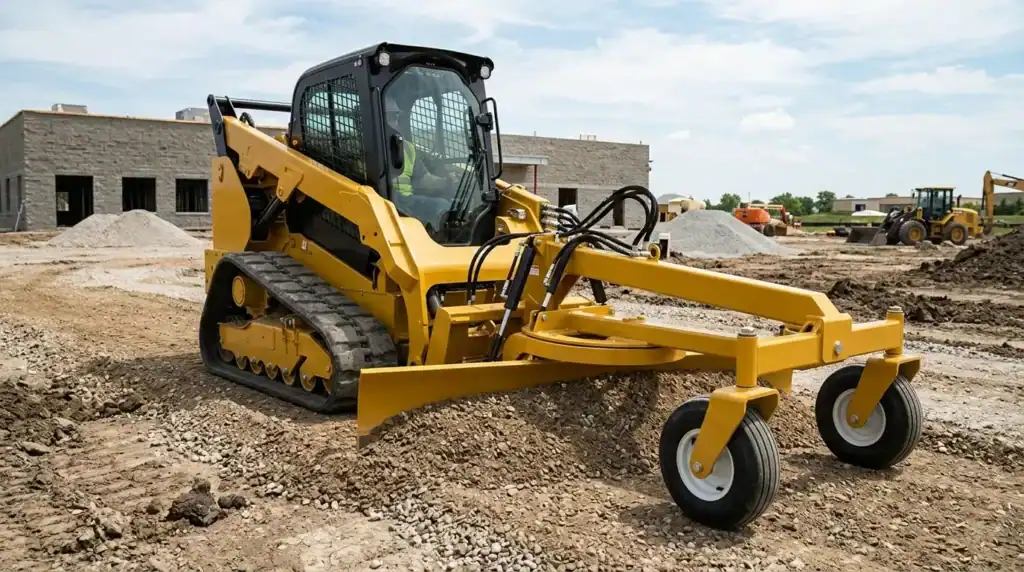
If you’ve ever tried to level a patch of ground with a skid steer bucket, you know the frustration of leaving ridges and low spots. You can get close, but a perfect finish feels just out of reach. That’s where a specialized attachment makes all the difference. A grading blade transforms your machine from a simple mover of dirt into a precision tool for creating perfectly smooth surfaces. Whether you’re prepping a foundation for a new shed, smoothing out a gravel driveway, or contouring a yard for proper drainage, the right grading blade for a skid steer is essential. This guide will walk you through everything you need to know, from how these attachments work to choosing the right one for your project.
Key Takeaways
- Prioritize a perfect fit for your machine: Always confirm that a grading blade’s mounting system, weight, and hydraulic requirements are compatible with your skid steer to ensure safe operation and get the best results.
- Match the blade’s features to the job’s demands: A simple fixed blade works well for basic leveling, but a 6-way blade provides the precision needed for creating complex slopes and contours. Choose the tool that aligns with the finish you need.
- Consider the total cost, not just the purchase price: A durable blade from a reputable brand may cost more upfront but saves money on future repairs. For single projects, hiring a professional skid steer service is often the most cost-effective option.
What Is a Skid Steer Grading Blade & How Does It Work?
If you’ve ever looked at a bumpy, uneven patch of ground and wished you could just smooth it out, a skid steer grading blade is the tool for the job. Think of it as a giant, powerful squeegee for the earth. This attachment connects to the front of your skid steer and is designed to level, scrape, and shape terrain with precision. Whether you’re prepping a site for a new shed, creating a smooth gravel driveway, or landscaping a yard, a grading blade makes the work faster and more professional.
Unlike a simple bucket, which is great for scooping and moving material, a grading blade gives you fine control over the final surface. It pushes and cuts through dirt, gravel, and other materials to create a perfectly flat or sloped finish. The real magic comes from the hydraulic controls, which allow you to adjust the blade’s angle and tilt on the fly. This versatility is what makes it an essential tool for anyone serious about site preparation and finishing work.
Key Functions and Common Projects
At its core, a skid steer grading blade turns rough ground into a smooth, workable surface. It’s a multi-purpose tool that can handle a surprising number of tasks. By adjusting the angle and height, you can push material, scrape away high spots, and fill in low areas with incredible accuracy.
This makes it the perfect attachment for projects like:
- Leveling ground for building pads, patios, or sheds
- Grading driveways and private roads before adding new material
- Creating gentle slopes for proper water drainage (swales)
- Spreading and smoothing topsoil, sand, or Class 5 gravel; read our Class 5 gravel buyer guide before planning the base
- Prepping a yard for new sod or seed
Essentially, any job that requires a precise, flat surface is a great candidate for a skid steer grader.
How to Attach a Grading Blade
Hooking up a grading blade is usually a quick process, thanks to the universal quick-attach system on most modern skid steers. You simply line up the attachment plate on the blade with the plate on your machine, lock it in place, and connect the hydraulic hoses. However, the most important step happens before you even get to this point: ensuring compatibility.
You need to confirm that the attachment is a good match for your skid steer’s lift capacity and hydraulic system. An oversized blade can strain your machine, while an undersized one won’t be effective. Always check the specifications provided by both the skid steer and the attachment manufacturer to ensure they align. This simple check prevents equipment damage and ensures you can operate safely and efficiently.
Understanding the Hydraulic Controls
The hydraulics are what give a grading blade its surgical precision. Most high-quality grading blades are “6-way” blades, which means you have six different movements you can control right from the cab. This level of control is what separates a rough job from a professional one.
The six movements are:
- Height: Lifting the entire blade up or down.
- Angle: Angling the blade left or right to push material off to the side.
- Tilt: Tilting the blade forward or backward to change how aggressively it cuts into the ground.
This hydraulic versatility allows you to make micro-adjustments as you work, ensuring the final grade is exactly what you need. You can cut into a high spot and feather the material into a low spot all in one smooth pass.
The Benefits for Your Project
Using a skid steer with a grading blade brings two major benefits to your project: efficiency and quality. You can accomplish in a few hours what might take days to do with manual tools like rakes and shovels. This speed means you can move on to the next phase of your project sooner, whether that’s laying pavers or planting grass.
Beyond speed, the quality of the finish is unmatched. A grading blade creates a consistently smooth and level surface that is difficult to achieve by hand. This professional-grade finish is crucial for ensuring proper drainage, creating a stable foundation for structures, and giving your landscaping a clean, polished look. For anyone who needs to create a perfectly smooth surface, this attachment is a game-changer.
What Are the Different Types of Grading Blades?
When you start shopping for a grading blade, you’ll quickly realize there isn’t just one type. The right attachment for your skid steer depends entirely on the job you need to do. Are you leveling a simple path, or are you carving out complex slopes for a landscaping project? Each type of blade offers a different level of control and precision. Understanding the main categories—fixed, adjustable, and 6-way—will help you narrow down your options and find the perfect tool for the task. Let’s break down what makes each one unique and which projects they’re best suited for.
Fixed Grading Blades
If your project is straightforward, a fixed grading blade is often all you need. These attachments are built for durability, usually with a blade made of hardened steel. As the name suggests, the blade is in a fixed position, which makes it perfect for tasks that require a consistent, stable grading surface. Think of it as your go-to for basic leveling and spreading materials. If you’re preparing a flat base for a shed, smoothing out a driveway with Class 5 gravel, or doing initial site prep, a fixed blade provides the strength and simplicity to get the job done efficiently.
Adjustable Grading Blades
When you need more precision, an adjustable grading blade offers a significant step up in flexibility. These blades allow you to fine-tune the angle and depth, giving you greater control over the final result. This adjustability is essential for projects where you need to remove varying amounts of material or create a specific, subtle grade—like ensuring proper water drainage away from a foundation. If your project requires more finesse than just basic leveling, the ability to make small adjustments on the fly makes these blades an incredibly useful tool for achieving a professional finish.
6-Way Grading Blades
For the most complex and demanding grading jobs, the 6-way grading blade is the top choice. This highly versatile attachment gives you maximum control, allowing you to tilt and angle the blade in multiple directions. This range of motion makes it ideal for intricate tasks like digging ditches, shaping swales, and creating precise slopes for landscaping or road construction. If your project involves more than just a flat surface, a 6-way blade provides the maneuverability needed to handle detailed contouring and finish grading with ease. It’s a powerful tool for contractors who tackle a wide variety of earthmoving projects.
Key Features to Compare
Beyond the blade type, a few key features will guide your final decision. First, ensure the attachment is compatible with your skid steer’s model and size. Next, check the hydraulic requirements to make sure your machine can power it effectively. Finally, consider the brand’s reputation for durability and support. While it’s tempting to focus on price, one of the biggest mistakes is choosing a cheaper blade that can’t handle your workload. If you’d rather leave the grading to the pros, our expert team offers professional skid steer services to handle everything for you, ensuring a perfect grade every time.
How to Choose the Right Grading Blade for Your Skid Steer
Picking the right grading blade isn’t just about finding one that fits; it’s about finding the one that turns your skid steer into a precision grading machine. The right attachment can save you hours of manual labor and deliver a perfectly smooth finish on everything from driveways to building pads. But with so many options out there, how do you make the right call? It comes down to understanding your machine’s capabilities, the demands of your project, and a few key features that separate a good blade from a great one. Let’s walk through the essential factors to consider so you can invest in an attachment that works as hard as you do.
Match the Blade to Your Skid Steer
Before you get excited about features, the first check is always compatibility. Not all grading blades work with all skid steers. You have to make sure that the attachment’s mounting plate or adapter is compatible with your specific skid steer model. An ill-fitting blade is useless at best and dangerous at worst. Check your skid steer’s manual for its specifications, including its operating weight and lift capacity. A blade that’s too heavy can strain your machine and compromise safety. Taking a few minutes to confirm compatibility upfront will save you a major headache later.
Check Your Hydraulic Requirements
Your skid steer’s hydraulic system is what powers the grading blade’s movements, so this is a critical piece of the puzzle. The attachment must be compatible with your machine’s hydraulic capabilities, specifically its flow rate (measured in gallons per minute, or GPM). Choosing a blade that requires more hydraulic flow than your skid steer can provide will lead to sluggish performance and poor results. On the other hand, a system that’s too powerful can damage the attachment. Check the hydraulic requirements for any blade you’re considering and make sure they align with your skid steer’s output.
Decide on Blade Width and Material
The size of your typical project should guide your choice of blade width. A wider blade covers more ground faster, which is great for large, open areas. A narrower blade offers more precision and maneuverability in tight spaces. Also, look for adjustability options that allow you to fine-tune blade angles and depth for greater control. Just as important is the blade’s construction. Grading is tough work, so you need a rugged, well-built blade made from high-strength steel that can withstand wear and tear. If you’re unsure what size is best for your project, our team can help with our professional skid steer services.
Common Buying Mistakes to Avoid
It’s easy to get sidetracked when shopping for attachments, but a few common missteps can lead to buyer’s remorse. One of the biggest mistakes is focusing only on price while ignoring quality and durability. A cheap blade that wears out quickly isn’t a bargain. Another pitfall is overlooking the hydraulic requirements we just discussed or ignoring compatibility. Finally, don’t forget to consider your specific needs. Buying a complex, 6-way blade when a simple, fixed blade will do the job just adds unnecessary cost and complexity. By avoiding these common attachment buying mistakes, you’ll make a smarter, more effective purchase.
A Look at Top Grading Blade Brands
Once you know what type of grading blade you need, the next step is to explore the brands that make them. The market is full of options, and it can be tough to sort through them all. Different brands are known for different things—some focus on heavy-duty durability, while others specialize in precision and versatility. Looking at a few of the top names can give you a good sense of the features, quality, and price points you can expect. This will help you create a shortlist and make a final decision that you feel confident about for your next project.
Let Us Handle the Grading: Minnesota Aggregates Skid Steer Services
Buying a new attachment is a big investment, especially if you only need it for a single project. If you’d rather skip the research, purchase, and maintenance, consider hiring a professional. Our skid steer services provide you with both the right equipment and a skilled operator to get the job done quickly and correctly. We can handle everything from site prep to final grading, ensuring a smooth, level surface for your driveway, yard, or building pad. It’s a great way to get professional results without the long-term commitment of owning specialized equipment.
Popular Brands: Worksaver, Titan, and Quick Attach
When you start shopping, you’ll likely come across a few key names again and again. Worksaver is a well-respected brand known for its high-quality, durable attachments. Their grader blades are built for professionals who need reliable performance for tasks like preparing surfaces for asphalt or concrete. Another popular choice is Titan Attachments, which offers a wide range of skid steer graders that balance affordability with solid construction. For maximum control, many operators turn to Quick Attach for its versatile Versa Blade, a 6-way blade that offers exceptional precision for complex grading jobs.
Comparing Features and Price Points
As you compare brands, look beyond the price tag and focus on the features that matter for your work. A key differentiator is the hydraulic control system. A 6-way blade, for example, gives you much more control over tilt and angle than a fixed blade, which can save you a lot of time on the job. Also, consider the blade width in relation to your skid steer’s power and the scale of your typical projects. A wider blade covers more ground but requires more power to operate effectively. Using a cubic yardage calculator can help you plan your material needs, which in turn informs the scale of equipment you’ll require.
Where to Find the Best Deals on Grading Blades
Finding the right grading blade is one thing, but finding it at the right price is another. A great “deal” isn’t just about the sticker price; it’s about getting a durable, reliable tool that fits your skid steer and your project needs without costing you a fortune in repairs down the road. Whether you’re a seasoned contractor or a homeowner tackling a big project, knowing where to look and what to look for can save you both time and money. Let’s explore the best places to find your next grading blade, from online retailers to local dealers, and weigh the pros and cons of buying new versus used.
Buying Online vs. Shopping Local
The debate between shopping online and buying from a local dealer is a classic one. Online retailers that specialize in skid steer equipment often have a massive selection and competitive pricing. You can easily compare different brands, features, and reviews from the comfort of your home. A rugged, well-built attachment with options for fine-tuning blade angles and depth can often be found through these online stores. However, the downside is that you can’t inspect the blade in person before buying, and shipping heavy equipment can be costly. A local dealer, on the other hand, lets you see and touch the equipment. You can build a relationship, get expert advice tailored to your specific machine, and have a go-to person for service and parts.
New vs. Used: Which Should You Choose?
Your budget will likely be the biggest factor in deciding between a new or used grading blade. A new attachment comes with a manufacturer’s warranty, the latest technology, and peace of mind knowing you’re the first owner. But that all comes at a premium price. A used blade can save you a significant amount of money upfront, but it requires a careful inspection. Look for cracks in the welds, excessive wear on the cutting edge, and any signs of hydraulic leaks. One of the most common mistakes buyers make is choosing the wrong size or compatibility, so double-check that the used blade is a perfect match for your skid steer’s specs.
Don’t Forget About Maintenance and Parts
A low-cost blade can quickly become a money pit if it’s not built to last or if replacement parts are hard to find. Before you buy, think about the total cost of ownership. How durable is the construction? Are the cutting edges replaceable, and if so, are they a standard size you can easily source? Ignoring the overall quality and durability for a lower price is a recipe for frustration. A well-made blade from a reputable brand might have a higher initial cost, but it will likely save you money on maintenance and downtime in the long run. Always factor in the availability and cost of wear-and-tear parts when comparing your options.
How to Find Seasonal Deals and Financing
If you have your heart set on a new blade but want to find the best price, timing is everything. Many dealers offer seasonal sales events, like end-of-year clearances or pre-season promotions in the spring, to make room for new inventory. Keep an eye out for trade shows and agricultural expos in your area, as manufacturers sometimes offer special event pricing. Don’t be afraid to ask about financing options, either. Many brands and dealers offer plans that can make a higher-quality blade more affordable by spreading the cost over time. Just remember that the best deal is one that balances price with performance and durability for your specific needs.
Frequently Asked Questions
What’s the real difference between using a grading blade and just using my skid steer bucket? Think of it this way: a bucket is for moving piles of material, while a grading blade is for creating a smooth, finished surface. While you can get a somewhat level surface with a bucket, a grading blade gives you the precision to scrape off high spots and fill in low ones with incredible accuracy. It’s the difference between a rough draft and a final, polished product, especially for projects like driveways or building pads where a perfect grade is essential.
Do I really need a fancy 6-way blade for my project? Not always. The right blade depends entirely on your project’s complexity. If you’re just leveling a flat area for a shed or spreading gravel on a straight path, a simple fixed blade will do the job perfectly. You only need the advanced controls of a 6-way blade when you’re tackling more intricate work, like creating specific slopes for drainage, carving out swales, or contouring a landscape.
What are the biggest red flags to look for when buying a used grading blade? When inspecting a used blade, pay close attention to the structural integrity. Look for cracks in the steel, especially around the welds and mounting plate, as these can indicate stress and potential failure. Check the hydraulic cylinders and hoses for any signs of leaks. Also, examine the cutting edge for excessive or uneven wear, as replacing it can be an added expense. A bent frame is another major red flag that you should walk away from.
How do I know for sure if a blade is compatible with my skid steer? The best place to start is your skid steer’s owner’s manual. You need to confirm three key things: the mounting system, the lift capacity, and the hydraulic flow rate (measured in GPM). The blade’s weight must be within your machine’s lift capacity, and its hydraulic requirements must match your skid steer’s output. Mismatching these can lead to poor performance or even damage your equipment.
When does it make more sense to hire a professional service instead of buying a grading blade? Buying an attachment is a great investment if you have frequent grading projects. However, if you’re facing a one-time job, like prepping your yard for sod or grading a new driveway, hiring a service is often more practical. You avoid the cost of the attachment, maintenance, and the learning curve of operating it. Our professional skid steer services give you access to the right equipment and an experienced operator to ensure the job is done right the first time.