
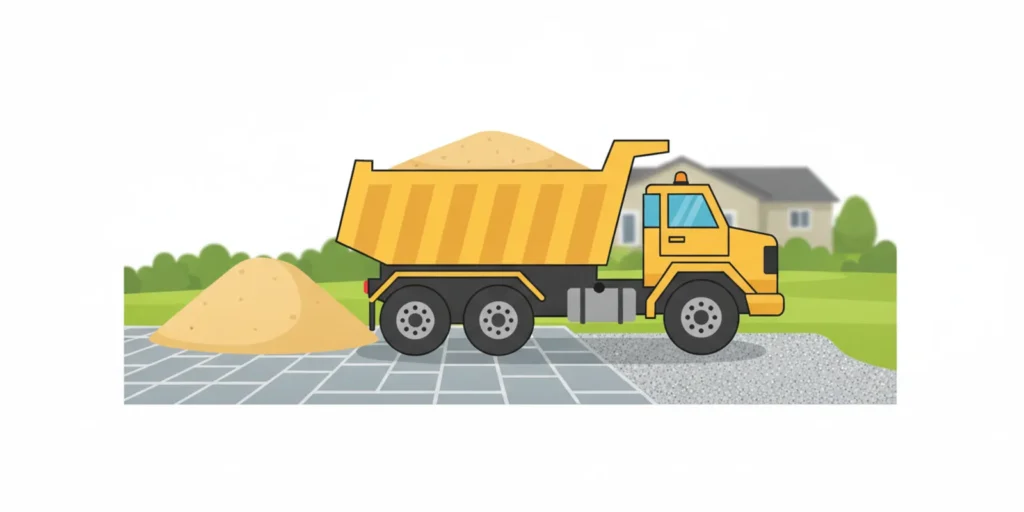
When comparing bulk sand for sale by the ton, start with more than the number beside the ton. The right purchase depends on the job, material specification, amount required, and delivery conditions. Confirming these points before requesting a quote helps you compare the same material and scope rather than two numbers that describe different orders.
Call to discuss your sand project
What should you confirm before choosing bulk sand?
Begin with the application. Sand may be used as bedding, for leveling, as fill, for traction, or in another construction or landscaping role. Those uses do not automatically call for interchangeable materials. If a plan, installer, engineer, or project specification names a sand type, provide that description when you ask for a quote. A general request for “sand” may leave important details open.
Describe what the material will do and where it will go. For example, a homeowner preparing a small patio should explain whether the sand is intended for a specified layer in a paver system, rather than asking only for a load of sand. A contractor working from project documents should share the written material requirement instead of substituting a product based on appearance or price. For a starting point on Minnesota material options, see the information about sand delivery in Minnesota and screened sand delivery.
Site conditions can also matter. Existing ground, drainage, finished elevation, and the way the material will be placed affect project planning. Where the underlying soil or design is uncertain, do not treat a general product description as a site assessment. Faribault County’s engineering page describes soil-type testing to determine sand, silt, and clay content; consult a qualified local professional when a project requires soil evaluation or design guidance (Faribault County Engineering).
How do tons and cubic yards differ?
A ton measures weight. A cubic yard measures volume. A project plan often gives an area and layer depth, which produces a volume estimate, while a supplier may quote a load by weight or by another stated unit. These measurements answer different questions: volume estimates how much space the layer occupies, and weight describes how heavy the order is.
There is no safe universal conversion to use for every sand order. Material density and moisture affect the weight that occupies a given volume. Even if a rough conversion appears in an online chart, it may not match the specific material or its condition. Ask the supplier for the conversion used for the sand being quoted and verify that the quote’s quantity unit is clear.
Keep the units visible in your notes. Write “2.2 cubic yards estimated volume,” for example, instead of recording “2.2” without the unit. Then ask how that estimate translates into the supplier’s order unit. This small habit helps prevent a volume calculation from being mistaken for a tonnage request.
How can you estimate the amount for a project?
For a rectangular area, multiply length by width by depth, using feet for all three measurements. Convert a depth in inches to feet by dividing by 12. Divide the resulting cubic feet by 27 to express the volume in cubic yards. This gives a planning estimate of the space occupied by the intended layer; it does not itself establish the weight to order.
For example, picture a 20-foot by 12-foot area with a planned 3-inch layer. Convert the depth to 0.25 feet. Then calculate 20 × 12 × 0.25 = 60 cubic feet. Divide 60 by 27 to get about 2.22 cubic yards. Before turning this into a tonnage request, confirm the material-specific conversion and whether the planned depth is appropriate for the project.
For an irregular site, break it into simple shapes. Measure a long section and a separate wider or angled area, calculate each section, and add the results. If the surface has significant slopes or low spots, estimate those areas separately instead of using one average measurement without checking. A cubic yardage calculator can help with the arithmetic, but it cannot determine the required sand specification or the correct conversion from volume to weight.
Use the planned finished depth, not the depth of a temporary excavation unless those are the same. If the project will be compacted or built in layers, follow the design or installer’s quantity guidance. Avoid automatically adding a percentage “for safety.” Ground variation, handling losses, and placement methods may affect the order, but the correct allowance depends on the job. Confirm it with the person responsible for the design or installation.
Which quote details should you compare?
Ask each supplier for a quote using the same material description, quantity basis, destination, and delivery scope. A material-only figure and a delivered figure do not cover the same thing. Neither does an estimate for screened sand compared with one for a different sand description. Ask what is included, how the amount is measured, and whether additional charges or site work are part of the offer.
| Quote detail | What to confirm | Why it matters |
|---|---|---|
| Material | Sand type, screening or specification, and intended use | Ensures the offer refers to the material your project requires |
| Quantity | Tons or cubic yards, estimated amount, and how partial quantities are handled | Keeps weight and volume from being confused |
| Delivery scope | Delivery destination, unloading location, and whether spreading is included | Separates delivery from placement or other site work |
| Site access | Approach, turning space, overhead clearance, and ground conditions | Lets the supplier consider the actual delivery conditions |
| Timing | Preferred date, flexibility, and how scheduling will be confirmed | Aligns material arrival with site readiness and project sequencing |
| Price basis | Whether the number is for material, delivery, or a stated combined scope | Makes comparisons meaningful rather than headline-only |
When reviewing offers, compare the delivered scope rather than choosing by the smallest number alone. If one quote assumes the supplier can unload close to the work and another includes extra handling or spreading, ask for the differences to be explained. If the quoted quantity changes after the material type or unit is clarified, update the comparison rather than relying on the earlier figure.
It can also help to review relevant buying guidance before making the call. The articles on where to buy sand in bulk and bulk sand delivery discuss the planning questions that commonly accompany a bulk order. Use project drawings and written specifications wherever they apply.
How should you plan the delivery location?
Decide where the truck should unload before delivery is arranged. The best location is not always the closest point to the finished work. Consider whether the area can hold the pile, whether material can be moved onward, and whether unloading there will interfere with traffic, other trades, or property access.
Walk the route from the entrance to the proposed drop point. Note narrow gates, tight turns, overhead branches or wires, soft ground, steep approaches, and obstacles that could affect access. Do not assume that a route suitable for a car will also work for a delivery truck. If you are unsure, take clear measurements or photos and describe the concern when requesting a quote. The supplier can then discuss the route and unloading plan before scheduling.
Think about water and neighboring areas as well. Choose a pile location that will not block a drain or allow loose material to wash into a drainage path. Keep the planned work area and access route clear of parked vehicles, equipment, and stored materials. If weather or site conditions change before the delivery, contact the supplier rather than leaving the truck to discover a new restriction on arrival.
Placement and spreading are separate considerations. If you need help moving or leveling delivered material, say so in the initial request and ask what scope is available. Minnesota Aggregates lists skid steer services for grading and site preparation; clarify whether you are asking for a sand delivery only or delivery together with equipment work. For a paver project, coordinate the material plan with the sand base preparation guidance rather than assuming the drop-off itself completes the base.
How can you prevent quantity and scheduling surprises?
Make a short project record before requesting a quote. Include the application, material name or specification, measured area, intended depth, estimated volume, delivery address, and preferred drop point. Keep measurements and assumptions together. If your calculation relies on a uniform depth or an unobstructed route, note that, so the supplier understands what has and has not been checked.
Then confirm the sequence of work. Is the site prepared and ready to receive material? Will equipment or another trade need the unloading area that day? Can the crew spread the material promptly, or will it remain in a pile? These questions can reveal a timing conflict before the order is placed. If the project date is flexible, mention that when discussing scheduling. Do not treat a requested date as confirmed until the supplier has confirmed the delivery arrangement.
For a layered installation, verify that the sand arrives at the stage when it can be placed as intended. Delivering too early may leave the pile in the way; delivering after a crew has moved on can require rearranging the schedule. The site contact should know the material, approximate quantity, location, and access plan, even if someone else placed the order.
What information should you send with a quote request?
A clear request does not need to be long. Include the details that establish what is being ordered and where it must go:
- The complete delivery address and a contact person for site questions.
- The intended application and the sand type or written specification, if known.
- Area dimensions, planned depth, and your volume estimate, with units.
- Whether you need help translating volume into the supplier’s order unit.
- The desired unloading location and any access restrictions or overhead hazards.
- Your preferred delivery date and how much flexibility you have.
- Whether you want material delivery only or also need spreading or site work.
If you are still deciding between sand types, state what the project is and what information you have. A supplier can respond to a specific question more usefully than an undefined request for the cheapest sand. If the plan calls for a named material, share that first and ask whether the available product matches it. Minnesota Aggregates provides sand delivery information for Minnesota customers; use the contact page to send the project details and ask about the appropriate next step.
When the project is a paver installation, keep the bedding material distinct from the base material and other layers in the design. If the specification is unclear, check with the installer or designer before ordering. A related guide to fill sand versus mason sand can help frame the distinction between material descriptions, but the project requirement should decide what is suitable.
Frequently asked questions
Can I convert cubic yards to tons with one fixed number?
Not reliably for every sand order. Weight varies with the material and its condition, including moisture. Calculate the volume for your project, then ask the supplier for the conversion appropriate to the sand being quoted.
Should I order more than my calculated volume?
Only after considering the project design and site conditions. Uneven ground, placement, and the specified layer can affect the amount, but an arbitrary extra allowance may be wasteful or conflict with the design. Confirm the amount with the installer, designer, or supplier using the actual project details.
Is every bulk sand appropriate for a paver project?
No. “Sand” is a broad description, and a paver system may specify different materials for different layers. Follow the product instructions and project plan, and confirm the named material before ordering rather than substituting by price alone.
What if I do not know the exact amount yet?
Share your dimensions, intended depth, project use, and the assumptions behind your estimate. A supplier can help clarify the order unit and material-specific conversion. For an irregular area, divide it into measured sections and calculate the pieces before combining them.
What should I do if truck access is uncertain?
Describe the route and unloading area before scheduling. Mention tight turns, low overhead clearance, soft ground, gates, or other limits. Photos and measurements can help explain the condition, but the delivery plan should be confirmed with the supplier.
Final planning note
For bulk sand by the ton, make the material, quantity unit, and delivery scope explicit before comparing offers. A measured volume estimate, a confirmed material description, and an honest account of site access give you a clearer basis for ordering and coordinating the work.