
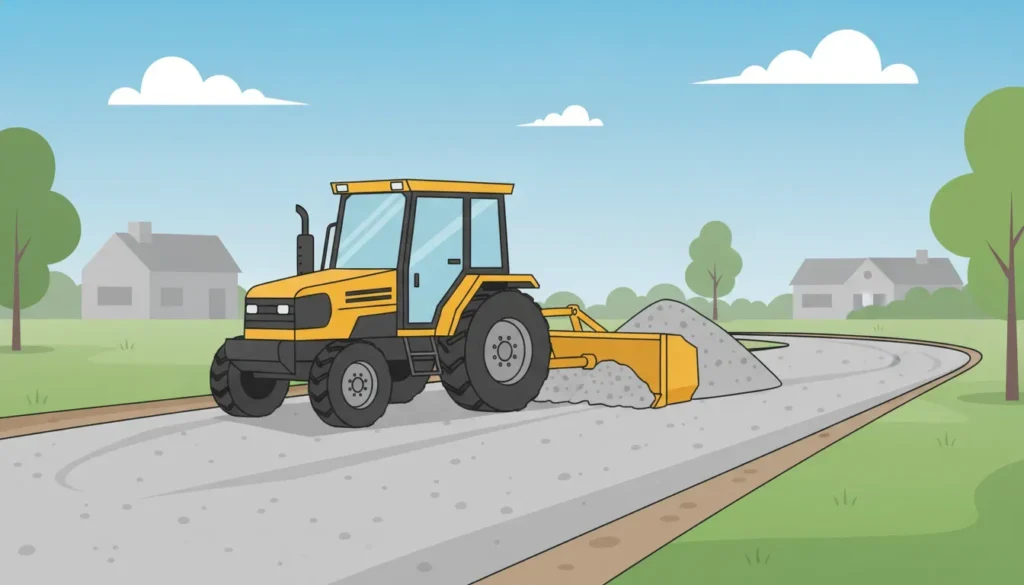
A box blade for spreading gravel can turn a loose delivery pile into a more even, usable surface, but the attachment works best when the material, access, and grade are planned before the truck arrives. In Minnesota, wet spring ground, summer storms, and freeze-thaw cycles make that planning just as important as the tractor or attachment. The goal is not simply to push gravel from one end of a driveway to the other. It is to place the right material, protect drainage, and leave enough room for the box blade to make controlled passes.
Request a gravel delivery quote or call 612-772-3677 to discuss your material, access, and spreading plan.
Short answer: A box blade is useful for rough-spreading gravel that is already on the surface, leveling uneven areas, cutting down high spots, and shaping a gentle crown. It is not a substitute for a loader when a large pile must be moved across a long site, and it cannot correct a weak or saturated base by itself.
Is a box blade good for spreading gravel?
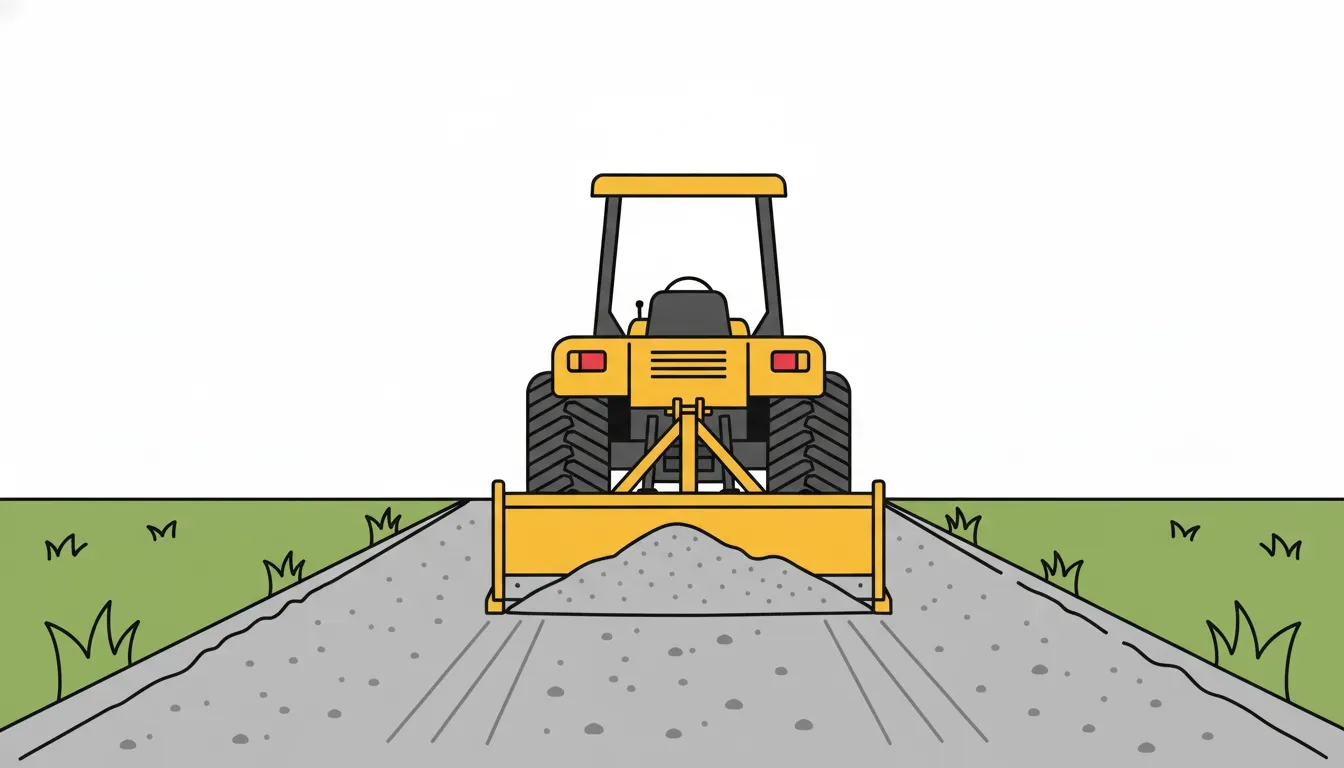
Yes, when the job is matched to the attachment. A box blade has side panels that hold a working amount of material while its cutting edges redistribute gravel across the surface. That makes it useful for blending a fresh load into an existing drive, filling shallow low spots, and creating a more consistent finish than pushing loose stone with a straight blade.
It is most effective after the gravel has been placed in manageable windrows or rough piles. The tractor can then make repeated passes along the drive or pad, collecting material from high areas and carrying it toward low areas. Small adjustments and overlapping passes generally produce a better result than trying to force the entire load into place in one pass.
A box blade is less efficient when the only task is moving gravel a long distance from one pile. In that situation, a front-end loader, skid steer bucket, or other loading tool is better for the first stage. The box blade can then handle the distribution and shaping stage. Thinking of the work as material handling followed by grading helps prevent the common mistake of expecting one attachment to do every job.
Box blade versus other gravel-spreading tools
The best tool depends on the amount of material, the surface condition, and the finish you need. A box blade is one part of a practical equipment plan, not automatically the right choice for every project.
- Hand tools: A shovel and bow rake can work for a small patch, walkway, or final touch-up. They are slow for a full driveway or parking pad.
- Front-end loader or skid steer bucket: A bucket is better for picking up, carrying, and rough-spreading material from a delivery pile. It can also work in tighter areas if the machine has enough room to maneuver.
- Box blade: A box blade is useful for redistributing gravel, leveling uneven areas, and shaping the surface after the material is roughly placed.
- Land plane or grading attachment: A land plane can be a good option for smoothing an established surface when there is less need to cut aggressively or carry a large reserve of gravel.
- Professional skid steer service: A skid steer with an experienced operator can combine material movement, spreading, grading, and site access decisions when the project is too large or complicated for the available tractor.
If you are comparing equipment for a broader gravel project, the general equipment guide for spreading gravel covers the larger tool-selection picture. This article stays focused on the box blade and the planning decisions that make it work.
What should you plan before gravel delivery?
The box blade cannot fix a delivery plan that puts material in the wrong place or leaves the tractor without a safe working path. Before ordering, walk the project and answer four questions: What material is needed? Where will the truck place it? How will the tractor enter and turn? What surface should exist when the work is complete?
Choose material for the job, not just the attachment
For a driveway, parking pad, or base project, Class 5 gravel is often considered because its crushed stone and fines can lock together under compaction. It is different from a clean, open stone that is selected primarily for appearance or drainage. The right material depends on whether you are building a base, topping an existing surface, filling a low area, or creating a temporary access route.
Tell the supplier what the gravel will support, whether a base already exists, and whether you plan to compact it. If the project needs more than one layer, ask how the material choices should be sequenced. A box blade can spread the load you order, but it cannot make an unsuitable product perform like a designed base.
Estimate the amount before the truck arrives
Measure the length and average width of the area, then decide the planned depth. Irregular drives may need to be split into sections so the low and high areas are not averaged together. A cubic yardage calculator can help turn those measurements into a starting estimate.
Use the estimate to plan the delivery, but do not treat it as a guarantee of final depth when the existing surface is uneven. Mark the boundaries and note places that need extra fill. If the project is large, staged deliveries may give the operator more control than one oversized pile that blocks the work area.
Prepare the delivery and working path
Mark the intended dump location before the truck arrives. The ground should be firm enough for the delivery vehicle, and the route should have adequate clearance from gates, low branches, wires, parked vehicles, and other obstacles. Consider turning space at the end of the drive and whether the truck can leave without driving across soft shoulders or finished landscaping.
Also plan where the tractor will enter after the material is unloaded. A delivery pile placed against a fence or at the narrowest point of the drive may be difficult to reach with a box blade. If the load must be placed in more than one location, explain the placement plan when requesting the quote.
How do you use a box blade to spread gravel?
The exact controls vary by attachment and tractor, so follow the equipment manufacturer’s operating guidance. The sequence below is a planning framework, not a replacement for safe equipment training.
- Inspect the surface. Remove large debris and identify soft spots, standing water, ruts, drainage outlets, and areas where the base has failed. Do not cover a serious soft spot and assume the box blade has repaired it.
- Rough-spread the delivery. Use the appropriate loading tool or a planned dump pattern to place gravel along the work area. Keep piles low enough that the tractor can approach them without losing visibility or traction.
- Set the attachment conservatively. Start with a shallow cut and a slow travel speed. An aggressive first pass can pull too much material, overload the attachment, or expose the underlying soil.
- Work from the high areas toward the low areas. Let the box carry a controlled amount of gravel instead of dragging an empty blade over the surface. Make overlapping passes so ridges are not left between tracks.
- Check the cross slope. A gravel drive needs a shape that moves water away from the travel lanes. Use a straightedge, level, or visual reference from the edges to check that the surface is not becoming a flat bowl.
- Make light finish passes. Once the material is close to grade, reduce the depth of cut. Several light passes are easier to correct than one deep pass that leaves a new ridge or exposes the subgrade.
- Compact in the right sequence. If the project calls for compaction, complete it according to the material and site conditions. Compaction is most useful after the gravel is placed at the planned depth and moisture conditions are suitable.
Pause often to inspect the surface from different angles. A pass that looks level from the tractor seat may still leave a ridge along the edge or a low area that collects runoff. Measuring a few representative spots is more reliable than judging the whole surface from one position.
How should you set up the box blade?
Attachment setup affects how much material the box carries and how aggressively it cuts. Check the attachment width against the tractor, the working width of the drive, and the available turning space. A very wide attachment may be efficient in an open area but difficult to maneuver near a garage, fence, or drainage edge.
Scarifier shanks can help loosen a compacted surface when the job requires it, but they should not be used automatically across a finished base. Loosening too deeply can mix good base material with weak soil and increase the amount of gravel needed. If the existing surface is hard but otherwise sound, a shallow adjustment may be enough. If it is saturated, contaminated with soil, or failing below the surface, attachment adjustments alone will not solve the problem.
Keep the tractor moving at a controlled pace and avoid sharp turns while the box is loaded. Do not work across a slope or near an excavation unless the equipment operator has evaluated the risk. Leave room around drainage features and utilities rather than trying to force the attachment into a space that is too tight.
What changes for a Minnesota gravel project?
Minnesota projects need a different schedule than a dry-climate tutorial might suggest. Spring thaw can leave the subgrade soft even when the top looks workable. Heavy rain can fill ruts and wash material toward the road or yard. In fall, a surface that looks finished may still need time and proper drainage before winter weather locks in the problem.
Wait for firm working conditions
Driving a tractor or delivery truck over saturated ground can create deeper ruts than the box blade can remove. If tires are sinking, the surface is smearing, or water is pumping through the track, pause and reassess. A short delay is often better than mixing wet soil into a new gravel layer.
Protect the crown and drainage paths
Do not spread gravel flat across the entire width just because a flat finish looks neat from above. Water needs a path away from the wheel tracks and toward an appropriate outlet. Keep ditches, culverts, swales, and driveway edges open. If runoff has nowhere to go, adding more gravel may raise the surface without fixing the drainage cause.
Plan around freeze-thaw movement
Freeze-thaw cycles can expose weak areas and move material after the first winter. A strong result depends on the condition of the base, the material selected, drainage, placement, and compaction. The box blade is valuable for shaping, but it is only one part of a surface that needs to perform through changing weather.
When is professional spreading a better option?
Consider professional help when the project involves multiple truckloads, a long or steep drive, tight access, significant grade changes, soft ground, drainage work, or a base that has failed below the surface. It may also make sense when you need the material delivered and placed in one coordinated visit, or when you do not have a tractor with the right capacity and attachment.
Minnesota Aggregates provides skid steer services for grading, spreading, and site preparation. An operator can help evaluate how the delivery should be placed and whether the work is primarily material movement, spreading, grading, or a combination. That distinction can make the quote and the schedule more accurate.
How do you coordinate box blade work with delivery?
Give the supplier the measurements, material use, access details, preferred dump location, and any concerns about soft ground. Share photographs when the route or placement is difficult to describe. Ask whether the delivery can be staged so the working area stays open, and confirm what portion of the work you will complete after the material arrives.
Minnesota Aggregates delivers aggregate materials across the Twin Cities metro and can discuss Class 5 gravel, other available products, and equipment support. The site states aggregate delivery is within 1 to 2 business days, while the actual schedule should be confirmed for your project, location, material, and conditions.
Plan your gravel delivery and spreading project or call 612-772-3677 for a quote based on your material, yardage, access, and site needs.
Box blade gravel spreading FAQ
Can a box blade spread a new gravel pile?
It can help distribute a rough-spread pile, but it is usually not the most efficient tool for carrying a large pile over a long distance. Use a bucket or other loading tool for the initial movement when needed, then use the box blade for controlled redistribution and shaping.
Is a box blade better than a bucket for gravel?
Neither is better for every stage. A bucket is generally better for picking up and carrying gravel. A box blade is generally better for leveling, collecting material from high areas, filling shallow low areas, and shaping the finished surface.
Can a box blade fix a gravel driveway with potholes?
It can redistribute existing material and help correct shallow ruts or potholes when the underlying base and drainage are sound. Deep potholes, standing water, or recurring failures may require removing weak material, improving drainage, adding suitable base, and compacting in layers before final grading.
Should gravel be wet before using a box blade?
Material that is slightly workable may shape and compact differently from dusty, completely dry material, but saturated ground is a separate problem. Avoid operating when the subgrade is pumping or the tractor is creating deep ruts. Follow the material supplier’s and equipment manufacturer’s guidance for the conditions on your site.
How many passes does a box blade need?
There is no fixed number because the result depends on the amount of gravel, the existing grade, the attachment setup, and operator experience. Plan on a rough-spreading stage, several controlled leveling passes, and a light finish pass. Inspect between passes rather than using a set number as the goal.
Further reading
For another equipment perspective on repairing an established gravel drive with a box blade, see John Deere’s box blade gravel-drive guidance. The focus of this article is different: planning new gravel delivery and spreading work for Minnesota conditions.